How does the tiger lily reproduce? A detailed guide to tiger lily propagation methods
Seed propagation
Collect tiger lily seeds in autumn and store them until sowing the following spring. They germinate about a week after sowing; after germination, provide appropriate shade and avoid direct strong light to prevent scorching. Generally, small bulbs form after autumn arrives, at which point the bulbs can be dug out and planted separately in flower pots. Plants grown this way may take one to three years to bloom.
Cutting propagation
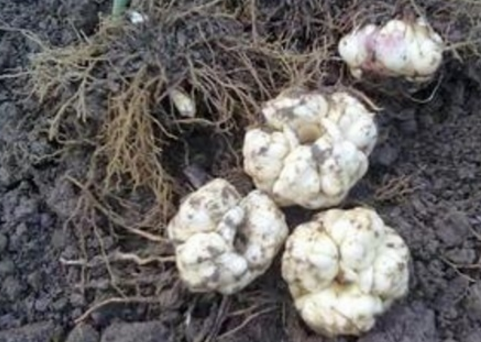
In autumn, dig out the bulbs and snap off the thick scales from the old bulbs, making sure each detached scale still has a piece of the basal plate attached. Then insert the detached scales into flower pots, keeping the soil moist; do not let it become overly wet in winter, and keep it warm. The following spring, small bulbs will grow from the base of the scales and can then be planted separately.
How to grow tiger lily (Lilium lancifolium): propagation methods for tiger lily
Tiger lily (Lilium lancifolium), also known as juandan, daochuilian and tiger-skin lily, is a perennial herbaceous bulbous plant. It prefers warm, dry climatic conditions and is also fairly tolerant of sunlight. Today we will introduce the cultivation methods and propagation methods for tiger lily.
How to grow tiger lily
Tiger lily (Lilium lancifolium), also known as juandan, daochuilian and tiger-skin lily, is a perennial herbaceous bulbous plant. It prefers warm, dry climatic conditions and is also fairly tolerant of sunlight. It grows vigorously in fertile, humus-rich sandy soil with good drainage, producing well-developed bulbs and brilliantly coloured flowers. It responds well to nitrogen fertilizer; soybean cake, rapeseed cake, farmyard compost and compound fertilizers containing nitrogen, phosphorus and potassium are best.
During the growing season, loosen the soil and weed frequently, and carry out intertillage together with watering and fertilizing. Generally, apply diluted liquid fertilizer 2-3 times during the growing season to promote the growth and development of the plants. When the buds are about to form and the plants are nearing bloom, apply phosphorus and potassium fertilizer 1-2 times to ensure the plants have sufficient nutrients during budding and flowering; this not only makes the flowers larger and more vividly coloured but also promotes bulb development.
In the north, choose a sunny, wind-sheltered spot; in the south, it can be planted in a slightly shaded place. The best planting time is August-September. Apply plenty of base fertilizer one month before planting and dig the soil deeply; compost and plant ash can be used as base fertilizer.
Pot cultivation is best done in September-October. For the growing medium, mix leaf mould, sandy soil and garden soil in a 1:1:1 ratio, and put plenty of fully rotted compost plus a small amount of bone meal in the bottom of the pot as base fertilizer. The planting depth is generally about 2-3 times the diameter of the bulb.
Tiger lily does not have very high fertilizer requirements; usually it is enough to apply fertilizer when growth begins in spring and at the start of flowering. Some growers abroad believe that lilies need relatively large amounts of nitrogen and potassium fertilizer and that these should be applied every 10-15 days during the growing season, while phosphorus fertilizer should be limited, because too much phosphorus causes the leaves to turn yellow. During the flowering period, phosphorus fertilizer can be applied additionally for 1-2 days.
To make the bulbs plump, promptly cut off spent flowers after blooming to reduce nutrient consumption. Watering only needs to keep the potting soil moist, but during the peak growing season and in dry weather it must be watered a little more frequently, and water should often be sprinkled around the flower pot to raise air humidity. The potting soil should not be too wet, otherwise the bulbs rot easily. Potted lilies should be repotted once a year with fresh growing medium and base fertilizer. In addition, during the growing season the pot should be turned once a week. Otherwise the plant tends to grow lopsided, which affects its appearance.
Propagation methods for tiger lily
Tiger lily can be propagated by division. It is best done in February or March after the soil has thawed. Take the mother plant out of the flower pot, shake off excess potting soil, separate the tangled root system as much as possible, and cut it apart with a sharp knife into two or more plants. Each divided plant must have a substantial root system, and its leaves should be pruned appropriately to help it survive.
How to grow tiger lily
1. Soil
Tiger lily likes acidic soil rich in humus; you can choose a mix of leaf mould, garden soil and sandy soil.
2. Light
Tiger lily needs suitable light to grow well and produce more brilliant flowers. Spring and autumn sunlight can meet the plant's needs; summer light is intense, so avoid direct strong light and use a shade net for shading; winter daylight is shorter, so light can be supplemented artificially.
3. Temperature
Tiger lily likes a warm environment; the suitable growing temperature is 16-28°C. It fears high temperatures and is relatively cold-tolerant; therefore, in summer spray water mist appropriately to cool it down, and in winter the temperature must not fall below 2°C.
4. Water
Tiger lily relatively prefers dryness, so watering should be moderate; generally it is enough to keep the potting soil moist. During the peak growing season, water a little more as appropriate, and if the air is too dry, spray water to keep it moist.