A Detailed Guide to Growing Grape Hyacinth
1. Soil
Grape hyacinth is highly adaptable and easy to cultivate, preferring loose, fertile, well-drained leaf mold.
2. Water
During cultivation, keep the potting soil moist and water promptly in dry spells; stop watering after the flowers fade.
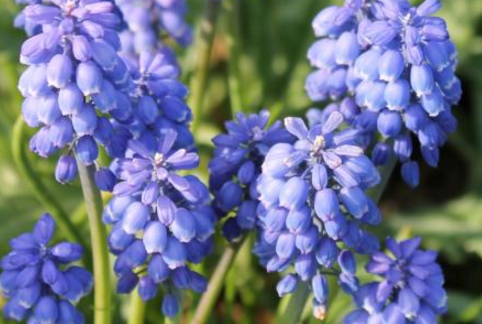
3. Light
Grape hyacinth likes sunlight and also tolerates partial shade. After sprouting in spring, extend the light exposure so the plant grows more rapidly.
4. Temperature
Grape hyacinth is highly cold-hardy, with an optimum growing temperature of 15-20°C. In East China, North China and other regions of our country, it can be grown outdoors and overwinter in the open ground.
How to Grow Grape Hyacinth: Grape Hyacinth Growing Methods
Grape hyacinth is a perennial herbaceous flowering groundcover plant of excellent quality introduced from Europe, and is a small bulbous flowering plant. Many people do not know how to grow grape hyacinth. This article introduces grape hyacinth growing methods and provides related pictures.
Grape Hyacinth Growing Methods
Grape hyacinth originates from central Europe, in France, Germany and southern Poland. It likes a warm, cool climate, loves light and also tolerates shade, with a suitable growing temperature of 15°C to 30°C, and is suited to growing in loose, fertile, well-drained sandy loam. Grape hyacinth is generally propagated by sowing seeds or by dividing and planting small bulbs. After the seeds are collected, they can be sown directly in the open ground in autumn, germinating in April of the following year, with seedling plants flowering after 3 years. Bulbs can be divided and planted after the leaves wither in summer; they root in autumn and grow leaves before winter sets in. It lies dormant in summer, and the leaves stay evergreen in winter; it is fairly cold-hardy, with only the leaf tips turning yellow and withered in the Beijing area.
Grape hyacinth is highly adaptable and easy to grow and manage. It can be transplanted at any time and can also be used for forcing in winter. At the end of August, place the bulbs in a freezer at 6°C to 8°C for 50 days of cold storage, then take them out and place them in a cool, ventilated room. In early December, plant them in pots meant for chrysanthemums, placing 8 to 12 bulbs per pot. Keep them at 15°C to 25°C, and they will bloom at New Year's Day and the Spring Festival, and can be used as indoor hanging potted flowers. Grape hyacinth can be used as groundcover under trees, and can also be used for edging flower beds or arranging flower borders, offering a distinctive charm.
Grape hyacinth can be used as groundcover under trees, and can also be used for edging flower beds or arranging flower borders, offering a distinctive charm. Grape hyacinth likes a warm, cool climate, loves light and also tolerates partial shade, and requires soil rich in humus, loose, fertile and well-drained; its cold tolerance is also fairly strong.
Grape Hyacinth Propagation Methods
Grape hyacinth loves light and also tolerates partial shade, and requires soil rich in humus, loose, fertile and well-drained; its cold tolerance is also fairly strong. It is generally propagated by sowing seeds or by dividing and planting small bulbs. After the seeds are collected, they can be sown directly in the open ground in autumn, germinating in April of the following year, with seedling plants flowering after 3 years. Bulbs can be divided and planted after the leaves wither in summer; they root in autumn and grow leaves before winter sets in. It lies dormant in summer, and the leaves stay evergreen in winter; it is fairly cold-hardy, with only the leaf tips turning yellow and withered in cold regions such as Beijing.
The above is a related introduction to grape hyacinth growing methods, and we hope it is helpful to everyone. Because grape hyacinth has an early flowering period and a relatively long blooming time, it is often used as ground cover under open woodland or for planting in patches, strips and as edging in flower borders and lawns, and is also used in rock gardens as dotted clump plantings; as a home potted flower or as a cut flower, it also has a good ornamental effect.
When to Plant Grape Hyacinth by Month? Grape Hyacinth Growing Methods
Introduction: Grape hyacinth is native to central Europe, and has been introduced and cultivated in provinces and regions of our country such as Hebei, Jiangsu and Sichuan. Grape hyacinth enters a dormant period; its optimum suitable growing temperature is 15°C to 30°C, and the best sowing time is generally in November-December.
Grape Hyacinth
Sowing method:
In December, place it in a clay pot with a nutrient soil made by mixing 1 part coarse sand, crushed pond mud and 1 part decomposed rice bran, bury the bulb in the soil with 23 cm of soil covering the bulb, and place it in a spot with abundant sunlight. At first do not water too much, and when the leaves emerge above the soil surface, apply a phosphorus and potassium fertilizer once.
Grape Hyacinth Growing Methods
1. Soil: Grape hyacinth is highly adaptable and easy to grow and manage, and can be transplanted at any time; it likes fertile, loose and well-drained leaf mold.
2. Watering: After planting grape hyacinth, keep the soil moist; water promptly in dry spells, and stop watering after the flowers fade.
3. Light: Grape hyacinth likes an environment with abundant light and also tolerates partial shade. When flower buds grow out in spring, move it to a spot with 60%-70% sunlight so the flower stems extend rapidly.
4. Temperature: Grape hyacinth is fairly cold-hardy, with an optimum germination temperature of 20-25°C, and in East China and North China it can be grown outdoors and overwinter in the open ground.
5. Fertilizing: After grape hyacinth sprouts in early spring, pay attention to topdressing; after the leaves grow out, a diluted solution of nitrogen, phosphorus and potassium can be applied to also promote development.
6. Pests and diseases: Common ones are smut disease (mainly harming the flowers), southern root-knot nematode disease, and stem nematode damage. For smut disease, spray with a 1000-fold dilution of 50% thiophanate-methyl wettable powder; for nematodes, 15-20-fold dilution of 80% dichloropropane emulsifiable concentrate can be used to drench the holes and kill them. 7. Dormancy: The bulb has a dormant habit in summer; the aboveground part withers in May and enters the dormant period. It is best for the bulb to enter dormancy when it is relatively dry. Newly dug bulbs should first be stored at 20-25°C, and after October the storage temperature drops to 15-18°C, with 8-10°C being suitable in winter.