How to grow bird's-foot trefoil? Detailed care methods and tips
Light
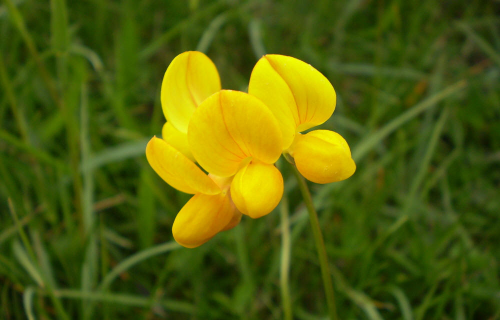
Bird's-foot trefoil loves sunlight very much and is not shade-tolerant. It prefers a warm, humid climate. During its growing period, the plant must be given plenty of light so that it can accumulate sufficient nutrients for flowering. If bird's-foot trefoil receives insufficient light, the plant will produce very few flowers, and the plant will grow in a prostrate manner.
Temperature
The most suitable growing temperature for bird's-foot trefoil is 18°C-25°C. During the flowering period, the temperature should be kept between 21°C-27°C so that it can flower smoothly. Bird's-foot trefoil is not cold-tolerant. If the winter temperature is too low, it should be moved indoors for care, and a certain temperature should be maintained so that the plant can overwinter smoothly; otherwise, the plant is very likely to suffer frost damage. Generally, the temperature should not fall below minus 3 degrees. The plant is not cold-tolerant but has a certain degree of heat tolerance.
Watering and fertilizing
Bird's-foot trefoil prefers a humid climate. During cultivation, give the plant sufficient water so that it can grow healthily, and apply appropriate fertilizer. Bird's-foot trefoil has a relatively high demand for fertilizer, especially before flowering, when the plant needs to absorb enough nutrients to sustain normal flowering. However, be careful not to splash fertilizer water onto the leaves, so as not to burn the leaves.
Soil
Bird's-foot trefoil prefers fertile soil that can be irrigated. Clay, sandy soil, acidic soil, and slightly alkaline soil are all options. Bird's-foot trefoil can tolerate poor and barren conditions, and can also grow normally in poor, barren soil. However, it is best to choose deep, fertile, well-drained sandy soil.
The above is an introduction to the question of how to grow bird's-foot trefoil. I hope that after reading it, everyone can successfully grow very good bird's-foot trefoil!
Bird's-foot trefoil Lotus corniculatus Bird's-foot trefoil profile: how to grow bird's-foot trefoil / how to propagate bird's-foot trefoil
Bird's-foot trefoil cardBird's-foot trefoil Lotus corniculatus
Aliases: five-leaf clover, ox horn flower, ducao, golden flower, bird's-foot grass, baimaigen
Classification: perennial herbaceous flower
Family and genus: Plantae, Angiosperms, Dicotyledoneae, Fabaceae, Lotus
Full blooming period: summer and autumn
Bird's-foot trefoil, also known as five-leaf clover (four-leaf clover), is a leguminous plant. This plant is cultivated in both northern and southern China and other places. Bird's-foot bean and ox horn flower are perennial herbaceous plants of the genus Lotus in the Fabaceae family. They originated in the temperate regions of Eurasia, and wild species are distributed in Hebei, Yunnan, Guizhou, Sichuan, Gansu and other places in China. After 1980, some scientific research departments in China introduced cultivated varieties of bird's-foot trefoil from Canada and other countries, and they are widely used for orchard sod culture, green manure, grassland improvement and forage. Bird's-foot trefoil is tolerant of barren soil and has strong ability to stabilize soil and prevent erosion. It is a very good soil and water conservation plant, and is an excellent leguminous forage for cultivation and utilization and grassland improvement in Guizhou....
Cultivation methods and precautions for bird's-foot trefoil Introduction to bird's-foot trefoil
Bird's-foot trefoil, also known as five-leaf clover (four-leaf clover), is a leguminous plant. This plant is cultivated in both northern and southern China and other places. Bird's-foot bean and ox horn flower are perennial herbaceous plants of the genus Lotus in the Fabaceae family. They originated in the temperate regions of Eurasia, and wild species are distributed in Hebei, Yunnan, Guizhou, Sichuan, Gansu and other places in China. After 1980, some scientific research departments in China introduced cultivated varieties of bird's-foot trefoil from Canada and other countries, and they are widely used for orchard sod culture, green manure, grassland improvement and forage.
Bird's-foot trefoil is tolerant of barren soil and has strong ability to stabilize soil and prevent erosion. It is a very good soil and water conservation plant, and is an excellent leguminous forage for cultivation and utilization and grassland improvement in Guizhou.
The flowering period of bird's-foot trefoil is May-September, and the fruiting period is July-October.
Morphological characteristics of bird's-foot trefoil
Bird's-foot trefoil is a perennial herb, 15-50 cm tall, with the whole plant sparsely covered with white soft hairs or smooth. It has a taproot. Stems are clustered, prostrate or ascending, solid, nearly four-angled. Pinnate compound leaves have 5 leaflets; the leaf axis is 4-8 mm long, sparsely covered with soft hairs, with 3 leaflets at the tip, and the 2 basal leaflets are stipule-like, papery, obliquely ovate to oblanceolate-ovate, 5-15 mm long, 4-8 mm wide, with the midvein indistinct; the leaflet stalk is very short, about 1 mm long, densely covered with yellow long soft hairs.
Bird's-foot trefoil has umbellate inflorescences; the peduncle is 3-10 cm long; 3-7 flowers are clustered at the top of the peduncle, 7 (9)-15 mm long; the pedicel is short, with 3 bracts at the base; the bracts are leaf-like, equal in length to the calyx, persistent: the calyx is bell-shaped, 5-7 mm long, 2-3 mm wide, hairless or sparsely covered with soft hairs, the calyx teeth are nearly equal in length, narrowly triangular, acuminate, equal in length to the calyx tube; the corolla is yellow or golden yellow, often turning blue after drying, the standard petal is oblate, the blade and claw nearly equal in length, 10-15 mm long, 6-8 mm wide, the wing petals and keel petals are equal in length, both slightly shorter than the standard petal, the keel petal is bent in a right-triangular shape, with a narrow pointed beak; stamens are diadelphous, the free part of the filaments is slightly shorter than the stamen tube; the style is straight, equal in length to the ovary and pointing upward at a right angle, the stigma is dot-like, the ovary is linear, hairless, with 35-40 ovules. The pod is straight, linear-cylindrical, 20-25 mm long, 2-4 mm in diameter, brown, dehiscent into two valves, twisted; it contains numerous seeds, the seeds are very small, ovate, about 1 mm long, grayish brown.
Bird's-foot trefoil is a perennial herbaceous plant of the genus Lotus in the Fabaceae family. The taproot is obvious, with numerous lateral roots distributed in the 30-60 cm soil layer. Stems and branches are clustered, creeping, smooth, 60-90 cm long. Palmately trifoliolate compound leaves, leaflets obovate, with short petioles. It has large stipules shaped like leaves, hence the name five-leaf clover. Umbellate inflorescences, 4-8 small flowers, located at the top of long peduncles, flower color pale yellow to deep yellow. The pod is oblong, clustered at the top of the peduncle, spreading out, shaped like a bird's foot, hence the name bird's-foot bean. Each pod contains 10-15 seeds. The seeds are very small, kidney-shaped, smooth, olive-colored, brown or dark green, with a 1000-seed weight of 1.0-1.2 grams.
Bird's-foot trefoil is a forage and green manure crop, and the pod is brown. Oblong-cylindrical, 27 mm long, about 4 mm wide, with numerous seeds. Flowering period is July. Fruiting period is September. Bird's-foot trefoil is a perennial herbaceous plant of the genus Lotus in the Fabaceae family, 45 cm tall. Stems are clustered, without an obvious main stem, stem length 80 cm, smooth and hairless, upright or creeping growth. The leaves are trifoliolate compound leaves, with papilionaceous corollas, yellow.
The flowers of bird's-foot trefoil are arranged 4 per terminal umbel; at the base there are 3 leaf-like bracts; the flower is 1.4 cm long; the calyx is yellow-green, nearly membranous, covered with long stiff hairs both inside and outside, about 6 mm long, lanceolate, equal in length to or longer than the calyx tube; the corolla is yellow, sometimes blue-green when dry, the standard petal is obovate, 9-13 mm long, 6 mm wide, with a longer part slightly longer than the keel petal, the petal bends about 135°, stamens 10, in 2 bundles; long and curved, terminal. The taproot is deep and long, with many well-developed lateral roots. Roots are distributed in the 60 cm soil layer. Stems and branches are clustered, creeping, smooth, 90 cm long. Palmately trifoliolate compound leaves, leaflets obovate.
Bird's-foot trefoil has large stipules shaped like leaves, hence the name five-leaf clover. Umbellate inflorescences, 8 small flowers, located at the top of long peduncles, flower color pale yellow to deep yellow. The pod is oblong, clustered at the top of the peduncle, spreading out, shaped like a bird's foot, hence the name bird's-foot bean. Each pod contains 15 seeds. The seeds are very small, kidney-shaped, smooth, brown or dark green, with a 1000-seed weight of 1.2 grams. Bird's-foot trefoil is a perennial herbaceous plant of the genus Lotus in the Fabaceae family, 45 cm tall.
Bird's-foot trefoil stems are clustered, without an obvious main stem, stem length 30-80 cm, smooth and hairless, upright or creeping growth. The taproot is deep and long, with many well-developed lateral roots. Roots are distributed in the 60 cm soil layer. Stems and branches are clustered, creeping, smooth, 90 cm long. Palmately trifoliolate compound leaves, with large stipules shaped like leaves, hence the name five-leaf clover. Umbellate inflorescences, 4-8 small flowers, located at the top of long peduncles, flower color pale yellow to deep yellow. The pod is oblong, clustered at the top of the peduncle, spreading out, shaped like a bird's foot, hence the name bird's-foot bean. Each pod contains 10-15 seeds.
The seeds are very small, kidney-shaped, smooth brown or dark green, with a 1000-seed weight of 1.2 grams.
The flowering period of bird's-foot trefoil is May-September, and the fruiting period is July-October.
Ecological habits of bird's-foot trefoil
Bird's-foot trefoil prefers a warm, humid climate, is tolerant of barren soil, moisture and shade, and can be planted between rows of forest and fruit trees.
The most suitable temperature for bird's-foot trefoil is 18-25°C, and flowering requires 21-27°C. Its cold tolerance is relatively poor, and seedlings are susceptible to frost damage. Adult plants have only a certain degree of cold tolerance, and stems and leaves turn yellow at minus 3 to minus 7°C. Its heat tolerance is slightly stronger than that of alfalfa, and its drought tolerance is slightly weaker than that of alfalfa but stronger than that of red clover and white clover. It prefers moisture and is not tolerant of shade.
Cultivation techniques for bird's-foot trefoil Cultivation points
Fertilizing
After sowing bird's-foot trefoil, it is used for a relatively long number of years and consumes a large amount of fertilizer. A sufficient base fertilizer should be applied once in combination with deep plowing in autumn, with 1500-2500 kg of organic fertilizer per mu and 25-50 kg of standard superphosphate. The superphosphate must first be mixed with organic fertilizer, sprinkled with water to moisten it, piled up and composted and fermented for 20-30 days before application. Before sowing, in combination with deep plowing, apply 5-10 kg of ammonium nitrate per mu to promote seedling growth.
Soil
Bird's-foot trefoil prefers fertile, irrigable clay, sandy loam, acidic soil, and slightly alkaline soil, with pH 6.2-6.5 being the most suitable. It can also grow in barren and poorly drained soil or in sites temporarily flooded for a short period.
Bird's-foot trefoil is suitable for grazing, tolerant of trampling, with strong regrowth. Its drought tolerance is stronger than that of white clover and red clover but weaker than that of alfalfa, and its acid tolerance is beyond that of alfalfa and red clover, but excessive acidity will affect the formation of root nodules and the progress of nitrogen fixation. It is suitable for growing on fertile, well-irrigated loam, but can also grow in sandy loam, shallow soil layers, poor soil, and slightly acidic or slightly alkaline soil. The suitable soil pH is 6.2-6.5. It is not shade-tolerant and requires long daylight; full flowering requires 14-16 hours of sunlight; insufficient sunlight reduces flowering and causes severe creeping growth; under weak light, both stem, branch and root growth are inhibited. Seedlings have relatively poor cold tolerance, and in areas with low winter temperatures and insufficient soil moisture, they cannot overwinter.
Temperature
Bird's-foot trefoil prefers a warm, humid climate, with the most suitable temperature being 18-25°C, and flowering requiring 21-27°C. Its cold tolerance is relatively poor, and seedlings are susceptible to frost damage. Adult plants have only a certain degree of cold tolerance, and stems and leaves turn yellow at minus 3 to minus 7°C. Its heat tolerance is slightly stronger than that of alfalfa, and its drought tolerance is slightly weaker than that of alfalfa but stronger than that of red clover and white clover. It prefers moisture and is not tolerant of shade.
Planting management
Tillage
Bird's-foot trefoil has no strict requirements for soil and can be planted in sandy loam, loam, poor land, poorly drained low wet land, and slightly acidic or slightly alkaline soil. The seeds are very small, the seedlings are weak, and their emergence ability is poor, so fine land preparation is required to ensure a full stand. After the previous crop is harvested in the previous year, summer plowing, autumn plowing, and stubble clearing and weeding should be carried out. In dryland, harrowing and leveling in autumn are used to preserve soil moisture and store water, and compaction in winter is used to preserve moisture; in irrigated areas, winter irrigation should be carried out to soak the land, and in winter and spring, harrowing and compaction should be used to preserve moisture. Before sowing the next year, shallow plowing and land preparation should be carried out so that the soil clods are fine and the ground is level.
Field management
Seedlings grow slowly and are susceptible to weed damage, so timely intertillage, loosening of the soil and weeding are required. Grazing is strictly prohibited, and trampling that damages seedlings must be avoided. After the grassland is established, it also must not be grazed too heavily, or grazed after irrigation or rainfall, to avoid damaging its vigor. After each grazing use, an interval of half a month is needed to restore regrowth. After each grazing or mowing, in irrigated areas, topdressing should be combined with irrigation, and in dryland, topdressing should take advantage of rainfall. Apply 10-15 kg of superphosphate per mu, and 4-5 kg of diammonium phosphate or ammonium nitrate. Leave a stubble height of 5-8 cm for mowing and 10-15 cm for grazing.
Harvest and utilization
The flowering period is long, and the seeds do not mature uniformly. After maturity, the pods easily split and shed seeds. When 70% of the pods turn dark brown, they can be mowed for seed harvest. If conditions permit, they can be harvested as they mature, in stages. The suitable period for mowing and utilization of artificial grassland is from early flowering to full flowering, and the starting period for grazing utilization is from the branching stage to the bud stage, or moderate grazing when the sward height reaches 20 cm. Heavy grazing or grazing after rainfall or irrigation must be avoided. The root stubble land has very high fertilizer efficiency and is often used in rotation with cereal grain and forage crops and cash crops. Seed fields and soil and water conservation planting sites are good nectar sources. When the flowering period comes, place beehives around them to promote pollination, increase seed yield, and make full use of the nectar source.
Propagation method of bird's-foot trefoil Sowing
For sowing seed fields of bird's-foot trefoil, use grade I seeds as specified by national or provincial forage quality standards; for hay fields and grazing land, grade I, II, and III seeds can all be sown.
Bird's-foot trefoil seeds have a high hard seed rate, so hard seed treatment must be carried out before sowing. Treatment methods include: mechanically scarifying the seed coat, soaking in warm water for 24 hours, drying and then sowing; soaking in concentrated sulfuric acid for 20-30 minutes, rinsing clean with water, drying and then sowing. The sowing rate depends on the purpose of utilization. For drilling in seed fields, 0.4-0.5 kg per mu, with row spacing of 30-40 cm. For drilling in hay fields, 0.5-0.6 kg per mu, with row spacing of 20-30 cm; for broadcast sowing, 0.7-0.8 kg. When mixed sowing with gramineous forages, bird's-foot trefoil accounts for 40-50%. Sowing depth is 1-2 cm.
The sowing period differs due to climatic differences among regions. Cold regions should sow in early spring, while warm regions can sow in spring, and can also sow in summer and autumn. Autumn sowing should not be later than late August, so that the seedlings have more than 1 month of growth period to facilitate overwintering. For supplementary sowing to improve natural grassland, overwintering sowing can be carried out at the beginning of winter. When establishing permanent artificial grassland, it can be sown alone or in mixture. Commonly used suitable mixed sowing combinations include Kentucky bluegrass, smooth brome, orchardgrass, perennial ryegrass, tall fescue, etc. For the mixing ratio, bird's-foot trefoil accounting for 40-50% is appropriate. When carrying out pure seed propagation, roots or stem segments can be used for cutting propagation. When supplementary sowing to improve natural grassland, utilization can be adjusted and controlled to facilitate full seed maturity, making it convenient for seeds to naturally shed and self-propagate for improvement.
Disease and pest control of bird's-foot trefoil
Common pests of bird's-foot trefoil include grassland caterpillars, mirids, alfalfa seed chalcids, white grubs, alfalfa noctuid moths, wheat thrips, and leafhoppers.
Variety classification of bird's-foot trefoil Related species
Alpine bird's-foot trefoil Lotus alpinus (DC.) Ramond
Slender bird's-foot trefoil Lotus angustissimus L.
Lanyu bird's-foot trefoil Lotus australis Andrews
Bird's-foot trefoil Lotus corniculatus L.
Bird's-foot trefoil (original variety) Lotus corniculatus L. var. corniculatus
Glabrous bird's-foot trefoil (variety) Lotus corniculatus L. var. japonicus Regel
**Bird's-foot trefoil Lotus frondosus (Freyn) Kuprian.
Short-pod bird's-foot trefoil Lotus praetermissus Kuprian.
Slender-leaf bird's-foot trefoil Lotus tenuis Waldst. & Kit. ex Willd.
Winged-pod bird's-foot trefoil Lotus tetragonolobus L.
Distribution area of bird's-foot trefoil
Bird's-foot trefoil is native to the warm regions of Europe and Asia, and is now widely cultivated and utilized in countries around the world.
Cultivation began in the late 19th century. In China, wild distribution occurs in Sichuan, Guizhou, Guangxi, Hubei, Jiangsu, Hebei, **, and Gansu (mainly the mountainous areas of southern Gansu), and wild species are distributed in the central Guizhou and northwestern Guizhou regions of Guizhou.
Uses of bird's-foot trefoil Forage value
Bird's-foot trefoil has fine stems and many leaves, with high grass yield. Generally, fresh grass yield per mu is 1500-3000 kg, and the highest can reach 4000 kg. After mowing, regrowth is slow, and it is generally mowed 2-3 times per year. Its nutritional content ranks first among leguminous forages, especially its ability to preserve nutrients in stems and leaves is very strong. After mature seed harvest, the protein content can still reach 17.4%, and the quality is still good. The mowing and utilization period has little effect on nutritional composition, so its forage value is very high.
Its stems and leaves are soft, tender and juicy, with good palatability, and all kinds of livestock like to eat it. It can be mowed for green feeding, made into hay, processed into grass meal and mixed feed, and can also be used for grazing. When used for green feeding or grazing, its green period is long, its saponin content is low, and its grazing tolerance is strong. It will not cause bloat in livestock, which general leguminous forages cannot match. Because it is heat-tolerant, when general forages grow poorly in summer, bird's-foot trefoil can still grow well, extending the utilization period.
Other uses
Bird's-foot trefoil has a well-developed root system, with numerous root nodules on the lateral roots. After the root stubble land is plowed, it can increase soil organic matter and nitrogen, with good effects on soil improvement and field fertilization, and a large effect on increasing the yield of subsequent crops. It is often used in rotation with cereal grain and forage crops and oilseed and cash crops. Its stems and branches grow creeping, with dense branches and leaves and large coverage. When planted on barren slopes and bare land, it has good performance in slope protection and soil and water conservation. Its flowering period is long, and insects pollinate it, making it a very good nectar plant.
Bird's-foot trefoil has a long lifespan and can be mixed-sown with gramineous forages to establish permanent grassland for both mowing and grazing. The seeds have the habit of falling to the ground and self-propagating, and can be used for supplementary sowing of natural grassland, which can keep the grassland productive over a long period and improve yield and quality. Both roots and stems have the ability to produce new branches from axillary buds and can be cut into short segments for cutting propagation, which has very high value in pure seed propagation and breeding of forage. The seed setting rate is high, and the propagation coefficient is large. Each mu can produce 40-70 kg of seeds, which is conducive to promotion.
Medicinal or dietary therapeutic value of bird's-foot trefoil
The medical information and healthy dietary therapy information on Huahua Network is for reference only and cannot be used as a basis for diagnosis or medical treatment. Any health problems should be consulted with professional medical staff, and the treatment of any disease should follow doctor's advice.
Ultimate flower-protecting task: To love yourself, start from reality and strictly follow doctor's advice. Regarding illness, do not be careless, do not delay, do not give up hope, face it bravely, use love to warm the silent world, and use your heart to care for the flower field within.
Medicinal value
[Meridian tropism]: Lung meridian
[Efficacy]: Tonify deficiency; clear heat; quench thirst
[Textual research]: From "Tang Ben Cao"
[Family and genus classification]: Fabaceae
[Indications]: Consumptive disease; yin deficiency with fever; thirst
[Efficacy classification]: Tonic medicine
[Nature and flavor]: Sweet; bitter; slightly cold
[Medicinal material source]: The root of the leguminous plant bird's-foot trefoil.
[Usage and dosage]: Oral administration: decocted in soup, 9-18 grams; or soaked in wine; or made into pills or powder.
[Source]: "Chinese Materia Medica"
Application value
Fresh grass contains 23% dry matter. The dry matter contains 11.30% crude protein, 2.17% crude fat, 22.17% crude fiber, 54.36% nitrogen-free extract, and 10.0% crude ash.
[Nature and flavor]: Pungent, neutral.
[Functions and indications]: Clear heat and detoxify, relieve cough and calm panting. Used for wind-heat cough, pharyngitis, tonsillitis, distention and pain in the stomach; external use for eczema, sores and boils, hemorrhoids.
[Usage and dosage]: 3-5 qian, for external use an appropriate amount plus a little borneol, pounded and applied externally.
Landscape uses of bird's-foot trefoil
The introduced species has strong adaptability and high yield, and is an excellent leguminous forage for cultivation and utilization and grassland improvement in Guizhou. Bird's-foot trefoil is tolerant of barren soil and has strong ability to stabilize soil and prevent erosion, and is a very good soil and water conservation plant.
Units such as the Lanzhou Institute of Animal Husbandry of the Chinese Academy of Agricultural Sciences, Gansu Agricultural University, the Gansu Grassland Work Team, and the Gansu Grassland Ecology Institute have successively introduced improved varieties from other places and carried out introduction trials in Lanzhou, Wuwei, Minxian, Yuzhong, Qingyang and other places, doing a great deal of work. Although they grew well in various places, none entered the stage of promotion and application in production.
Flower language of bird's-foot trefoil
Bird's-foot trefoil flower language: the day of reunion.
Bird's-foot trefoil pictures
How to grow lucky bamboo, lucky bamboo cultivation methods
Lucky bamboo is also called bamboo banana, evergreen bamboo, flowering bamboo, lucky tower, etc. If it is placed in the Wenchang position, it is also called Wenchang bamboo (generally 4 stalks are placed). Lucky bamboo belongs to the genus Disporum in the Liliaceae family. It originally grew in western Africa and is a perennial herbaceous plant. With the continuous progress of life, lucky bamboo today is mainly used as a potted plant and has very high ornamental value, symbolizing “great fortune and prosperity”, hence the name lucky bamboo. So, what are the cultivation methods for lucky bamboo? Let's take a look together!
Morphological characteristics of lucky bamboo
Lucky bamboo is a perennial herbaceous plant that grows in southwestern China and nearby areas. It is also called water bamboo, a small tree-like foliage plant. The plant is generally more than 1 meter tall and relatively slender overall. Next, the upright part has branches and can be used as a commodity, artwork, etc. If you plan to cultivate it, its height is best at 80——100 cm. As for the leaves of lucky bamboo, they are alternate or nearly opposite, papery, and the leaf length is lanceolate, with 3 to 7 more obvious main veins. If it has an umbellate inflorescence, then 3 to 10 small flowers grow at the leaf veins. Because the plant's leaves are relatively lush and its growth is also relatively good, it is also widely cultivated.
Lucky bamboo cultivation methods
When cultivating lucky bamboo, it has very good ornamental value and feng shui symbolism. If you plan to cultivate lucky bamboo, you can choose soil culture or water culture. The following are the specific matters for the two cultivation methods, so let's take a look!
1 Soil culture: Lucky bamboo prefers shady, humid, high-temperature places. It is tolerant of waterlogging, has strong fertilizer tolerance, and also has relatively good cold resistance. As for soil, it is suitable for growing in well-drained sandy soil or semi-muddy sand. The temperature should be 20——28 degrees, and a low temperature of 2——3 degrees is also acceptable, but attention should also be paid to frost prevention in winter. The high-temperature and humid season in summer is very favorable for the plant's growing environment and is also the best period for growth. It is suitable for growing under diffused light, because too strong light or direct sun exposure will cause symptoms such as leaf changes and chlorosis.
2 Water culture: Water cuttings can take root, and soilless cultivation can also be carried out. The best planting time is late March. Because during this period the temperature gradually rises and the humidity is also relatively suitable. Cuttings can take root in 7——15 days, and the survival rate reaches 100 percent.
The symbolism contained in lucky bamboo
Lucky bamboo has the function of promoting academic success and career success. Planting 4 stalks of lucky bamboo and placing them on a table in the living room or in the Wenchang position of a room will have effects such as a flow of ideas and improved creativity. It can also help improve the air quality of unventilated rooms, effectively absorb waste gases in the environment, regulate air humidity, and allow the room environment to be better improved.
How to grow lucky bamboo Taxus bonsai price What to do when anthurium leaves turn yellow Japanese cherry blossom pictures Tianshan snow chrysanthemum price