How to Grow a Rabbit's Foot Fern? Detailed Care Methods and Precautions
1. Soil
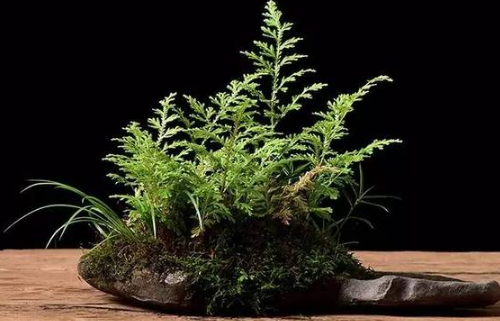
When growing a rabbit's foot fern, you can choose the pot you want according to your ornamental preferences. Generally, a tall pot or a hanging basket is a good choice, and you can also choose pots with unique shapes, such as a custom-made tree fern pot or a piece of rotten wood. The soil should be loose, breathable and well-draining. Generally, leaf mold can be used for the mix.
2. Light
The rabbit's foot fern likes to grow in a semi-shaded environment and does not like strong, direct light. It prefers bright, diffused sunlight. When growing a rabbit's foot fern at home, you can place the pot or hanging basket in a spot indoors that receives diffused light for care.
3. Temperature
The rabbit's foot fern originates from tropical and subtropical regions. Its most suitable growing temperature is 18°C-26°C. It is not tolerant of high summer temperatures or cold winter temperatures. If the ambient temperature around the plant is outside the suitable range, whether too high or too low, it will be detrimental to the plant's growth. Note that during winter care, the ambient temperature around the plant must not be below 5°C, otherwise the plant can easily suffer frost damage.
4. Watering
The rabbit's foot fern likes a moist environment, so the soil should be kept in a moist state. During the peak growing season, the plant consumes a lot, so sufficient water must be ensured, generally watering once every 2-3 days. However, be careful not to water too much to avoid water accumulation in the pot, which would cause the plant's roots to rot.
5. Fertilizing
The rabbit's foot fern has no strict requirements for fertilizing. It does not like fertilizer that is too concentrated. Generally, diluted, fully decomposed manure water can be applied, and during care, applying some foliar fertilizer is also fine.
Rabbit's Foot Fern - Rabbit's Foot Fern Guide: How to Grow a Rabbit's Foot Fern / How to Propagate a Rabbit's Foot Fern
Rabbit's Foot Fern ProfileRabbit's Foot Fern
Aliases: Dragon's Claw Fern, Rabbit's Foot Fern
Classification: Fern
Family and Genus: Plantae, Pteridophyta, Dicotyledoneae, Davalliaceae, Davallia
Bloom Season: Does not bloom
The rabbit's foot fern, also known as the dragon's claw fern or rabbit's foot fern, is a plant of the genus Davallia in the family Davalliaceae. Its rhizome is exposed, fleshy, about 6-12 cm long, with brown scales and hairs covering the surface, resembling a rabbit's foot, which is why flower growers call it the rabbit's foot fern or rabbit's tail fern. The rabbit's foot fern has graceful leaf shapes and an elegant form. Both its rhizome and leaves have extremely high ornamental value. It is a very popular indoor ornamental fern; it can also be used as a landscape plant arranged beside rockeries and rocks. Its rhizome can also be used medicinally, with effects of dispelling wind and dampness, and clearing heat and cooling blood.
How to Grow a Rabbit's Foot Fern and Precautions - Introduction to the Rabbit's Foot Fern
The rabbit's foot fern, also known as the dragon's claw fern or rabbit's foot fern, is a plant of the genus Davallia in the family Davalliaceae. Its rhizome is exposed, fleshy, about 6-12 cm long, with brown scales and hairs covering the surface, resembling a rabbit's foot, which is why flower growers call it the rabbit's foot fern or rabbit's tail fern.
The rabbit's foot fern has graceful leaf shapes and an elegant form. Both its rhizome and leaves have extremely high ornamental value. It is a very popular indoor ornamental fern; it can also be used as a landscape plant arranged beside rockeries and rocks. Its rhizome can also be used medicinally, with effects of dispelling wind and dampness, and clearing heat and cooling blood.
Morphological Characteristics of the Rabbit's Foot Fern
The rabbit's foot fern, also known as the dragon's claw fern or rabbit's foot fern, is a plant of the genus Davallia in the family Davalliaceae. Its rhizome is exposed, fleshy, about 6-12 cm long, with brown scales and hairs covering the surface, resembling a rabbit's foot, which is why flower growers call it the rabbit's foot fern or rabbit's tail fern. It is a small epiphytic fern.
The rabbit's foot fern plant is 20-25 cm tall, with a long and creeping rhizome densely covered with velvety, lanceolate, grayish-brown scales. The leaves are distant, with broadly ovate-triangular blades, three to four times pinnately compound. The sori are borne at the tips of the small veins near the leaf margin, and the indusia are nearly circular.
The rabbit's foot fern has delicate leaflets that are elliptical or pinnately lobed, leathery, with smooth, dark green leaf surfaces that are rich in luster. The pinnae are 10-30 cm long, supported by slender petioles. The petioles are slightly darker in color and 10-30 cm long.
Ecological Habits of the Rabbit's Foot Fern
The rabbit's foot fern is neither tolerant of high temperatures nor cold. The suitable temperature is 20°C-26°C. It grows poorly above 30°C or below 15°C. During winter, it must not be below 5°C.
Cultivation Techniques for the Rabbit's Foot Fern - Key Cultivation Points
Light
The rabbit's foot fern is an evergreen herbaceous epiphytic fern that likes a warm, semi-shaded environment and is suitable for diffused light. It must not be exposed to direct sunlight, otherwise it easily wilts and curls. For home cultivation, it can simply be placed in a bright spot indoors.
Watering
The rabbit's foot fern should be kept with moist potting soil. During the growing season, water should be supplied adequately, generally watering once every 2 to 3 days. Although the soil should be kept moist, for the rabbit's foot fern, mild drying between waterings is also harmless. The rabbit's foot fern also should not be overwatered; too much water can cause leaf drop.
Temperature
The rabbit's foot fern is native to New Zealand and Japan, and is distributed in tropical and subtropical regions of Asia, Oceania, the Americas, and the Pacific Islands.
Air Humidity
It likes a high-humidity environment and is not tolerant of dryness. During care, you should frequently spray water on the plant and its growing environment to increase humidity. The suitable humidity is around 80%. Excessive dryness can cause the leaf margins to turn yellow and withered, or even the entire leaf to turn yellow and withered.
Soil and Fertilizing
The soil is best as a loose, breathable sandy loam. The rabbit's foot fern has low fertilizer requirements and does not like concentrated fertilizer. During care, you can apply a small amount of diluted fertilizer.
How to Grow a Rabbit's Foot Fern - How to Grow a Rabbit's Foot Fern Well on a Balcony
Today's household balconies are generally enclosed. After enclosure, the glass blocks most ultraviolet rays, which is extremely unfavorable for sun-loving flowers. However, the rabbit's foot fern - a fern with very high ornamental value that prefers a shaded and humid environment - can grow robustly in an enclosed balcony, and is therefore very popular.
The rabbit's foot fern has thick stems that creep along the ground and trail outside the flower pot. The stems are densely covered with pine-needle-shaped, light grayish-brown scales similar to animal fur, resembling a wolf's tail, hence the name. The stems also bear leaves, but sparsely; the petioles are about 9 cm long, and the leaf blades are broadly ovate-triangular, 10-15 cm in both length and width, somewhat resembling asparagus fern, arranged in pinnate fashion. It has many aliases, such as white-haired snake, white-haired rock silkworm, hairy stone egg, and round-covered Davallia, among others.
The light on an enclosed balcony is already sufficient to meet the needs of the rabbit's foot fern. It is best to place it on the north half in summer and the south half in winter. If the air is dry, you can mist the leaves. For the potting soil, you can use leaf mold rich in humus and well-draining; it is even better if you can mix in some carbonized bark. During the growing season, it requires sufficient water, and you should apply diluted fertilizer water based mainly on decomposed organic nitrogen once or twice, while also spraying low-concentration foliar fertilizer. In midsummer, some leaves turn yellow and should be removed promptly to facilitate new leaf growth in autumn. Its suitable growing temperature is 21-26°C during the day and 10-15°C at night. In winter, the room temperature should not be lower than 5°C.
Ferns do not bloom or set fruit and reproduce by spores, but a small household does not need to collect spores; cuttings are sufficient. In spring, cut the rhizome of the rabbit's foot fern with 2-3 leaves or leaf buds into small sections of about 10 cm, bury them shallowly in the surface layer of humus soil, and keep them moist. In about 40 days, new roots can grow. The rabbit's foot fern has wild plants in East China, South China, Southwest China and other places, growing epiphytically on tree trunks and on shaded, humid rocks near water, and can be dug up for cultivation. Cultivation is usually done in pots or hanging baskets. The most distinctive approach is to grow it in a specially made tree fern pot, where the plant will flourish with abundant branches and leaves. If there is no tree fern pot, selecting a piece of attractively shaped rotten wood is also very suitable.
Propagation Methods of the Rabbit's Foot Fern - How to Propagate
Cut off the tip portion of the rhizome with 2-3 leaves, place it in a mixed medium of peat or perlite and sand, and place it in a semi-shaded, moist, warm environment. Fix it in place with wire or similar materials, keep it moist, and after about one month it will grow new leaves and new roots. Alternatively, propagation by layering its rhizome is also acceptable. Although the soil should be kept moist, mild drying between waterings is also harmless. Too much water will turn the scales on the rhizome brown.
Pest and Disease Control of the Rabbit's Foot Fern
Common pests and diseases of the rabbit's foot fern include aphids, red spider mites, and root rot.
Aphids and Red Spider Mites
Caused by a poor environment. Can be controlled with 1% emamectin benzoate at 2000 times dilution.
Root Rot
Can be controlled with 80% mancozeb at 1000 times dilution, or 2% ningnanmycin at 1000 times dilution, and a mixture of brassinolide and tetramycin: 2000 times: 1500 times dilution.
Uses of the Rabbit's Foot Fern - Ornamental Value
The rabbit's foot fern grows slowly and has brown rhizome scales. It is semi-hardy. When grown in a tall pot or hanging basket, its silvery-white stolons hang down. It has graceful leaf shapes and an elegant form. Both its rhizome and leaves have extremely high ornamental value. It is a very popular indoor ornamental fern; it can also be used as a landscape plant arranged beside rockeries and rocks, or as an accent plant in moss micro-landscapes.
The rabbit's foot fern is a green plant with graceful leaf shapes and an elegant form, like a youth dressed in a green robe. The rabbit's foot fern has very high ornamental value and is an indoor ornamental plant loved by many people.
Landscape Uses of the Rabbit's Foot Fern
The rabbit's foot fern can also be seen in many parks, used as a landscape plant arranged beside rockery stones.
Dietary or Medicinal Value of the Rabbit's Foot Fern
The medical information and health dietary information on TheNaturePlanet is for reference only and cannot be used as a basis for diagnosis or medical treatment. Any health issues should be consulted with professional medical personnel, and the treatment of any disease should follow a doctor's advice.
Ultimate flower-care mission: Love yourself, and start from reality by strictly following a doctor's advice. For illness, do not be careless, do not delay, do not give up hope, face it bravely, warm the silent world with love, and care for the flower field within your heart with dedication.
Medicinal Value
The rhizome of the rabbit's foot fern can also be used medicinally, with effects of dispelling wind and dampness, and clearing heat and cooling blood.
Cultural Background of the Rabbit's Foot Fern - Origin of the Name
The stems of the rabbit's foot fern are exposed, with brown scales and hairs covering the surface, resembling a rabbit's foot, which is why flower growers call it the rabbit's foot fern or rabbit's tail fern.
Flower Language of the Rabbit's Foot Fern
Flower language of the rabbit's foot fern: self-intoxication.
Rabbit's Foot Fern Pictures
How should the rabbit's foot fern be grown?
Ferns are plants with extremely strong vitality, only slightly more advanced than mosses. Ferns also have extremely high ornamental value. The rabbit's foot fern, also known as the dragon's claw fern or rabbit's foot fern, is a plant of the genus Davallia in the family Davalliaceae. The rabbit's foot fern grows slowly and has brown rhizome scales. It is semi-hardy. When grown in a tall pot or hanging basket, its silvery-white stolons hang down. It has graceful leaf shapes and an elegant form. Both its rhizome and leaves have extremely high ornamental value. It is a very popular indoor ornamental fern, and can also be used as a landscape plant arranged beside rockeries and rocks.1. Light: The rabbit's foot fern is an evergreen herbaceous epiphytic fern that likes a warm, semi-shaded environment and is suitable for diffused light. It must not be exposed to direct sunlight, otherwise it easily wilts and curls. For home cultivation, it can simply be placed in a bright spot indoors.
2. Watering: The rabbit's foot fern should be kept with moist potting soil. During the growing season, water should be supplied adequately, generally watering once every 2 to 3 days. Although the soil should be kept moist, for the rabbit's foot fern, mild drying between waterings is also harmless. The rabbit's foot fern also should not be overwatered; too much water can cause leaf drop.
3. Temperature: The rabbit's foot fern is native to New Zealand and Japan, and is distributed in tropical and subtropical regions of Asia, Oceania, the Americas, and the Pacific Islands. The rabbit's foot fern is neither tolerant of high temperatures nor cold. The suitable temperature is 20°C-26°C. It grows poorly above 30°C or below 15°C. During winter, it must not be below 5°C.
4. Air Humidity: It likes a high-humidity environment and is not tolerant of dryness. During care, you should frequently spray water on the plant and its growing environment to increase humidity. The suitable humidity is around 80%. Excessive dryness can cause the leaf margins to turn yellow and withered, or even the entire leaf to turn yellow and withered.
5. Soil and Fertilizing: The soil is best as a loose, breathable sandy loam. The rabbit's foot fern has low fertilizer requirements and does not like concentrated fertilizer. During care, you can apply a small amount of diluted fertilizer.