How to grow Colchicum autumnale in water? Detailed steps of the water culture method
1. First, peel off the brown skin of the Colchicum autumnale bulb until the ivory-white part is exposed, then gently score a cross on the upper part of the bulb, being careful not to damage the flower buds, and soak the cut side facing down overnight.
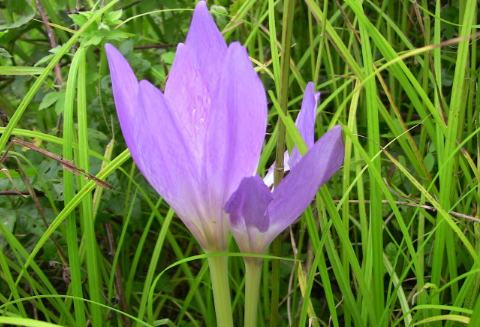
2. Then plant the bulb in a water container, with just enough water to cover the bulb. Generally, the water needs to be changed every one or two days, and the ideal growing temperature for Colchicum autumnale is 10-18°C. At this time, maintain good ventilation and sufficient light. When growing indoors, be careful that Colchicum autumnale in the growing period is not exposed to light at night; it usually blooms in 40-60 days.
Colchicum autumnale L. Colchicum autumnale guide: how to grow Colchicum autumnale / how to propagate Colchicum autumnale
Colchicum autumnale profileColchicum autumnale L.
How to grow Colchicum autumnale and precautions; introduction to Colchicum autumnale
Colchicum autumnale (scientific name: Colchicum autumnale) belongs to the genus Colchicum in the family Colchicaceae. The alkaloid colchicine is named because it was first extracted from this plant.
Colchicum autumnale is a perennial herbaceous bulbous flower. It blooms from August to October. The flower buds are spindle-shaped and open like funnels, light pink (or purplish red), dignified and elegant, and much loved. The bulb contains colchicine and can be used medicinally, especially for polyploid breeding. There are about 60 species in the same genus, most of which bloom in autumn without growing leaves, with pink or dark red flowers that emerge directly from the underground stem, 1-4 flowers per plant, and it has the reputation of being an "underground flower."
Morphological characteristics of Colchicum autumnale
Colchicum autumnale is a perennial herbaceous bulbous flower. The corm is ovate, with a dark brown outer skin. It has an ovate bulb underground. The stem is very short, mostly buried underground. The leaves are lanceolate, about 30 cm long. In autumn, it first produces light red flowers, very beautiful, and in the second spring it grows linear dark green leaves. It blooms from August to October. Each scape bears 1-4 flowers; the buds are spindle-shaped, funnel-shaped when open, light pink (or purplish red), about 7-8 cm in diameter. The stamens are shorter than the pistils, and the anthers are yellow. The capsule has many seeds, irregularly spherical, brown. Water-cultured Colchicum autumnale already exists.
After the leaves of Colchicum autumnale wither for a period of time, the flower stalk grows from the ground.
Distribution area of Colchicum autumnale
It is native to Europe and the Mediterranean coast. Since the 1970s, China has introduced seeds and corms from abroad and conducted trial plantings in Beijing, Lushan, Kunming and other places, achieving good results. In gardens, it is often used for rock gardens or flower beds. Due to the development of bioengineering science, the demand for colchicine has been increasing, and planting areas are being expanded everywhere.
Garden uses of Colchicum autumnale
Colchicum autumnale is suitable for alpine gardens and rock gardens, and can also be planted beside shrubs or in borders and lawns in clumps; the flowers grow close to the ground, giving it a distinctive character. The bulb can be used to extract colchicine for medicinal purposes.
Medicinal or dietary therapeutic value of Colchicum autumnale
The medical information and health dietary information on Huahua Network are for reference only and cannot be used as a basis for diagnosis or medical treatment. Any health issues should be consulted with professional medical personnel, and treatment of any disease should follow medical advice.
Ultimate flower-protecting task: To love yourself, start from reality and strictly follow medical advice. For illness, do not be careless, do not delay, do not give up hope, face it bravely, warm the silent world with love, and care for the flower field in your heart with your heart.
The medical content on Huahua Network is for reference only and cannot be regarded as professional advice. Any health issues should be consulted with professional medical personnel.
Medicinal information (1) Characteristic features
In the flowers and corms of Colchicum autumnale there are many highly toxic alkaloids, mainly lycorine, galanthamine and colchicine (also called colchicine), etc. Oral intake of 6 mg of colchicine can cause death. Clinically, colchicine is mainly used for the treatment of breast cancer, lung cancer, stomach cancer, skin cancer and chronic myelogenous leukemia, and can also be used to relieve acute attacks of gout. Colchicine has relatively large toxic side effects. Common symptoms after acute poisoning are severe abdominal pain, diarrhea, nausea and vomiting, and in severe cases it can cause respiratory center paralysis and death. Chronic toxic reactions mainly manifest as direct inhibition of bone marrow hematopoiesis, easily causing agranulocytosis, aplastic anemia, etc. In Chinese folk medicine, the flowers and corms of Colchicum autumnale are often used to treat sciatica and arthritis, but because the dosage is difficult to control, cases of poisoning from taking this medicine are common, so publicity and education should be strengthened to prevent accidental ingestion and abuse. Because colchicine is rapidly metabolized by hydrolysis in the human body and is also rapidly excreted, as long as emergency measures are appropriate, acute poisoning symptoms can be quickly relieved.
Toxicological research
Colchicine is a commonly used anti-inflammatory drug for treating gout and psoriasis. Animal experiments show that the drug can inhibit the process of liver fibrosis, but the results of human trials are not significant, and no study has discussed colchicine in preventing HCC and affecting disease progression. Researchers in Mexico completed a 3-year study. After analyzing the medical history data of 186 patients with liver fibrosis caused by hepatitis virus infection, they found that among patients treated with colchicine, only 9% progressed to HCC after 3 years of follow-up, compared with 29% among patients not treated with colchicine. In addition, patients in the former group developed HCC significantly later than the latter (colchicine can delay the progression from cirrhosis to HCC by an average of 72 months), and the average survival time of the former was also longer than that of the latter. The researchers pointed out that the preventive effect of colchicine on HCC is independent of age, platelet count, α-FP and transaminase levels.
Colchicine can inhibit mitosis, destroy the spindle, and cause chromosomes to stall in metaphase. This abnormal division caused by colchicine is called colchicine mitosis (C-mitosis). In such mitosis, although the chromosomes split longitudinally, the cell does not divide and cannot form two daughter cells, thus doubling the chromosomes. Since 1937, when American scholar A.F. Blakeslee and others successfully used colchicine to double the chromosome number of plants such as Datura, colchicine has been widely used in cytology, genetics research and plant breeding.
Symptoms:Burning throat, diarrhea, cardiovascular collapse, delirium, sensory disturbance, convulsions, muscle weakness, difficulty breathing, even similar to arsenic poisoning; 50% of poisoned people die. Onset time: 2-6 hours; death occurs within 2-3 days; poisoned people remain conscious until death.
Detoxification:Activated charcoal treatment, gastric lavage.
Note:Can be used medicinally; similar to garlic; soluble in milk, meaning milk cannot dilute it; goats can be immune.
Medicinal toxicity
Collectors often mistake Colchicum autumnale for the edible wild garlic, because the two are very similar in appearance before flowering, and after flowering the flowers of Colchicum autumnale also closely resemble saffron. However, the whole plant of Colchicum autumnale contains the highly toxic alkaloid colchicine, with the highest content in the corm, so it is potentially fatal. Colchicum autumnale can be used to treat gout, but its therapeutic index is very low. The poisoning symptoms of colchicine are somewhat similar to those of arsenic poisoning, and there is no antidote. Colchicine is often used to induce polyploidy in plant cells.
Applications
As early as the 19th century, colchicine began to be used to treat sciatica and arthritis, and later it was found to have certain effects on breast cancer, cervical cancer and acute lymphocytic leukemia. In addition, colchicine (extracted from the corms of Colchicum autumnale) can induce chromosome doubling in haploid plants (the doubling concentration is about 0.1-1%) to form polyploids, which plays an extremely important role in breeding new varieties of flowers and crops and increasing crop yields.
In 2011, British scientists used Colchicum autumnale to develop a new drug that can eliminate solid tumors.
Cultivation techniques of Colchicum autumnale; cultivation management
In winter it likes humid and rainy conditions and is resistant to severe cold; in summer it prefers a dry and hot environment, as well as well-drained, fertile and loose sandy loam. Therefore, the planting site should be chosen as high, dry flat land. Before cultivation, strict disinfection should be carried out to prevent nematode disease, damping-off and rot. If underground pests such as white grubs and cutworms are found, 50% phoxim can be applied in furrows, or manual capture in the morning and evening or poisoned bait can be used. In rainy autumn seasons, the anthers are easily attacked by mold and the bulbs are prone to rot, so timely measures and prevention should be taken. In winter, dug-out bulbs should be stored indoors to overwinter and planted again the following year. When planting, the spacing between plants and rows is generally 15×15 cm, so that they can obtain sufficient nutrients and light and grow well. They can also be propagated by seeds and small bulbils; the soil cover should not be too deep, 1.5-2 cm thick is sufficient. Mother bulbs of Colchicum autumnale are relatively scarce, and imported bulbs are expensive. To accelerate bulb propagation, spread mature soil on the rows to increase the thickness of the soil layer, so as to increase the number of small bulbs. With continuous planting for 2-3 years, the number of bulbs doubles.
Key cultivation points
Narcissus is one of China's top ten famous flowers. After carving and water cultivation, narcissus bulbs can be shaped into narcissus bonsai in countless forms, and can be called a wonderful flower in the garden of a hundred flowers.
Selection and treatment of bulbs
When selecting narcissus bulbs, pay attention to the following points:
① The bulb body should be large and slightly flat, with 1-2 pairs of small bulbs symmetrically on both sides of the main bulb, forming a fan shape, and the emerging leaf buds should be tender green, 1-2 cm long;
② The brown membranous outer skin of the bulb should be intact, glossy, spotless, and free of mildew or rot;
③ Press the narcissus bulb with your hand; it is best if the bulb feels firm, elastic, and slightly raised;
④ A long oval bulb with a thick and broad stem plate contains more flower buds.
Water culture management and flowering period control
Before placing narcissus in a pot for water culture, it should first be cleaned and cut. First peel off the brown skin of the narcissus bulb until the ivory-colored scales are exposed. For large bulbs, use a knife to make a cross-shaped vertical cut on the upper part, with the depth not damaging the flower buds (about 1/3 of the bulb height). After cutting, soak in water for a whole day and night (if bleaching powder is added to the water, it should be left to stand for 1 day before use). When soaking, be sure to immerse the bulb in water with the cut side facing down. After soaking for 1 day, remove the mucus, mud, residual roots and dead skin thoroughly. Then rinse with clean water until the mucus flowing out of the narcissus bulb is washed away. To ensure rapid root growth and prevent the wound from turning yellow, cover the bulb wound and bulb base with gauze, and let the gauze hang into the water to facilitate water absorption for the newly sprouted roots.
Put the bulb into a pot and add water to cover more than half of the bulb; change the water once every 1-2 days. Keep the indoor growing temperature at 10-18°C. Good ventilation and sufficient sunlight are needed. During the growing period, narcissus should avoid light exposure at night. From being placed in the pot for water culture to flowering, narcissus takes 40-60 days.
The flowering period of narcissus can be controlled by using the temperature of the growing environment: when the temperature is high, the flowering period is early; when the temperature is low, the flowering period is late. Determine the water culture time according to the predicted flowering date and indoor temperature. ① If you plan to have it bloom on New Year's Day, start water culture about 30 days in advance, that is, start water culture in early December. After the bulb is potted, place it in the sun during the day, pour out all the water in the pot at night, and put it in a warm room (12-15°C). ② If you want it to bloom during the Spring Festival, when the indoor temperature is 12°C, start water culture 40-50 days in advance; when the room temperature is about 15°C, start water culture 30-35 days in advance.
If flowers have already opened 1 week before the scheduled flowering date, move the pot to an environment of 10-12°C, or change the water with cold water, so that the flowers open more slowly. If the bud membrane has not yet ruptured 1 week before the expected flowering date, move it to an environment of 18-20°C and change to warmer water to promote faster growth and ensure flowering on schedule. During the flowering period of narcissus, the temperature should be controlled at 10-12°C to slow the flowering speed and extend the viewing time.
Potting and post-potting management
During water culture, place the treated bulb upright among the pebbles in the pot, then pour in clean water. The water depth should preferably submerge the base of the bulb (1/3 of the bulb is in water). Place it in full sunlight during the day, and pour out all the water in the pot in the evening. To promote larger flowers, a longer flowering period and robust leaves, after new leaves grow, foliar fertilizer can be applied frequently. Choose 300 times compound potassium dihydrogen phosphate, Hexin liquid fertilizer 500 times, double-effect microelement fertilizer 600 times, or amino acid microelement fertilizer 300 times solution.
Management after potting is very important. Because the bulb has been carved, the leaves, flower stalks and bulb are all wounded, and since new roots have not yet grown, it is prone to dehydration and wilting. Therefore, it should first be placed in a cool place for 2-3 days, and clean water should be sprayed on the bulb frequently. When the wound gradually heals and new roots grow, it should be moved promptly to a place with sufficient sunlight. In the early stage of water culture, the water must be changed every day, and the water level should be below the wound.
Placement methods of the bulb
The bulb can be placed face-up, upright, inverted or face-down. Face-up means the carved wounded side faces up and the roots face sideways; upright means normal placement, with leaves and flowers facing up and roots facing down; inverted means placing the carved narcissus bulb upside down for water culture, that is, leaves facing down and roots facing up. Be sure to cover the bulb base and roots with absorbent cotton, and let the cotton hang down into the pot to absorb water and nourish the roots; face-down means reverse placement, with the wounded side facing down and the uncarved side of the bulb facing up.
Cultural background of Colchicum autumnale; threat of extinction
On January 18, 2008, the International Association of Botanic Gardens Conservation (BGCI), with 120 countries participating, said: "400 medicinal plants are threatened with extinction due to overharvesting and deforestation, posing a threat to future discoveries of cures for diseases." These plants include Taxus (the paclitaxel contained in its bark is used to treat cancer), Hoodia (native to Namibia, a source of weight-loss drugs), half of all Magnolia species (used in traditional Chinese medicine for thousands of years to treat cancer, mental decline and heart disease) and Colchicum autumnale (used to treat gout). The association also found that 5 billion people worldwide benefit from the health care effects of traditional medicine.
Flower language of Colchicum autumnale
August 6 birthday flower: Colchicum autumnale (Meadow Saffron)
Flower language: Easy
Colchicum autumnale has several rather inelegant names, such as: maiden without underwear, naked woman... etc. This is mainly because its appearance easily gives rise to associations. It waits until all the leaves have withered and fallen before it blooms. Therefore its flower language is - simplicity. People born under the blessing of this flower have a simple, unpretentious personality, and their body and mind are like a clean white sheet of paper. In this society like a big dye vat, they instead have a fresh and healthy temperament. Of course, being fortunate enough to become the intimate partner of such a person is truly a blessing cultivated in a previous life!
In ancient Christianity, there was a custom of linking saints with specific flowers, because when the church commemorated saints, it usually decorated the altar with blooming flowers. After the Middle Ages, in Catholic monasteries, various flowers were planted almost like in a gardening center. Over time, the church combined the 366 days' saints with different flowers, forming the so-called flower calendar. Because most monasteries at that time were located in Southern Europe, and Southern Europe has a Mediterranean climate, it was very suitable for planting flowers and plants. All kinds of flowers bloomed competitively, and each flower had rich meanings.
Colchicum autumnale pictures
Narcissus water culture methods and precautions; how to add water in narcissus water culture
Narcissus likes warmth, humidity and good drainage. It has a cultivation history of more than a thousand years in China and is a traditional ornamental flower, and is the tenth of China's top ten famous flowers. Carved narcissus is especially beautiful, and placing it flat or upright in a pot makes it look so elegant. How to add water in narcissus water culture? Today, the wed114 wedding website editor brings you the water culture methods and precautions for narcissus. Let's look at the details together.
Water culture methods for narcissus
During the day with sufficient sunlight, it should be placed in a sunny spot, and at night it should be put back indoors. (One point is very important: all the water in the pot should be poured out, and leaf growth is controlled in this way.) Add clean water again the next morning, and be sure not to move the bulb.
Just after potting, narcissus should have its water changed once a day, and later once every 2-3 days. Once it forms flower buds, it can be watered once a week. Ensure that narcissus blooms in about 45 days, so that the flowering period can last more than a month.
Precautions for narcissus water culture
Prevent “dumb flowers”
The narcissus bulb is of poor quality, weak, and small.
Improper care. Caused by poor ventilation, insufficient light, inappropriate water changes, etc.
Improper water culture season. Water culture after the temperature rises.
Control the flowering period
Water culture in autumn and winter, flowering in spring, about 40-45 days.
Prevent excessive growth
During water culture, remove the brown membrane, make vertical and horizontal cuts on the narcissus bulb, and place it in a shallow pot for cultivation. (Remember not to damage the flower buds.) Sufficient light avoids leggy leaves.