What are the propagation methods for Gloriosa lily? You'll know after reading this
Division and stem cutting
Before the Gloriosa lily sprouts in spring, remove its offshoot rhizomes, each piece must have a bud eye, transplant them into new flower pots, and cover with about 3 cm of soil.
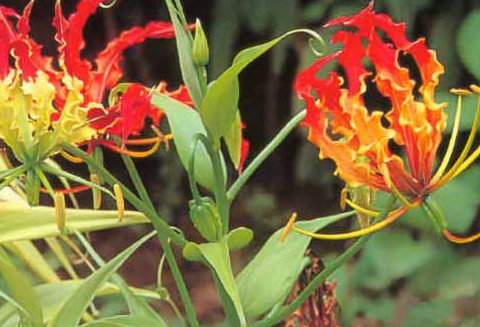
Sowing
Gloriosa lily seeds can be sown immediately after being collected in autumn, or sown in the following spring, scatter the seeds on the culture soil, keep moist and ventilated, and after they sprout, transplant the dense seedlings separately; they generally take two to three years to bloom.
That's all for the Gloriosa lily cultivation methods, hope it helps everyone grow beautiful Gloriosa lilies, everyone hurry up and try planting them.
Gloriosa lily cultivation methods
1. Soil
Gloriosa lily needs to be grown in sandy loam rich in humus, loose and fertile, with good drainage.
2. Water
Gloriosa lily likes a moist environment, and its growing period needs sufficient water, but the soil should not be too wet, so as to avoid root rot; in winter it enters a dormant state, so watering should be reduced.
3. Temperature
Gloriosa lily is extremely intolerant of cold, and its suitable growing temperature is 22-24°C; temperatures below 22°C will cause poor flowering, and if below 15°C it will freeze and damage the plant; temperatures above 32°C will stop the plant's growth.
4. Light
Gloriosa lily fears strong light, so in summer high temperatures avoid direct strong light, and appropriate shading can be carried out.
5. Fertilizing
When cultivating Gloriosa lily, some manure or cake fertilizer can be applied as base fertilizer; for potted plants, decomposed cake fertilizer mixed with calcium, magnesium, and phosphorus fertilizers can be used as base fertilizer. During the growing period, apply a nitrogen, phosphorus, and potassium compound fertilizer once a month.
Gloriosa lily cultivation methods
Soil for Gloriosa lily
Gloriosa lily requires growing in sandy loam rich in humus, loose and fertile, with good drainage and strong water retention.
Watering Gloriosa lily
Gloriosa lily likes a warm and moist environment. During its growing period, sufficient water must be maintained, and when it enters the winter dormant period, watering should be reduced. The soil should not be too wet, as it easily causes root rot; if root rot occurs, the tubers should be dug up during dormancy and stored in sand or wood shavings.
Temperature for Gloriosa lily
Gloriosa lily has extremely poor cold tolerance, and the most suitable temperature for growth is 22-24°C, but when the temperature is below 22°C, it will cause poor flowering and failure to bear fruit. When the temperature is below 15°C, it will cause frost damage. When the temperature is above 32°C, growth will stagnate. In winter, the indoor temperature should preferably not be lower than 18°C.
Light for Gloriosa lily
Gloriosa lily likes weak light and cannot be exposed to direct sunlight; in summer high-temperature weather, shading should be carried out to avoid sun exposure. In an indoor environment with good light, it can be enjoyed for a long time.
Fertilizing Gloriosa lily
During the cultivation of Gloriosa lily, some manure or cake fertilizer can be applied as base fertilizer; for potted Gloriosa lily, decomposed cake fertilizer mixed with calcium, magnesium, and phosphorus fertilizers should be used as base fertilizer. During the growing period, apply a nitrogen, phosphorus, and potassium compound fertilizer once a month. In spring, nitrogen fertilizer is suitable, and in summer, increase potassium fertilizer. This promotes tuber enlargement and good flowering.
Pest and disease prevention for Gloriosa lily
Gloriosa lily is prone to leaf spot and damping-off disease in hot and rainy seasons, and zineb can be used for spraying. In the rainy season, plant ash can be applied or garlic extract can be sprayed for prevention and control; each week, on a day when it is not raining, apply a basin of thiophanate-methyl solution and chlorothalonil. When nematodes are severe, trichlorfon stock solution can be used for watering.