Cultivation Methods and Care Tips for Dame's Rocket
Light
Dame's Rocket loves sunlight very much. During cultivation, it can be given all-day light, or a slightly shady environment is also acceptable, but note that in summer, because the temperature is too high and the sunlight too strong, the plant must not be placed in direct sunlight; give it appropriate shade to prevent the leaves from being scorched.
Water and Fertilizer
Since Dame's Rocket is a dwarf plant with hairy branches and leaves, when watering and fertilizing, be careful not to let water or fertilizer solution splash onto the leaves; if any does splash on, wipe it off promptly to prevent the plant from being scorched or rotting.
Soil
Dame's Rocket has fairly strict soil requirements; it needs loose, breathable soil with good drainage. This soil can be mixed yourself, or you can buy a special nutrient soil for Dame's Rocket at a flower shop.
The above is an introduction to the question of how to grow Dame's Rocket. Below, let's look at what else needs attention when growing Dame's Rocket.
Cultivation Methods and Precautions for Dame's Rocket
Cultivation Methods for Dame's Rocket
Temperature and Light
Dame's Rocket likes a growing environment with plenty of sunlight and a cool climate; maintaining a relatively low temperature can produce a good plant shape. It generally grows better under conditions ranging from full light to slightly shady, but in the hot summer, it needs appropriate shading and good ventilation.
Water and Fertilizer
Since Dame's Rocket is a dwarf plant with hairy branches and leaves, when watering and fertilizing, take care to avoid soiling the leaf surface, and promptly wipe away any residual water or fertilizer on the leaves; otherwise, the branches and leaves can easily rot.
Soil
A medium with good drainage that is loose and breathable is suitable.
Precautions for Growing Dame's Rocket
When the environmental conditions of management are not so ideal, it is best to spray chlormequat 1 or 2 times, which can prevent Dame's Rocket from growing leggy and help control the plant shape.
Under normal circumstances, Dame's Rocket has no serious pest or disease problems. Note that during the cultivation of Dame's Rocket, reasonable and good spacing between plants and rows must be maintained to avoid crowding affecting the plant shape and causing pests and diseases.
Faded flowers and stems should be removed promptly to help the second season of blooming be more luxuriant. Dame's Rocket blooms luxuriantly in the second year in spring, with a good ornamental effect; at this time it is suitable to pair with other flowering plants that bloom in the same period, for example, oxeye daisy is a good choice.
Dame's Rocket Hesperis matronalis Dame's Rocket Illustrated Guide: How to Grow Dame's Rocket / How to Propagate Dame's Rocket
Dame's Rocket ProfileDame's Rocket Hesperis matronalis
Cultivation Methods and Precautions for Dame's Rocket Introduction to Dame's Rocket
The correct name of Dame's Rocket is European Dame's Rocket (Hesperis matronalis); it originated in Eurasia, but it has been introduced to eastern North America for many years and has already grown in many places in the east. In China, the cultivable area is broad: most areas of the Yangtze River basin and the middle and upper reaches of the Yellow River (most warm-winter areas in both the south and the north can cultivate it).
Dame's Rocket flowers have a fresh lilac-like fragrance, especially in the evening, when the scent is rich.
Morphological Characteristics of Dame's Rocket
Dame's Rocket is a perennial or biennial herbaceous plant with a relatively short growing period.
Vertical, multi-branched, about 60-90 cm tall, usually not exceeding 120 cm. Crown width 30-60 cm.
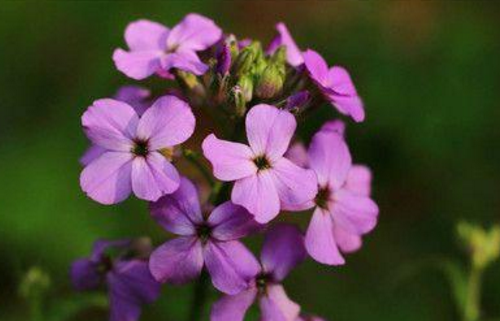
Leaf margins serrated, elliptical to lanceolate, dark green. Flowers are white, light purple, or purple, flower diameter 1.2-2.4 cm, 4 petals, in racemes, very similar to Orychophragmus violaceus. Also, because the flowers are similar to Phlox and are clustered on a long stalk, it is also often called "wild phlox," but Dame's Rocket has one fewer petal than Phlox.
The flowers have a fresh lilac-like fragrance, especially in the evening, when the scent is rich.
The number of flowers clustered per single plant is greater than that of Orychophragmus violaceus, and the flower shape and flower color are consistent. The seeds are smaller than those of Orychophragmus violaceus; each kilogram contains about 540,000 seeds, whereas Orychophragmus violaceus generally has fewer than 400,000.
Ecological Habits of Dame's Rocket
Dame's Rocket has strong adaptability, growing under conditions from full light to slightly shady, in moderately moist, well-drained soil.
It is best planted in partial shade under hot summer climates. Through abundant self-seeding and reproduction, it can remain in the planting site for many years.
It blooms luxuriantly in the second year in spring with a very good effect, and pairing it with other flowering plants that bloom in the same period, such as oxeye daisy, is especially good. Promptly removing faded flowers and stems can make the second season of blooming luxuriant.
Cultivation Techniques for Dame's Rocket Cultivation Points
Dame's Rocket can grow in places with sufficient light or slight shade; it is often cultivated as a biennial and has low maintenance requirements. The flowering period is early spring, slightly later than Orychophragmus violaceus, but the full bloom period is longer than that of Orychophragmus violaceus. In the middle and lower reaches of the Yangtze River, the flowering period runs from mid-to-late March to June.
Overview
Dame's Rocket needs a cool climate in summer. In the middle and lower reaches of the Yangtze River and areas to the south, because summers are hot, autumn sowing is often used, and seedlings overwinter above 0 degrees, so that they can bloom in spring.
Transplanting/Potting
Dame's Rocket seedlings do not tolerate transplanting, so it is better to do it early rather than late, and try to keep the seedling root system intact. It is often transplanted and potted within 4 weeks after emergence. The cultivar 'Palona' is suitable for small pots of about 10 cm, as well as a potting medium with good drainage that is loose and breathable.
Temperature Regulation
The temperature when seedlings emerge is relatively high, and can be 22 degrees; in the initial period after transplanting and potting, it is best to maintain 18°C. Once the root system elongates, it can be lowered to grow at about 15°C, and in this way it can bloom in about 9-10 weeks. Maintaining a relatively low temperature can produce a good plant shape. Phlox can tolerate a low temperature of about 0°C, but its growth period is relatively longer.
Care
Dame's Rocket is suitable for growing under environmental conditions of sufficient sunlight and a cool climate, and in this way there is no need to use chlormequat to control the plant shape. When environmental conditions are not ideal, spraying chlormequat 1-2 times can prevent leggy growth. During cultivation, good spacing between plants and rows must be maintained to prevent crowding from affecting the plant shape and causing pests and diseases. The plant is dwarf with hairy branches and leaves, so when watering and fertilizing, avoid soiling the leaf surface to prevent the branches and leaves from rotting. The entire growth and development period is 10-14 weeks, related to pot size, light conditions, and seedling raising time.
Propagation Methods of Dame's Rocket
Because Dame's Rocket has a short growing period, it can be sown multiple times in spring or autumn to extend the ornamental period.
The base becomes woody and remains for many years, and new shoots can sprout from the continuously reproducing tuberous roots, and it continues to bloom in the second season and later seasons. But sowing is the most ideal method of propagation. In the Jiangsu-Zhejiang-Shanghai region, sowing in August-September is most ideal. Although it can also self-seed and reproduce, the overall effect may not be very good. It can only be used in rough, natural landscape areas.
Disease and Pest Control of Dame's Rocket
Dame's Rocket has no serious pest or disease problems.
Distribution Range of Dame's Rocket
Dame's Rocket originated in Eurasia, but it has been introduced to eastern North America for many years and has already grown in many places in the east.
In China, the cultivable area is broad: most areas of the Yangtze River basin and the middle and upper reaches of the Yellow River (most warm-winter areas in both the south and the north can cultivate it).
Landscape Uses of Dame's Rocket
The bright and fresh blue of Dame's Rocket is extremely rare among spring flower types. It is an excellent plant for natural sites, road slopes, and courtyards. It can also be used in flower borders, but in the summer after flowering, like Orychophragmus violaceus, the leaves will drop, so annual or slow-growing perennial plants are needed to fill the gaps.
Under normal circumstances, it is used as a single-species sowing, but it can also be mixed-sown. In sunny areas, mix-sow with Mirabilis jalapa, Echinacea, black-eyed Susan, Salvia coccinea, and Salvia farinacea; in semi-shady areas, interplant with hosta and Ophiopogon species. In addition, Dame's Rocket is also a very good pasture plant.
Cultural Background of Dame's Rocket Origin of the Name
Also, because the flowers of Dame's Rocket are similar to Phlox and are clustered on a long stalk, it is also often called "wild phlox," but Dame's Rocket has one fewer petal than Phlox.
Flower Language of Dame's Rocket
Dame's Rocket flower language: competition.
Dame's Rocket Pictures