Propagation Methods and Care Management Key Points for Pyracantha
For pyracantha propagation, we generally use seed propagation or cutting propagation, but cutting propagation is simple to operate and has a high success rate.
Cutting propagation uses healthy one-year-old branches, cut into 15 cm long cuttings, with the lower end preferably cut into a horse-ear shape. Cutting can be carried out from November to March, and the propagation success rate of cuttings is very high, usually reaching over 90%.
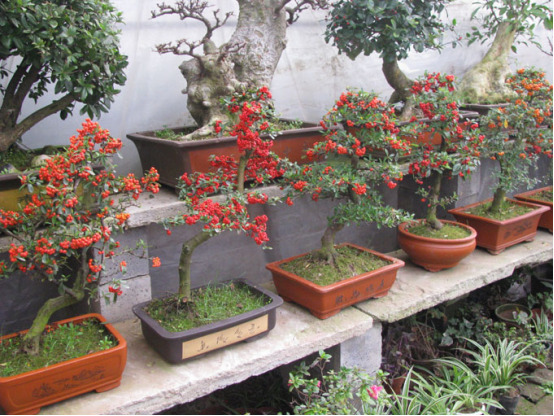
Propagation Techniques and Management Measures for Pyracantha
Pyracantha can be propagated in three ways: seeding, layering and cutting.1. Seed propagation: Every autumn, pick mature fruits with dark red skin and soft flesh from superior mother plants, crush them to remove the flesh, then wash the seeds thoroughly and dry them in the sun for later use. In spring, broadcast them on a prepared sand bed or soil bed, and cover with about 1-3 cm of sand or soil, keeping the soil moist. The seeds will germinate in about 30 days. When the seedlings grow to 15 cm tall, move them into nursery bags or leave them in the seedbed. When the seedlings grow to about 30 cm tall, take them out for planting. If the seeds are pre-treated with 200×10-6 gibberellin before sowing, or soaked in warm water at 25°C for about 10-20 hours before sowing, it will help the seeds germinate. In addition to seedbed sowing, furrow sowing and hole sowing can also be used.
2. Layering propagation: Pyracantha layering propagation can use mound layering or air layering.
① Mound layering propagation: First pile up a fertile soil mound of a certain height, then select strong branches near the ground at the base and press them down, burying the appropriate part in the soil mound. After about 60-70 days, once new roots have grown, they can be cut away from the mother plant and then temporarily planted in a seedbed. After 8-10 months, take them out for planting, or leave the layered shoots that have already grown new roots in the mound for 8 months after separating them from the mother plant, then take them out for direct planting.
② Air layering propagation: Each spring, select strong branches and girdle an appropriate part, with the girdled opening about 1.5 cm wide. Wrap the girdled opening with a rooting medium using plastic film (apply 0.5%-1% naphthaleneacetic acid NAA to the girdled opening to promote rooting). After about 60-70 days, when new roots have grown and emerged, cut away from the mother plant, temporarily plant in a seedbed for 8-10 months, then take out for planting. During temporary planting, besides keeping the seedbed moist, also pay attention to shading and maintain a certain temperature to increase the survival rate.
3. Cutting propagation: Each spring, select 1-2 year old strong branches 15 cm long, insert them into a prepared soil bed or sand bed, either slanting or straight, with a depth of about 8-10 cm of the cutting length, shade them and keep the soil moist. By March-April of the second year, they can be taken out for planting. Among the above propagation methods, cutting and layering (air layering and mound layering) have better results, with plants growing fast and flowering and fruiting early. Among them, plants grown from layering can flower and fruit 2-3 years after planting.
Management measures:
1. Suitable habitat: Pyracantha is a subtropical plant and prefers warm, humid, well-ventilated, sunny environments with long sunlight hours, with an optimal growth temperature of 20-30°C. In addition, pyracantha has strong cold resistance, and can still grow normally at -16°C and overwinter safely. If planted in places where the winter temperature is above 10°C, dormancy will be unfavorable, which will affect flowering and fruiting the following year. Although pyracantha is tolerant of poor soil and not strict about soil requirements, in order to ensure good plant growth and development, it is still best to choose deep soil with loose texture, rich in organic matter, relatively fertile, well-drained, slightly acidic soil with a pH of 5.5-7.3 for planting.
2. Watering: Pyracantha is drought-tolerant, but if the spring soil is dry, it can be fertilized and watered once before flowering, and the watering should be sufficient. During the flowering period, keep the soil on the dry side, which helps fruit set, so do not water too much. If the flowering period coincides with the rainy season, also pay attention to digging ditches and draining water to avoid flower drop caused by excessive moisture. After the fruits mature and are harvested, before entering winter dormancy, water thoroughly for overwintering.
3. Fertilizing: Pyracantha should be fertilized according to different growth and development stages. When transplanting and planting, apply sufficient base fertilizer. The base fertilizer should mainly be organic fertilizers such as soybean cake, oil cake, chicken manure and bone meal. Three months after planting and survival, apply inorganic compound fertilizer; afterwards, in order to promote the growth and development of branches and trunks and help the plant take shape as early as possible, fertilization should mainly be nitrogen fertilizer; after the plant has taken shape, each year before flowering, appropriately apply more phosphorus and potassium fertilizers to promote vigorous plant growth and benefit flowering and fruiting. During the flowering period, in order to promote fruit set and improve fruit quality and yield, a 0.2% potassium dihydrogen phosphate aqueous solution may be applied as appropriate. Stopping fertilization in winter will help pyracantha pass through the dormant period.
4. Shaping and pruning: Under natural growth conditions, pyracantha branches are messy. Every year, prune excessive growth branches, thin and weak branches, and overly dense branches to facilitate ventilation and light penetration and promote new shoot growth. During the flowering period, in order to concentrate nutrients, when there are too many flowering branches or the inflorescences on the flowering branches and the florets in each inflorescence are too dense, attention should be paid to thinning them out. After fruiting, appropriately thin out overly dense fruits on fruit branches as well. In this way, it can not only ensure large fruit and good quality, but also avoid an "on-year and off-year" phenomenon caused by excessive nutrient consumption from too much fruiting in the current year. Fruit branches should be pruned every year after fruiting, with special attention to shortening long branches to leave only 3-4 nodes, prompting them to form fruiting mother branches and improving the yield and quality of fruit the following year. In addition, after the fruits mature, they should be picked promptly to avoid continuing to consume plant nutrients, which is unfavorable for flowering and fruiting the following year and affects yield.
Propagation and Cultivation Methods of Pyracantha
I. Propagation
The main propagation methods of pyracantha are seed propagation and cutting propagation.
1. Seed propagation. Pyracantha fruits mature in October and can persist on the tree until February of the following year. It is best to collect seeds from October to December. After collection, remove the flesh promptly, rinse the seeds clean, and dry them in the sun for later use. Autumn sowing is preferable for pyracantha. Before sowing, the seeds can be treated with a 2 in 10,000 concentration of gibberellin. On a prepared seedbed, open long furrows 5 cm deep at a row spacing of 20-30 cm, broadcast the seeds in the furrows, and cover with 3 cm of soil.
2. Cutting propagation. Take 1-2 year old branches and cut them into 12-15 cm long cuttings, with the lower end in a horse-ear shape. On a prepared cutting bed, open small furrows 10 cm deep, place the cuttings slanting at a 30-degree angle along the edge of the furrow, with 10 cm spacing between cuttings, leaving 2-5 cm of the upper part exposed above the bed surface, then cover with soil and firm it. Cutting can be carried out from November to March of the following year, and the survival rate is generally above 90%.
II. Afforestation
For fruit-oriented plantations, choose flat terrain with sandy loam rich in organic matter, dig pits 0.6-0.8 m deep at a spacing of 2 m × 2 m, fill in base fertilizer and topsoil, plant in the pits, firm the soil, and water thoroughly to settle the roots.
III. Maintenance and Management
1. Fertilizing: Apply base fertilizer once each year from November to December. Dig 4-6 radial fertilization furrows around the tree at 80 cm from the root crown, 30 cm deep, and apply 3-5 kg of organic fertilizer per pit. Apply urea once each before flowering and during fruit set, 0.25 kg per plant.
2. Irrigation: Water once each before and after flowering and in early summer, which is beneficial to the growth and development of pyracantha. In areas with dry and cold winter climates, irrigate once with winter sealing water before entering the dormant period.
3. Shaping: In the natural state, the crown of pyracantha is messy and irregular, and the inner branches are often slender due to insufficient light, with poor fruiting capacity. To promote growth and fruiting, shaping and pruning should be carried out. Pyracantha has strong branching ability, and side branches mostly grow horizontally on the trunk. Pyracantha can be trained into a trunk-tiered shape, with the first tier 40 cm above the ground, composed of 3-4 main branches, and the third tier 30 cm from the second tier, composed of 2 main branches, with small branches growing between the tiers.
4. Pruning: Pyracantha branches easily, but continuous fruiting is poor, with only about 10% under natural conditions. Therefore, fruiting branches should be pruned annually, and perennial fruiting branches should be retracted to promote new shoot growth. Pyracantha has a strong ability to form flowers. Overly numerous flowering branches should be shortened to promote the growth of vegetative branches, and before flowering, more than half of the flower stalks as well as overly dense branches and thin weak branches should be removed manually or chemically, so that light can directly reach the inner crown. The annual pruning amount should be based on the number of flowering branches, with a leaf-to-flower-stalk ratio of 70:1 being optimal.