How to Propagate Alstroemeria? A Detailed Guide to Common Propagation Methods
Seed Propagation
Alstroemeria is usually sown in winter. Sand mixed with peat soil can be used as the sowing medium. At low temperatures the seeds gradually awaken, then they are moved to a spot at 15-20°C, and after two weeks the seeds will germinate. Continue to keep the environment warm, and when the seedlings grow to four or five cm they can be planted separately, generally in early spring.
Division Propagation
Division propagation of Alstroemeria is carried out in October, using the dormant buds that have not yet sprouted on its rhizome. Cut the plant's rhizome into sections, taking care to avoid damaging the roots, to stimulate the dormant buds to begin sprouting and absorb the water and nutrients stored in the rhizome until they grow into flowering stems.
How to Grow Alstroemeria
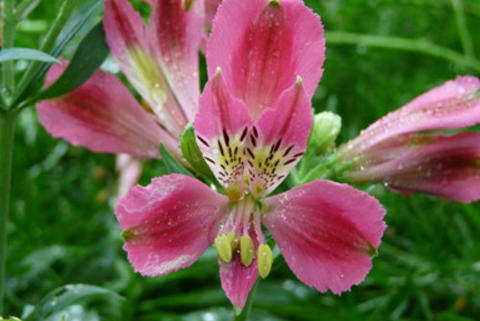
Alstroemeria is also known as Chilean lily, Peruvian lily, narcissus lily and so on. It is a perennial herbaceous plant of the genus Alstroemeria in the Amaryllidaceae family, native to Chile, Peru, Brazil and Argentina in South America and Mexico in Central America. Its flowers resemble azaleas and also narcissus, while its stems and leaves look like those of lilies, and it has extremely high ornamental value. Let us take a look together at how to grow Alstroemeria!
The Ecological Habits of Alstroemeria
Alstroemeria prefers dry conditions and is afraid of excessive rain and too high a water table. The soil should have good drainage and aeration, be loose and rich in humus, with a pH of 6 to 6.5 being suitable. The optimum growing temperature is 13°C to 21°C, among which 13°C to 15°C is best for rhizome enlargement, while growth suffers when the soil temperature exceeds 20°C. The optimum temperature for seed germination is 11°C. Before sowing, place the seeds under high-temperature conditions of 26 to 31°C for one month, then move them to the optimum temperature conditions for germination, which is more conducive to germination. It is sensitive to day length; long days promote flowering and increase the number of flowers, while short days inhibit flowering.
Propagation Methods for Alstroemeria
1. Sowing: Alstroemeria is best sown in autumn and winter. The sowing medium uses peat soil and sand at a ratio of 1:1, and after high-temperature sterilization it is placed in a sowing pot. Sow from mid-October to late November, and after one month of natural low temperatures of 0 to 5°C, the seeds gradually begin to sprout. Then move them to conditions of 15 to 20°C, and after about 2 weeks the seed germination rate can reach over 80%. After the seeds germinate, maintain the temperature at 10 to 20°C, and growth is rapid.
2. Division: Alstroemeria produces many dormant buds on its prostrate rhizome. When external conditions are suitable, the prostrate rhizome extends through the soil, and at the same time some of the dormant buds sprout until they grow into flowering stems. The division propagation time is October. Before dividing and planting the plant, the soil should be made loose and neither dry nor wet. When dividing, first cut off the upper part of the plant 30 cm from the ground, then dig up the plant, gently shake off the surrounding soil, and the rhizome can be clearly planted in the prepared seedbed.
3. Tissue culture: The terminal bud is commonly used as the explant. After routine disinfection and sterilization, it is inoculated onto MS medium supplemented with 6-benzylaminopurine 5 mg/L and naphthaleneacetic acid 1 mg/L. After 2 months of culture it forms adventitious buds, which are then transferred to 1/2 MS medium supplemented with naphthaleneacetic acid 1 ml, where the adventitious buds form tubers.
How to Grow Alstroemeria
1. Soil: For the planting site of Alstroemeria, choose fertile sandy loam with good permeability, with a soil layer more than 50 cm thick and good drainage. The most suitable soil for Alstroemeria cultivation is slightly acidic, so the pH should be adjusted to about 6.5 according to the soil's physical and chemical properties.
2. Water: During the vigorous growing season, Alstroemeria should have a sufficient water supply and relatively high air humidity, with relative humidity controlled at 80 to 85% being more suitable. In hot summers it is in a semi-dormant state. When temperatures are lower in winter, attention should be paid to controlling water.
3. Fertilizer: When planting Alstroemeria, in combination with improving the soil's physical and chemical properties and structure, a large amount of decomposed organic fertilizer such as barnyard manure should be applied, at 30 to 40 kg per sq m, or an appropriate amount of superphosphate should be added as a supplement. Throughout the entire growth and development cycle of the plant, base fertilizer alone cannot meet the needs of growth and development, so topdressing should be applied as needed at different growth stages.
4. Temperature: Giving Alstroemeria an appropriate low temperature (not lower than 5°C) within 1 to 2 months after planting is very beneficial for the rejuvenation of the root system and the recovery of the plant. During the growing season, maintain the temperature at 8 to 15°C, and in summer it is best to keep the soil temperature at around 20°C. The most suitable temperature for flower bud differentiation of the plant is 20 to 22°C. In summer, to prevent the soil temperature from being too high, water supply pipes, perlite, etc. can be buried underground to achieve the purpose of cooling.
5. Light: Alstroemeria is a strongly sun-loving plant, and there should be sufficient light during the growing season, with its optimum day length being 13 to 14 hours. In winter and early spring the natural day length is short, so supplemental lighting should be provided when cultivating in protected areas. To save energy, the supplemental lighting time should be chosen when the plant has already entered the vigorous growth stage. Supplement light for 4 to 5 hours each day, and stop supplemental lighting once the natural light reaches about 13 hours.
6. Pruning: Potted Alstroemeria commonly uses 12 to 15 cm pots. Pot them in mid-October, with a planting depth of 3 to 5 cm, and water thoroughly after planting; leaf buds grow out after 30 days. After winter begins, the new buds grow rapidly and the stems and leaves become densely packed, affecting the growth of flower buds at the base, so leaves need to be thinned, removing small and thin leaf buds and retaining thick and strong flower buds, to achieve the goal of a short plant with many flowers.
7. Pests and diseases: Alstroemeria often suffers from root rot, which can be sprayed with 65% zineb wettable powder at 600 times dilution. Among insect pests, aphids harm the flowering stems and can be killed by spraying with 40% dimethoate emulsifiable concentrate at 2000 times dilution. Alstroemeria is not sensitive to diseases; on the contrary, aphids, thrips, mites, slugs, caterpillars, white butterflies and nematodes are very harmful. Pythium rot is prone to occur when soil humidity is too high, while diseases caused by Rhizoctonia solani are prone to occur under warm and humid conditions.
Propagation Methods for Alstroemeria
Seed Propagation of Alstroemeria
Seed propagation of Alstroemeria is usually carried out in winter. Sand and peat soil are mixed at a ratio of 1:1, sterilized at high temperature, and then placed in a pot as the sowing medium. Sow from mid-October to late November. Under the natural low temperatures of 0°C to 5°C in winter, the seeds gradually awaken.
Move them to conditions of 15°C to 20°C, and after about two weeks the seeds can germinate. The germination rate is over 80 percent. After the seeds germinate, keep the temperature at 10°C to 20°C. Alstroemeria grows rapidly. When the Alstroemeria seedlings grow to 4 cm to 5 cm, they should be divided and planted. The division and planting time should be in early spring, in February to March. It should be noted that care must be taken not to damage the roots when dividing and planting.
Division Propagation of Alstroemeria
Besides seed propagation, Alstroemeria can also be propagated by division. The division propagation time of Alstroemeria is in October. Division propagation of Alstroemeria makes use of the dormant buds that have not yet sprouted on the rhizome of Alstroemeria. After cutting the rhizome of Alstroemeria into sections, stimulating the dormant buds to sprout can form new plants.
The rhizome of Alstroemeria lies prostrate underground, and fleshy roots grow on the rhizome, which can help Alstroemeria store water and nutrients. Many dormant buds grow on the prostrate rhizome of Alstroemeria. When conditions are suitable, the prostrate rhizome will extend through the soil, and at the same time some of the dormant buds will gradually sprout until they grow into flowering stems.
Before dividing and planting the plant, ensure the soil is loose and neither dry nor wet. When dividing, cut off the upper part of the plant 30 cm from the ground. Then dig up the plant, and note that care should be taken to avoid damaging the roots as much as possible. Gently shake off the soil around the plant and plant the rhizome in the prepared seedbed. If the plants are cultivated for cut flowers, the row spacing at cultivation is generally 40 cm x 50 cm.