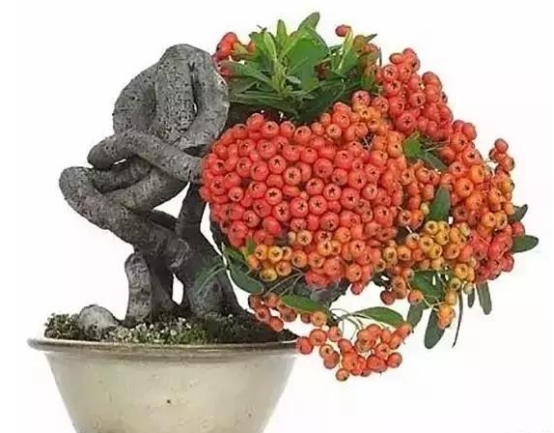
How to grow a firethorn bonsai? Learn the correct cultivation methods
1. Watering
Water management for firethorn is very important; if managed poorly, it will affect the firethorn's flowering period and fruiting. Reduce watering during the flowering period; keeping the soil slightly dry is enough, as this helps with fruiting. Note that for routine watering, follow the principle of watering when the soil is dry, and when you water, water thoroughly.
2. Sunlight
Firethorn likes a sunny environment, which helps it flower and fruit and can improve its ornamental effect.
3. Temperature
The most suitable growing temperature is 20-30°C. Firethorn is drought-tolerant and can grow at minus 15°C. In winter, keep the temperature below 10 degrees, otherwise it is not conducive to its dormancy.
4. Soil
Firethorn grows fast and has many dense roots. Although it can adapt to poor soil, it prefers fertile soil with good fertility, and is best suited to well-aerated, slightly acidic sandy soil, or leaf mold plus vegetable garden soil. Generally, replacing two-thirds of the old soil of the bonsai once a year is enough.
5. Fertilizing
Firethorn likes fertilizer. During the periods of sprouting, blooming and fruit setting in spring, summer and autumn, fertilizer and water must be ensured. Fertilizing is also needed after pruning; applying cake fertilizer water is enough.
6. Pests
The main pests are aphids and red spider mites, which may occur in spring and autumn. Dilute omethoate 1000 times and spray once every 7 days to kill them. If powdery mildew, leaf blight, sooty mold, etc. occur, spray a 500 to 1000 times carbendazim solution.
How to grow a firethorn bonsai: firethorn bonsai cultivation methods
Because the firethorn bonsai has green leaves all year round and a beautiful tree shape, it is enjoyable for its leaves, flowers and fruit, and is very suitable for placing at home, so it is very popular. Next, let's talk about firethorn bonsai cultivation methods.
1. Watering:
For a newly potted firethorn stump, water once at 8 a.m. and once at 6 p.m. every day, and each time wet all the branches and trunk. After new shoots grow 5cm-6cm, water once a day, and be careful not to let the potting soil be too wet, so as not to affect the normal growth of new roots. After new shoots grow 8cm-10cm, the new roots have basically formed; then, depending on the potting surface, do not water if the soil is not dry, and when watering, water enough until water flows out from the bottom of the pot.
2. Fertilizing:
Because the space in a pot is limited, with little soil and insufficient nutrients, fertilizer is indispensable to make a potted firethorn grow vigorously, but the timing and amount of fertilizing must be well controlled. In order to fully utilize the fertilizer's effect and meet the needs of the firethorn stump's growth, generally do not fertilize a new stump from March to April; from May to June, use a 0.2% urea solution to spray the potting soil and leaves once every 10 days; from July to September, apply rapeseed cake water once every 10 days; from October to December, apply 10% diluted chicken manure once every 15 days; and stop fertilizing from January to February of the following year.
Using the above fertilizing method, the new branches of that year can thicken by 1cm-1.5cm, and a formed firethorn bonsai will also bloom and bear fruit every year, with more fruit, larger fruit and shiny fruit, fully displaying its ornamental effect.
3. Repotting:
A firethorn bonsai bears fruit every year and consumes nutrients quickly, so generally a large, deep pot has its soil changed once every two years, while a small, shallow pot needs its soil changed once a year. The best time for repotting is from late February to before Qingming. Before the new shoots have sprouted, remove the leaves and fruit, and repot using nutrient soil containing phosphorus and potassium fertilizer. When repotting, take the plant out of the pot, then use a small trowel or bamboo strip to remove one-third of the old roots and old soil around the sides and bottom. When putting it back into the pot, first place gauze or broken tile pieces over the drainage hole inside the pot to facilitate ventilation and drainage.
Spread a layer of nutrient soil, then put the plant in, and while filling soil, use a small wooden stick or bamboo strip to firm the soil. The soil must be 1cm-2cm lower than the pot rim to facilitate routine watering. After changing the soil, water thoroughly the first time, and then manage it normally. A firethorn bonsai that has been repotted should not be moved frequently, so as not to damage the growth of new roots and change the plant's orientation, which would affect the ornamental effect.
4. Pruning:
Prune promptly to encourage the growth of fruit-bearing branches, which is very important for the plant to bear fruit the following year. Firethorn branches grow very fast, so prune them promptly to encourage the growth of small fruit-bearing branches. Especially in autumn, prune the branches properly and maintain a good tree shape, because once the new branches grow out the following year, they will bloom and bear fruit. If you do not prune in autumn, the flowers the following year will bloom on the tips of the branches, and if you prune then, you will cut off the fruit-bearing branches.
Therefore, the tree shape in late autumn is basically the tree shape for fruiting the following year. After the branch tips bear fruit, any new branches that grow can be pruned at any time to keep the plant's crown width unchanged, and the fruit borne will all be on the outer layer of the crown. After the fruit ripens, the ornamental effect is the best.
5. Disease and pest control:
Due to environmental factors, firethorn is prone to powdery mildew, which harms leaves, young branches, flowers and fruit. This is caused by insufficient light, poor ventilation and long periods of shade. It can be prevented and controlled by spraying Bordeaux mixture, lime sulfur mixture or carbendazim. There are mainly two kinds of pests that harm firethorn growth: one is the sap-sucking scale insect, which can make the stump decline and even die entirely. Scale insects have a waxy layer on their bodies, making it difficult for chemicals to enter the insect body.
Control methods:
Observe frequently. If scale insects are found, immediately remove them with wire, a wooden stick or a small knife. For chemicals, use 0.1% machine oil emulsion and spray the tree body, and bury carbofuran at 1‰ of the potting soil to kill the insects through internal absorption. The second is aphids, which generally occur easily in spring and autumn. Aphids harm the stump and can cause new shoots and tender leaves to twist and deform. The excrement of aphids falls on the leaves and fruit and forms small black spots, affecting the ornamental effect of the firethorn bonsai. Use a 1000 times solution of 40% omethoate, or an 800-1000 times solution of 80% dichlorvos, and spray twice in succession to kill all the aphids.
The above are the firethorn bonsai cultivation methods introduced for everyone. I hope it can help you. For more home knowledge, please stay tuned.
Care of firethorn bonsai
The bright red fruit of the firethorn bonsai greatly enhances its ornamental value. The following explains how to carry out the care of a firethorn bonsai so as to help the plant increase its fruit yield.
(1) Choosing the plant
A firethorn bonsai is a relatively sturdy and overall healthy young stump, which generally bears fruit more easily and is also easier to prune.
(2) Soil
The firethorn bonsai does not have high requirements for soil. Generally, relatively loose, fertile leaf mold and rural soil are used, which provide better conditions for growth.
(3) Light
The firethorn bonsai is a sun-loving plant and has relatively high requirements for light. The firethorn bonsai should always be cultivated in a sunny environment, especially in autumn and winter when the growing environment is not good; they need light even more.
(4) Pruning
If the fruit is to hang on the branches of the bonsai, relatively strong branches are needed to bear it, so pruning is necessary to ensure the sturdy growth of the branches and trunk.
(5) Fertilizing
During the growth of the firethorn bonsai, a certain amount of nutrients is also consumed. In order to have sufficient nutrients for fruiting, attention should be paid to fertilizing it correctly. In spring, generally once every 20-30 days; in autumn, once every 15-20 days. The types of fertilizer are mainly organic fertilizers such as phosphorus and potassium fertilizers, but fertilizing should be light.
In addition, attention should also be paid to routine pest removal work to avoid the potted plant being harmed by external factors.