How to Grow and Care for Purple Shamrock (Oxalis triangularis)
1. Soil
Purple shamrock prefers fertile, moist soil, but the plant is prone to waterlogging, so the soil should be loose, airy and well-draining.
2. Temperature
The ideal growing temperature for purple shamrock is 16-22°C. It is relatively cold-hardy, but in winter it must not drop below 0°C, otherwise the rhizomes will be frost-damaged; purple shamrock is not tolerant of high temperatures, and above 35°C the leaves will curl and growth will slow, so pay attention to shading and ventilation.
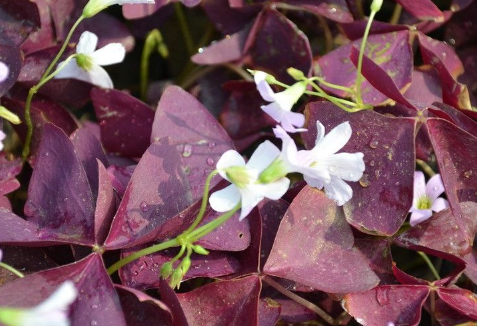
3. Light
Purple shamrock needs plenty of light to grow, and can take full sun or partial sun. A lack of light will make the leaves dull and the plant spindly; but strong direct light should also be avoided, and light shading is fine.
4. Water
Purple shamrock likes a moist environment and is drought-tolerant. During the growing season, follow the rule of "don't water until dry, and water thoroughly when you do," and mist lightly as needed to keep it moist; in winter, restrict watering and keep it on the dry side rather than wet.
How to Grow Purple Shamrock and the Flower Language of Purple Shamrock
Purple shamrock, also called red-leaf shamrock or triangular shamrock, is a perennial herbaceous plant with fleshy roots. Today we will share how to grow purple shamrock and the flower language of purple shamrock.
How to grow purple shamrock:
1. Propagation: Use division or seed sowing (planting). Division is mostly done during the growing season, but avoid the high heat of summer; spring is ideal. To divide, first dig up the plant, break apart the corms and plant them separately, or cut the corms into small pieces, each with at least 3 buds, and place them in a sand bed to cultivate. Once they have rooted and leafed out, transplant them and water thoroughly after planting.
2. Care: It likes a warm, humid environment with plenty of sun, tolerates partial shade, and is slightly cold-hardy. The optimal growing temperature is 24-30°C. At home it is mostly grown as a potted ornamental; the potting soil should be a neutral or slightly acidic sandy soil rich in humus, loose and fertile, with somewhat better drainage.
3. Light: During the growing season, keep it in a spot with plenty of light. In the high heat of summer the plant enters a semi-dormant state, so shade it appropriately and improve ventilation. Because its leaves are strongly phototropic, the pot should be turned frequently during cultivation so the plant grows evenly and looks attractive.
4. Watering: Water by the rule of "don't water until dry, and water thoroughly when you do." When the air is dry, mist the plant and the area around it to raise humidity, which keeps its leaves thick and glossy.
5. Fertilizing: Apply a diluted, well-rotted liquid fertilizer or compound fertilizer about once every 20 days. The fertilizer should contain a full balance of nitrogen, phosphorus and potassium, and in particular the nitrogen content should not be too high, otherwise the plant will grow leggy, the purple-red color of the leaves will fade, and the ornamental value will suffer.
6. Winter care: In winter, move it indoors to a spot with plenty of light, restrict watering, and stop fertilizing; it can overwinter safely above 5°C. After heavy frost in winter, its above-ground leaves wither, and it overwinters in the soil as a root-like corm, sprouting new leaves the following March.
The flower language of purple shamrock:
The flower language of purple shamrock is: patriotism, luck, Easter.
Easter: In southern Europe, shamrock is called "Hallelujah." Perhaps because it happens to bloom around Easter, its flower language is Easter. People born under this flower's blessing are lively, talkative and often smiling, and get along with others very harmoniously.
One account says the national flower of Ireland is white-flowered shamrock. The shamrock, a member of the legume family, is the flower used to honor Ireland's patron saint, St. Patrick, and is now the national flower of Ireland. Ireland once fought a long, bloody war of resistance against Britain for independence. Therefore, its flower language is patriotism.
Ordinary shamrock has only three leaflets, but occasionally a mutant individual with four leaflets appears, called a "lucky clover." Legend says that if you find a four-leaf lucky clover, you can make a wish and it will come true.
How to Grow Purple Shamrock: Growing Methods for Oxalis triangularis
Oxalis triangularis, also called red-leaf shamrock or purple shamrock, is a perennial herbaceous plant with fleshy roots. Purple shamrock plants are neat and uniform, with purple-red foliage. The purple-red leaves are beautiful and alluring, and the pink flowers are charming and lovely. Grown in pots, it is used to furnish flower beds and accent scenic spots, making it an excellent potted plant and groundcover. Below we will tell you how to grow purple shamrock and explain its growing methods.
Growing habits of purple shamrock
Purple shamrock prefers loose, well-draining soil, likes light, and tolerates partial shade; its flowering period lasts as long as 8 months. It suffers no pest or disease problems, though during periods of high temperature and high humidity the old leaves are prone to gray mold, which does not affect the new leaves. It is relatively cold-hardy: above -5°C it stays evergreen in winter, and below -5°C the above-ground leaves wither, but the underground parts do not die and can sprout new leaves again the following March. It has no obvious dormant period, and cultivation and care are simple.
How to grow purple shamrock
Purple shamrock likes a moist, partially shaded environment with good ventilation, and is relatively drought-tolerant. It grows best in sandy soil rich in humus and well-draining. In midsummer, purple shamrock grows slowly or enters dormancy, and strong sunlight can scorch the leaves, causing them to curl and scorch brown. In summer it must be shaded appropriately; once it enters semi-dormancy, all fertilizing should stop and watering should be controlled, keeping it dry rather than wet to prevent the roots or bulbs from rotting.
How to grow purple shamrock
1. Propagation: Use division or seed sowing (planting). Division is mostly done during the growing season, but avoid the high heat of summer; spring is ideal. To divide, first dig up the plant, break apart the corms and plant them separately, or cut the corms into small pieces, each with at least 3 buds, and place them in a sand bed to cultivate. Once they have rooted and leafed out, transplant them and water thoroughly after planting.
2. Care: It likes a warm, humid environment with plenty of sun, tolerates partial shade, and is slightly cold-hardy. The optimal growing temperature is 24-30°C. At home it is mostly grown as a potted ornamental; the potting soil should be a neutral or slightly acidic sandy soil rich in humus, loose and fertile, with somewhat better drainage.
3. Light: During the growing season, keep it in a spot with plenty of light. In the high heat of summer the plant enters a semi-dormant state, so shade it appropriately and improve ventilation. Because its leaves are strongly phototropic, the pot should be turned frequently during cultivation so the plant grows evenly and looks attractive.
4. Watering: Water by the rule of "don't water until dry, and water thoroughly when you do." When the air is dry, mist the plant and the area around it to raise humidity, which keeps its leaves thick and glossy.
5. Fertilizing: Apply a diluted, well-rotted liquid fertilizer or compound fertilizer about once every 20 days. The fertilizer should contain a full balance of nitrogen, phosphorus and potassium, and in particular the nitrogen content should not be too high, otherwise the plant will grow leggy, the purple-red color of the leaves will fade, and the ornamental value will suffer.
6. Winter care: In winter, move it indoors to a spot with plenty of light, restrict watering, and stop fertilizing; it can overwinter safely above 5°C. After heavy frost in winter, its above-ground leaves wither, and it overwinters in the soil as a root-like corm, sprouting new leaves the following March.
Is purple shamrock toxic?
Purple shamrock, i.e. Oxalis triangularis, of the family Oxalidaceae, is non-toxic. Oxalis is an important class of forage crop with broad cultivation value, and is also an important green manure and soil-and-water-conservation plant; it has the largest cultivated area in Western Europe, North America and Oceania.
In Soviet Russia, people liked to use oxalis leaves as tea. The slight sourness not only tastes good, but is also very effective at easing fever and regulating the blood, so it can be called a flower that is like a health food.
Flower language of purple shamrock
The flower language of purple shamrock is: patriotism, luck, Easter.
Easter: In southern Europe, shamrock is called "Hallelujah." Perhaps because it happens to bloom around Easter, its flower language is Easter. People born under this flower's blessing are lively, talkative and often smiling, and get along with others very harmoniously.
One account says the national flower of Ireland is white-flowered shamrock. The shamrock, a member of the legume family, is the flower used to honor Ireland's patron saint, St. Patrick, and is now the national flower of Ireland. Ireland once fought a long, bloody war of resistance against Britain for independence. Therefore, its flower language is patriotism.
Ordinary shamrock has only three leaflets, but occasionally a mutant individual with four leaflets appears, called a "lucky clover." Legend says that if you find a four-leaf lucky clover, you can make a wish and it will come true.
The above is an introduction to how to grow purple shamrock and the flower language of purple shamrock. I believe you now have a deeper understanding of purple shamrock, and I hope the above content is helpful to you.