A Detailed Guide to Common Diseases of Sophora japonica Flowers and Their Control Methods
1. Sophora japonica leaf scorch disease
Symptoms:
The edges of the pagoda tree leaves turn withered and yellow, and in severe cases the flowers may drop off. This disease may be caused by bacteria or by a calcium deficiency.
Control methods:
Do not grow pagoda trees at high temperatures, since pathogens multiply quickly in heat, and keep humidity well controlled. Ensure healthy root growth. Take preventive measures by spraying a fungicide once a month, especially indoors during hot summer weather, to do a good job of sterilization. When the disease occurs, promptly spray a fungicide for controlling bacterial diseases and promptly supplement calcium.
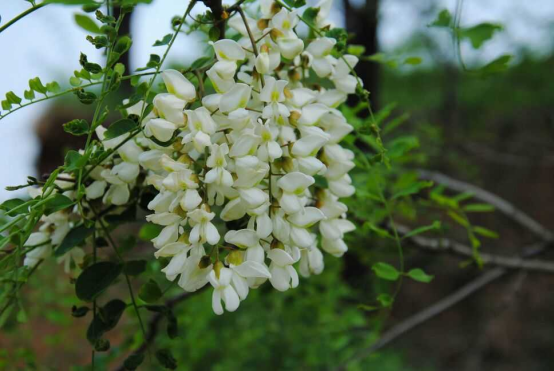
2. Sophora japonica canker disease
Symptom analysis:
This is a common disease of Sophora japonica flowers. It can occur at any growth stage of the flowers. It shows as small black spots on the trunk, and the trunk gradually withers.
Control methods:
Water the Sophora japonica flowers promptly, replenish nutrients promptly, and apply phosphorus and potassium fertilizer to strengthen the plant's disease resistance. After pruning, pay attention to treating the cut surfaces. Disinfect the cuts to prevent bacterial infection.
After reading the editor's introduction, don't you think Sophora japonica is very easy to propagate? Why not buy some seeds and give it a try? I believe you can successfully grow pagoda tree seedlings too!
Control methods for Sophora japonica diseases
Sophora japonica leaf scorch disease
Symptom analysis
Leaf scorch disease first harms the leaves, causing the leaf edges to wither and yellow. If the disease is severe, it can also cause the flowers to drop. There are two main causes of Sophora japonica leaf scorch disease. One is caused by bacteria: brown patches appear on the leaf edges, the leaf color fades, and finally the leaves all wither. Under the influence of the pathogen, the leaves gradually infect the trunk, and as it spreads it can affect the growth of the entire plant.
The other cause is a calcium deficiency in the plant. Calcium is one of the elements that cannot be reused within the plant body. When it forms calcium salt precipitates, the plant's calcium deficiency becomes very obvious, and localized necrosis occurs in the plant.
Control methods
Ensure the maintenance temperature is suitable and avoid excessively high temperatures. Control humidity well and avoid excessively high humidity.
Protect root growth, and avoid injuring the roots when repotting or turning the soil.
Take preventive measures by spraying a fungicide once a month, especially indoors during hot summer weather, to do a good job of sterilization. When the disease occurs, promptly spray a fungicide for controlling bacterial diseases and promptly supplement calcium.
Sophora japonica canker disease
Symptom analysis
This is a disease rarely seen in home flower growing, but it is common in Sophora japonica. It appears at every stage of Sophora japonica growth. It mainly shows as necrotic lesions on the branches, which gradually expand or spread around the branch, slightly sunken. As the bacteria spread, many small black spots appear on the trunk, the branches slowly wither, and the underground parts may rot along with them.
Control methods
During pruning, avoid pruning too heavily, water promptly, and appropriately supplement phosphorus and potassium fertilizer to strengthen the plant's disease resistance. When pruning in spring and autumn, treat the cut surfaces by coating them with plant ash or lime sulfur mixture to prevent bacterial infection.
Promptly prune off diseased branches and dispose of them centrally. When the disease occurs, promptly spray carbendazim suspension concentrate.
Propagation and Cultivation Techniques for Sophora japonica 'Xianghua' and Its Pest and Disease Control Measures
Sophora japonica 'Xianghua', also known as the wealth tree, is native to Spain and is a deciduous tree of the Fabaceae family with papilionaceous flowers. The double-season pagoda tree is rich in the elegance of garden woody flowering plants and has high ornamental value; it is capable of purifying the ecological environment and has high environmental value; it has wide uses and high economic value. It truly deserves the name wealth tree and is called the green gold variety of the 21st century.
1 Biological characteristics
Sophora japonica 'Xianghua' belongs to the papilionaceous, Fabaceae trees, with a tree height of 10-12 m, a straight and upright trunk, sparse branches and long internodes, and grayish-brown to brown bark. The leaves are alternate, 17-19 per plant, pinnately compound, elliptical to ovate, with smooth surfaces and bright green color, larger than black locust leaves. It blooms from May to August, and in southern China it can bloom continuously in spring, summer, and autumn. The inflorescences are axillary, densely forming racemes, drooping, 8-12 cm long, with individual flowers nearly 10 cm. The flowers are large, beautifully shaped, long-lasting, abundant, and pleasantly fragrant. Sophora japonica 'Xianghua' both likes a fine environment with ample sunlight and good air circulation and can withstand severe cold of -25 to -28°C. In China, except for Heilongjiang, it grows well from coastal plains to high mountains at an altitude of 2100 m, whether in neutral soil, acidic soil, or mildly alkaline soil. Its adaptability, ease of growth (it can be propagated from root segments or branches), fast growth (seedlings can reach 2 m in the same year), regenerative capacity (roots buried one year produce seedlings, and multiple seedlings can grow the next year), and its economic and ecological value as a high-quality nectar and pollen source, for ornament, greening, sand fixation, and soil conservation all determine its broad development prospects.
2 Propagation techniques
Sophora japonica 'Xianghua' flowers but does not set fruit and has no seeds for propagation, so it can only be propagated asexually by burying root segments, inserting branches, or grafting.
2.1 Root burial propagation
This is the main and most commonly used propagation method, with a survival rate of 85%-95%.
2.1.1 Seed root preparation. After Sophora japonica 'Xianghua' sheds its leaves and before it sprouts in spring, the seed roots can be introduced. Before planting, store them buried in sandy soil and manage the sand moisture well, so that the root segments neither dehydrate and dry out nor mold and rot from too much water. Select 1-2 year old main and lateral roots of Sophora japonica 'Xianghua', preferably 0.5-1.0 cm in diameter. Cut the lateral roots at 20-30 cm, and the amount cut should not exceed 1/2 of the lateral roots, so as not to affect the plant's normal growth and flowering.
2.1.2 Land preparation and seedling raising. Choose sandy loam with deep soil, flat terrain, convenient drainage and irrigation, and no sources of pest or disease infection for the seedling bed. In early April, take out the roots, cut them into 5-7 cm root segments, open furrows along the beds, generally set the plant and row spacing at 20 cm x 30 cm, then place the root segments flat in the furrows, cover with 3 cm of fine sandy soil, water thoroughly to settle the roots, and seedlings will emerge in 20 d.
2.1.3 Seedling management. Water promptly after emergence, and pay attention to drainage during continuous rainy weather. During the seedling stage, weed promptly and remove lateral buds. When removing buds, take special care to keep only 1 healthy bud on each root segment, loosen the surface soil shallowly, and never injure the tender, weak short roots. Control pests and diseases promptly, fertilize appropriately, and during long droughts use clear manure water to resist drought while also applying topdressing to promote strong seedlings.
2.1.4 Transplanting and management. The seedlings are transplanted and planted after leaf fall in late autumn of the same year or before bud break in spring of the following year. Dig holes and apply fertilizer according to the plan, fill and compact the soil after planting, and water thoroughly to settle the roots; the survival rate is generally above 95%. After autumn, the tree height can reach 2-3 m, with a diameter at breast height of 3-5 cm, and it blooms the second year. The trunk of Sophora japonica 'Xianghua' is upright, the crown is open, the tree shape is graceful, the flowers are brilliant, and the fragrance is striking.
2.2 Branch cutting propagation
(1) The cutting time is the same as for root burial propagation. (2) Select lignified hard branches 8-20 mm in diameter and cut them into 15 cm cuttings; cut the upper end flat, 1-2 cm from the bud, and cut the lower end at a 45° slant, 5 mm from the bud, soak the lower end in 50 mg/kg rooting powder solution (or treat the roots with "920") for 3-4 h, then take them out for later use. (3) The land preparation requirements are the same as above. After land preparation, choose 70 cm wide plastic film, lay flat film with a bed width of 60 cm and a bed spacing of 30 cm, and insert the branches into the plastic film at a 45° angle at a plant and row spacing of 20 cm x 20 cm. Build 1 small arched frame every 2 beds to increase temperature and preserve moisture. (4) After emergence, promptly expose the seedlings and cover them with soil, and maintain the temperature and humidity of the bed soil; when it is hot, open both sides of the frame film to ventilate and cool down; remove lateral buds, strengthen fertilizer and water management, and the cuttings can grow to more than 1-1.5 m in the same year.
3 Cultivation management
Sophora japonica 'Xianghua' likes a warm and humid climate and an environment with ample sunlight and good ventilation. For soil, it prefers moist, well-drained, deep, and loose neutral soil, and can also adapt to slightly acidic or slightly alkaline soil. Sophora japonica 'Xianghua' is cold-resistant and drought-resistant, able to withstand low temperatures of -25 to -28°C, and can be cultivated in the open ground in northern China. Cultivation management is relatively extensive, and the main task is good management during the seedling stage.
When the seedlings grow 4-5 leaves, weeds must be pulled by hand; when the seedlings reach 40 cm, herbicides can be used. Generally, lateral buds (shoots) should be pinched off before they grow to 3 cm, so as not to affect seedling growth and straightness. When they grow to about 60 cm, prevent lodging caused by strong winds, which can be prevented by inserting sticks and tying the seedlings. Fertilize when the seedlings are above 50 cm, scattering urea or diammonium before rain. Fertilize once every 20 d.
4 Pest and disease control
Before planting Sophora japonica 'Xianghua' seed roots, control underground pests by spraying 40% methyl parathion 1000-fold solution; Sophora japonica 'Xianghua' seedlings must be protected against locusts or grasshoppers eating the main trunk and tender leaves; in summer, pay attention to controlling black aphids on the tips and tender leaf parts of Sophora japonica 'Xianghua' seedlings, commonly controlled by spraying 50% phoxim emulsifiable concentrate or 40% omethoate emulsifiable concentrate 1500-2000 fold solution; around early autumn, the root and trunk parts of Sophora japonica 'Xianghua' are prone to rot disease or nematode feeding, controlled by drenching with 50% thiophanate-methyl wettable powder 500-fold solution and 50% phoxim emulsifiable concentrate 1000-fold solution.