Is Sorbaria sorbifolia suitable for growing indoors?
Sorbaria sorbifolia can be grown indoors, but because it is a shrub plant that grows quickly and generally needs repotting and root pruning after a few years of growth, it is usually grown as a bonsai for ornament. Daily care requires frequent pruning to keep the plant shape attractive, while also controlling the plant's size so it does not take up too much indoor space. When grown indoors, it also needs to be placed in a spot with ample light and good ventilation, and it needs 1-2 hours of sufficient light every day, preferably morning and evening sunlight. If the light is insufficient, the plant will become leggy. So Sorbaria sorbifolia can be grown indoors, but it is not particularly suitable. Growing it indoors demands fairly high cultivation skills and it is not easy to grow well, so for flower lovers new to Sorbaria sorbifolia, growing it outdoors is better.
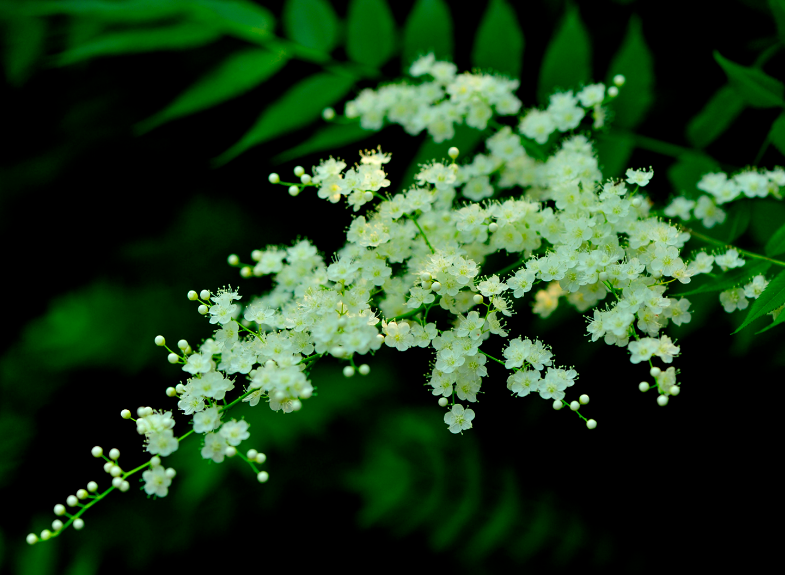
That is all for whether Sorbaria sorbifolia is suitable for indoor growing. Do you know what uses it has? Let's find out together.
What to do about root rot in Sorbaria sorbifolia, and troubleshooting the causes of root rot in Sorbaria sorbifolia
Sorbaria sorbifolia is a very attractive indoor bonsai. During the care of potted Sorbaria sorbifolia, if it is handled improperly, root rot can occur. Flower lovers all know that once any plant develops root rot, if it is not treated in time, it will die, and Sorbaria sorbifolia is no exception. Below is a troubleshooting guide for root rot problems in Sorbaria sorbifolia as well as rescue treatment for root rot in Sorbaria sorbifolia.
Troubleshooting the causes of root rot in Sorbaria sorbifolia 1. Root rot caused by overwateringWe all know that Sorbaria sorbifolia is tolerant of poor soil and drought. When grown indoors in pots, it is certainly given meticulous care, and too much water is undoubtedly one result. If you ask how those flowers died, it is absolutely from being loved to death. Too much water will cause root rot in Sorbaria sorbifolia.
2. Root rot caused by pests and diseasesHome-grown Sorbaria sorbifolia is much more delicate than those grown outdoors. A high-temperature, high-humidity environment is more conducive to the breeding of pathogens, making pests and diseases more likely, and pest damage can also cause yellowing and root rot in Sorbaria sorbifolia.
3. Root rot caused by lack of fertilizer or fertilizer burnNormal growth of Sorbaria sorbifolia requires a certain amount of nutrients. When the plant lacks phosphorus and nitrogen fertilizer, the roots grow poorly, leading to rot; in addition, too much fertilizer leaves the roots growing in dire conditions for a long time, with respiration restricted, causing root burn and rot. So whether there is too much or too little fertilizer, it will inhibit the growth of Sorbaria sorbifolia. Not too much, not too little, just right!
Treatment methods for root rot in Sorbaria sorbifolia 1. Prune the roots of Sorbaria sorbifoliaAfter Sorbaria sorbifolia develops root rot, you can trim away the rotten roots, sprinkle on carbendazim or thiophanate powder, and after two hours replace with new soil and replant.
2. Reduce watering as much as possible (control the amount of watering)Two hours after planting, water thoroughly, then place in a dark, ventilated indoor spot to dry. Once dry, place it in a sunny, ventilated position, and for the time being it is not suitable to be exposed to the sun. For future watering, wait until the potting soil is dry before watering. Do not water if there is a feeling of moisture, and only water after it is dry, so root rot is less likely.
How to grow Sorbaria kirilowii
Sorbaria kirilowii has no strict requirements for soil, is relatively easy to cultivate and survive, has fairly strong drought and cold tolerance, and grows vigorously. Each year, combined with shaping and styling, it can be pinched back or cut back 3-4 times, which can achieve full branches and a graceful form.
Collect seeds each year in September-October. Place the capsules in a ventilated, cool indoor spot, dry them in the shade, rub them gently, remove the seed shells and impurities, and store them in a paper bag.
Rake the ground level and fine, mix the seeds with soil and broadcast sow them, then cover with a thin layer of fine soil, preferably humus soil, and immediately sprinkle water with a watering can so the seeds and soil are tightly combined. After sowing, sprinkle water 1-2 times a day. When raised in the open field, seedlings emerge in 3-5 d, and the soil must be kept moist during the seedling stage. One-year-old seedlings are 5-15 cm tall, and two-year-old seedlings can grow to about 50 cm. Two-year-old seedlings are transplanted and established with a plant spacing of 40 cm × 60 cm, and they leave the nursery at four to five years old.
In April, cut cuttings from vigorous branches. The cuttings are 10-15 cm long, with the upper end cut flat and the lower end cut into a horseshoe shape, with smooth cuts. Tie them into bundles and soak the lower ends in ABT No. 1 solution at a concentration of 100 mg/kg for 1 h. Insert the cuttings vertically into the soil, leaving about 1 cm above the surface, with a plant spacing of 10 cm × 30 cm. Water thoroughly immediately after insertion, then water once every 1-2 weeks, and loosen the soil and weed in time.
Cuttings generally take root and sprout in 20-30 d. Hardwood cuttings can generally reach 30-50 cm in height in the year of cutting. In the second year in spring, they are transplanted and established with a plant spacing of 40 cm × 60 cm, and the stems are cut back at transplanting to promote branching. After establishment, cultivate for 2-3 a, and the plant height can reach more than l m, with 5-10 branches per clump, at which point they can leave the nursery.