How to Grow White-Flowered Avonia quinaria? Care Methods and Things to Note
1. Potting soil
If we are rooting White-Flowered Avonia quinaria from cuttings, we need to choose a loose, fertile soil, and to prevent waterlogging and allow the roots to breathe, our soil also needs to have good drainage and aeration, so that the potting soil will not become waterlogged and the roots can breathe normally. Mixing some garden soil from our neighborhood with some leaf mold works fine, and it is very easy to find.
2. Long hours of light
Everyone knows that succulents love light, especially in spring and autumn, which are still the growing seasons, so we can confidently put White-Flowered Avonia quinaria outside the window to enjoy the sunlight, because at this time the climate is pleasant and the temperature is not high, which is very beneficial for the growth of succulents. However, in summer, because the temperature is high and the sunlight is strong, it can easily be sunburned, and it easily causes the local temperature to rise; White-Flowered Avonia quinaria easily goes dormant, and then we cannot carry out care.
So in summer we should place it in a ventilated spot at noon to lower the temperature and prevent dormancy. In winter, because the temperature is low, it also cannot be kept outdoors and can only be placed inside the window, and we must maintain the temperature and give it plenty of sun.
3. Pay attention to water control
When caring for the succulent White-Flowered Avonia quinaria, we all know to water it sparingly. Each watering needs to be based on whether the potting soil is dry or wet, and each time we should water only after the potting soil has dried out completely. Water thoroughly in one go, and do not water repeatedly. After watering, we also need to put the plant in a cool, ventilated place to let the water dry, which will reduce water accumulation in the pot. In spring and autumn, water once every 5-7 days; in summer it may be every 3-5 days; if it is dormant, then every 7-10 days; in winter, watering once every half a month is basically fine.
4. Appropriate fertilizer
Fertilizing our succulents can help them grow better during the growing season. For example, White-Flowered Avonia quinaria blooms in spring and autumn, so after fertilizing it will bloom more easily. At the same time, fertilizer can also replenish the nutrients the soil has lost, laying the foundation for future growth, and it also has the effect of enhancing the plant's resistance.
Above we introduced how White-Flowered Avonia quinaria is grown; next let us look at how it is propagated.
Avonia quinaria Avonia quinaria Illustrated Guide: How to Grow Avonia quinaria / How to Propagate Avonia quinaria
Avonia quinaria ProfileAvonia quinaria Avonia quinaria
Avonia quinaria Growing Methods and Things to Note Avonia quinaria Introduction
Avonia quinaria is a succulent plant in the family Portulacaceae and the genus Avonia, a perennial herb with a tuberous root, and its flowers are white and red.
Morphological Characteristics of Avonia quinaria
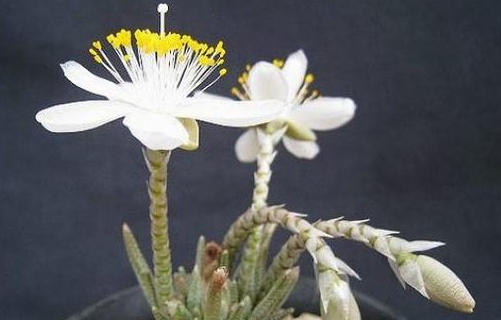
The Avonia quinaria plant has an irregular rhizome (commonly known as a "tuberous root"), with small branches growing in a cluster at the top. The fine branches are wrapped in small scale-like leaves that are white with a hint of green; the leaves are small and have stipules, which are papery stipules that wrap around the tiny leaves. The flowers are 5-merous, and the flowering period is extremely short; some species bloom for only one hour. Avonia quinaria is self-pollinating, with a maturation period of about three weeks. The flowers of Avonia quinaria are plum-blossom-shaped, borne at the tips of the fine branches, about 2 cm in diameter, with relatively long stamens that often exceed the petals, with golden-yellow anthers at the tips, and silky, white petals. The flowers are plum-blossom-shaped, borne at the tips of the fine branches, with silky petals, white or red, usually opening in the evening after ample sunlight and closing at night. If there is cloudy and rainy weather or insufficient light in the cultivation site, it is difficult for them to bloom. Each flower lives for only 1 to 2 hours, blooming in summer. A single plant blooms for 7 to 10 days.
People often use "a fleeting glimpse of the epiphyllum" to describe the brevity of a plant flower's life. In fact, many plant flowers live even shorter than the epiphyllum, and Avonia quinaria is one of them; from blooming to closing takes less than 2 hours. Because its flowering period is short and, moreover, this plant was introduced to our country not long ago and is not very commonly cultivated, few people have seen its flowers. It usually opens in the afternoon with ample sunlight and closes at night. Each flower lives only 4-5 hours. If there is cloudy and rainy weather or insufficient light in the cultivation environment, it is difficult for it to open. The flowering period is May-July.
White-Flowered Avonia quinaria
Small branches grow in a cluster at the top, and the fine branches are wrapped in small scale-like leaves that are white with a hint of green. The flowers are plum-blossom-shaped, borne at the tips of the fine branches, with silky petals, white or red, usually opening in the evening after ample sunlight and closing at night. If there is cloudy and rainy weather or insufficient light in the cultivation site, it is difficult for them to bloom. Each flower lives for only 1 to 2 hours, blooming in summer. A single plant blooms for 7 to 10 days. Its form is peculiar; the fine branches and the quaint rhizome set each other off beautifully, much like a stone sea anemone attached to a rock, and also like dancing silver snakes. Moreover, the plant is small and slow-growing, just like a living work of art. It is suitable for planting in a small pot and placing in sunlight, on a windowsill, and other places, to be carefully admired in leisure time and to appreciate its magical charm.
Ecological Habits of Avonia quinaria
Native to the desert regions of South Africa and Namibia, it likes a cool, dry and sunny environment, is drought-tolerant, afraid of waterlogging, and also afraid of stuffy heat and humidity, and is slightly cold-tolerant.
Distribution Range of Avonia quinaria
Native to the desert regions of South Africa and Namibia.
Garden Uses of Avonia quinaria
Its form is peculiar; the fine branches and the quaint rhizome set each other off beautifully, much like a stone sea anemone attached to a rock, and also like dancing silver snakes. Moreover, the plant is small and slow-growing, just like a living work of art. It is suitable for planting in a small pot and placing in sunlight, on a windowsill, and other places, to be carefully admired in leisure time and to appreciate its magical charm.
Variety Classification of Avonia quinaria
Avonia quinaria is divided into two kinds: White-Flowered Avonia quinaria and Red-Flowered Avonia quinaria.
White-Flowered Avonia quinaria
The scientific name of White-Flowered Avonia quinaria is: Avonia quinaria subsp. alstoni
Red-Flowered Avonia quinaria (A.alstonii), with deep pink flowers, and its other characteristics are basically the same as Avonia quinaria. Similar species in the same genus also include Avonia albissima (A.albissima), also called "Dance of the Fairies", which has a stout fleshy short stem, clustered fine round branches, and a surface densely covered with scale-like spiral small leaves; and Avonia papyracea (A.papyracea), also called "White Snake Hall", whose fleshy stem is stout and short, with many branches at the top of the stem, extending obliquely or curved toward the ground, the stem surface covered with scale-like white papery small leaves, and small white-green flowers at the top.
Red-Flowered Avonia quinaria (A.alstonii), with deep pink flowers,
Red-Flowered Avonia quinaria
The scientific name of Red-Flowered Avonia quinaria is: Avonia quinaria subsp. quinaria
Synonym: Anacampseros quinaria
Its other characteristics are basically the same as Avonia quinaria. Similar species in the same genus also include Avonia albissima (A.albissima), also called "Dance of the Fairies", which has a stout fleshy short stem, clustered fine round branches, and a surface densely covered with scale-like spiral small leaves; and Avonia papyracea (A.papyracea), also called "White Snake Hall", whose fleshy stem is stout and short, with many branches at the top of the stem, extending obliquely or curved toward the ground, the stem surface covered with scale-like white papery small leaves, and small white-green flowers at the top.
Propagation Methods of Avonia quinaria
Propagation is by sowing seeds.
Cultivation Techniques for Avonia quinaria
Avonia quinaria is native to the desert regions of South Africa and likes a cool, dry and sunny environment. It is drought-tolerant, afraid of waterlogging, and also afraid of stuffy heat and humidity, and is slightly cold-tolerant. From the end of September to April of the following year is its main growing season, when the fine branches at the top of the rhizome begin to sprout and grow. It can be placed in a sunny spot for care, and watering should follow the principle of "do not water until dry, and water thoroughly when watering", avoiding soil waterlogging so as to prevent the tuberous root from rotting. Because it grows slowly and needs few nutrients, there is generally no need for additional fertilizing. In winter, control watering; it can tolerate a low temperature of about 5°C. In summer, pay attention to good ventilation, avoid rain, and strictly control watering, so as to prevent rotting caused by stuffy heat and humidity and waterlogging of the potting soil. The potting soil should be loose and breathable, with good drainage and a certain degree of granularity. It can be prepared by mixing 1 part leaf mold or peat and 3 parts coarse sand or vermiculite, and mixing in a small amount of calcareous materials such as bone meal. It can also be planted with materials such as akadama soil.
Avonia quinaria Pictures
Avonia quinaria / Red-Flowered Avonia quinaria Illustrated Guide: How to Grow Avonia quinaria / Red-Flowered Avonia quinaria / How to Propagate Avonia quinaria / Red-Flowered Avonia quinaria Portulacaceae Avonia
Chinese name: Avonia quinaria / Red-Flowered Avonia quinariaLatin name: Avonia alstoni
Korean and Japanese names: ????
Family and genus: Portulacaceae Avonia
Brief introduction: The Avonia quinaria plant is small and slow-growing. It is native to the desert regions of South Africa and Namibia and likes a cool, dry and sunny environment. It is drought-tolerant, afraid of waterlogging, and also afraid of stuffy heat and humidity, and is slightly cold-tolerant. The flowers of Avonia quinaria are plum-blossom-shaped, borne at the tips of the fine branches, and the flowers are white or red. Propagation is by sowing seeds.
Watering Schedule
| January | February | March | April | May | June | July | August | September | October | November | December |
White-Flowered Avonia quinaria has small branches growing in a cluster at the top, and the fine branches are wrapped in small scale-like leaves that are white with a hint of green. The flowers are plum-blossom-shaped, borne at the tips of the fine branches, with silky petals, white or red, usually opening in the evening after ample sunlight and closing at night. If there is cloudy and rainy weather or insufficient light in the cultivation site, it is difficult for them to bloom. Each flower lives for only 1 to 2 hours, blooming in summer. A single plant blooms for 7 to 10 days. Its form is peculiar; the fine branches and the quaint rhizome set each other off beautifully, much like a stone sea anemone attached to a rock, and also like dancing silver snakes. Moreover, the plant is small and slow-growing, just like a living work of art. It is suitable for planting in a small pot and placing in sunlight, on a windowsill, and other places, to be carefully admired in leisure time and to appreciate its magical charm. People often use "a fleeting glimpse of the epiphyllum" to describe the brevity of a plant flower's life. In fact, many plant flowers live even shorter than the epiphyllum, and Avonia quinaria is one of them; from blooming to closing takes less than 2 hours. Because its flowering period is short and, moreover, this plant was introduced to our country not long ago and is not very commonly cultivated, few people have seen its flowers. It usually opens in the afternoon with ample sunlight and closes at night. Each flower lives only 4-5 hours. If there is cloudy and rainy weather or insufficient light in the cultivation environment, it is difficult for it to open. The flowering period is May-July. Red-Flowered Avonia quinaria Its other characteristics are basically the same as Avonia quinaria. Similar species in the same genus also include Avonia albissima (A.albissima), also called "Dance of the Fairies", which has a stout fleshy short stem, clustered fine round branches, and a surface densely covered with scale-like spiral small leaves; and Avonia papyracea (A.papyracea), also called "White Snake Hall", whose fleshy stem is stout and short, with many branches at the top of the stem, extending obliquely or curved toward the ground, the stem surface covered with scale-like white papery small leaves, and small white-green flowers at the top. Avonia quinaria is native to the desert regions of South Africa. From the end of September to April of the following year is its main growing season, when the fine branches at the top of the rhizome begin to sprout and grow. It can be placed in a sunny spot for care, and watering should follow the principle of "do not water until dry, and water thoroughly when watering", avoiding soil waterlogging so as to prevent the tuberous root from rotting. Because it grows slowly and needs few nutrients, there is generally no need for additional fertilizing. In winter, control watering; it can tolerate a low temperature of about 5°C. In summer, pay attention to good ventilation, avoid rain, and strictly control watering, so as to prevent rotting caused by stuffy heat and humidity and waterlogging of the potting soil. The potting soil should be loose and breathable, with good drainage and a certain degree of granularity. It can be prepared by mixing 1 part leaf mold or peat and 3 parts coarse sand or vermiculite, and mixing in a small amount of calcareous materials such as bone meal. It can also be planted with materials such as akadama soil. Propagation is by sowing seeds. Related Articles
|