A Detailed Guide to Growing and Caring for Wax Mallow
Soil
Wax mallow is suited to fertile, well-draining sandy soil, and it is best planted in soil rich in humus.
Light
Wax mallow loves warm, humid environments and is not cold-tolerant, so place it in a spot with ample light. Only then will the plant grow more densely; if light is insufficient, flowering will be affected and growth will slow.
Temperature
Because wax mallow tolerates heat but not cold, the minimum temperature for growing it must not fall below 8 degrees; in summer, protect it from scorching sun to prevent the leaves from being burned.
Caring for wax mallow is relatively simple, it has many benefits and high medicinal value, so plant a pot at home right away! If you want to learn more, please pay more attention to the Four Seasons Plant Network!
How to Grow Wax Mallow How to Propagate Wax Mallow
Wax mallow, a plant of the genus Malvaviscus in the mallow family, is native to Mexico and Colombia. Today we will share knowledge on how to grow wax mallow and how to propagate wax mallow.
How to Grow Wax Mallow
Wax mallow often naturalizes in the tropics and subtropics of Asia and Africa, and in southern China it is mostly planted in courtyards. Wax mallow is not strict about soil, tolerates moisture well, and blooms year-round, though it produces fewer flowers in winter.
Wax mallow is robust, fond of high temperatures, high humidity and full sun, tolerates heat, drought, poor soil and moisture, is not tolerant of cold or frost, tolerates slight shade, dislikes waterlogging, and grows quickly. It is best grown in fertile, loose, well-draining, slightly acidic soil, with winter temperatures no lower than 8°C. In midsummer keep the soil moist and provide plenty of sun, but protect it from blazing sun; it tolerates pruning.
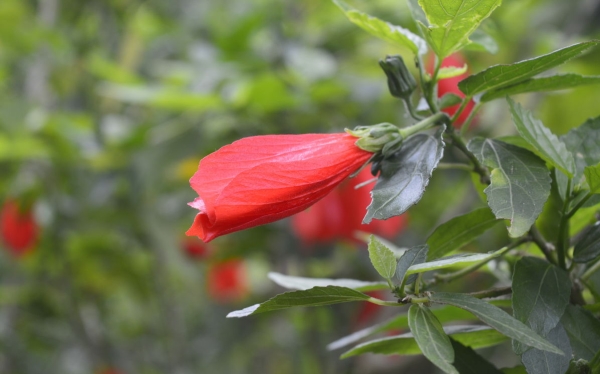
Wax mallow resembles Chinese hibiscus somewhat in appearance, but its leaves are narrower and deeper green; the flower does not open fully like other hibiscus types, and its bright red petals curl spirally in a bell shape, with the long, slender stamens and pistils protruding beyond the petals. The petals twist slightly to the left and do not open from the bud, and are fish-red in color; the leaves are broadly heart-shaped, with shallow two-lobed or angular edges.
The flowers hang downward. The leaves are stalked, alternate, clustered at the ends of the stems, long-elliptic in shape, tapering to the tip, with coarse, blunt serrated edges, and the main veins are palmate, with five to seven of them. Green. Leaves appear year-round, especially abundantly from March to August.
How to Propagate Wax Mallow
Wax mallow is mainly propagated by cuttings, and can also be grafted or air-layered.
Cuttings of wax mallow can generally be taken in spring, summer and autumn, with March to May being the best. Choose vigorous young shoots for the cuttings, and 1-2 year old branches give the highest success rate for growing into plants. Cut 10-15 cm long branches as cuttings; no treatment is needed, insert them into a sand bed and keep it moist. Generally, roots form within less than a month after insertion, with a survival rate of over 80%.
How to Grow Wax Mallow, Wax Mallow Growing Methods
How to grow wax mallow? This is a question flower lovers care about. Wax mallow is very attractive and easy to grow, and is often used as a garden ornamental flowering plant; of course, it can also be grown at home in the yard. Growing wax mallow in the courtyard is very easy, as long as you understand the daily care points for wax mallow. Below is a summary of daily wax mallow growing methods, which we hope flower lovers will master to help them grow wax mallow better.
Wax Mallow Growing Method 1. Soil Mixing RequirementsTo grow wax mallow well, first understand that it is not demanding about soil, and the potting soil should preferably be rich in humus. It requires fertile, loose, well-draining, slightly acidic soil.
2. Light and TemperatureWax mallow likes high temperatures and humid environments, and requires ample sunlight. It is not cold-tolerant and tolerates slight shade. During growth, wax mallow requires plenty of sunlight so the plant can grow healthily with dense branches and leaves. Insufficient light will affect the plant's growth, making it grow slowly and even affecting flowering.
Wax mallow tolerates heat but not cold, so overwintering temperatures should be higher, with a minimum no lower than 8 degrees; in summer's high temperatures, protect it from blazing sun to avoid burning the plant.
3. Watering Amount ControlWhen watering wax mallow, avoid splashing the petals, as this can cause white spots. During the growing season, fertilize once every half month. In midsummer keep the soil moist and provide plenty of sun, but protect it from blazing sun, and spray water on the leaves morning and evening.
4. Water and Fertilizer for Nutrition, VentilationWax mallow likes humid environments but does not tolerate waterlogging, so watering should be based on keeping the soil moist. In the rainy summer season, guard against waterlogging and drain promptly; when temperatures are too high, evaporation is great, so spray water on the leaves morning and evening to supplement moisture, and in autumn when temperatures drop, control watering.
During the growing season, fertilize wax mallow once every half month. When the weather turns cool in autumn, stop fertilizing and maintain ventilation.
5. Pest and Disease ControlWax mallow often suffers from leaf spot and powdery mildew, which are fungal diseases caused by fungi. Fungi are a type of lower organism without chlorophyll, varying in size, and most can only be seen clearly under a microscope. In late autumn or early spring, clear away dead branches and fallen leaves and promptly prune diseased branches and leaves and burn them. Before the disease occurs, spray 65% zineb wettable powder at 600 times dilution for protection.