How to Grow Japanese Pieris
Method One - Seed Propagation
The best time to sow Japanese pieris seeds is generally in spring and autumn. Choose healthy seeds free of any disease, as this improves the germination rate of Japanese pieris. The sowing temperature should also be kept at around 18 degrees, which helps the seeds take root and sprout.
Method Two - Cuttage Propagation
The most commonly used method of propagating Japanese pieris is cuttage. First, select a suitable branch, then cut it off and let it dry in the sun for a few days. Once the wound has healed, insert the branch into soil prepared in advance, keep the soil moist, and finally just wait for the branch to take root.
Cultivating Variegated Japanese Pieris
Variegated Japanese pieris is the most popular variegated foliage shrub for gardens in Europe, America and Japan. It offers both attractive foliage and flowers, meets the demand of China's landscaping industry for new and superior varieties, and has great market potential.Variegated Japanese pieris is the collective name for the cultivated varieties or cultivars of Japanese pieris (Pieris japonica) and for hybrids between Japanese pieris and Taiwan pieris. It belongs to the Ericaceae family and is an evergreen broadleaf shrub or tree. Its cultivated varieties and cultivars are numerous, and the leaf colors vary greatly. The varieties introduced to China can be broadly divided into two main series: foliage types and flowering types. The foliage series can be divided by leaf color into three main series: red-leaf, variegated-leaf and green-leaf. The flowering series can be divided into two main series: red-flowered and white-flowered. At peak bloom, the red-flowered series is a mass of brilliant, colorful blossoms, while the white-flowered series resembles drifting clouds and cascading falls, fresh and elegant.
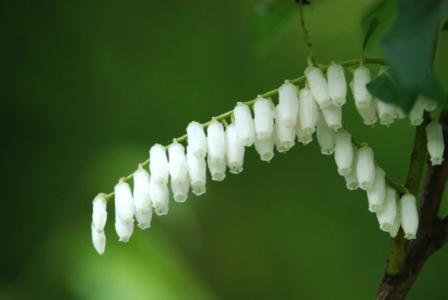
The bark of variegated Japanese pieris is gray or brown, with longitudinal striations and scaly markings. The leaves are leathery yet pliable, mostly alternate, lanceolate to oblanceolate or long-elliptical, with serrated edges; young shoots are often red, bronze, copper, orange or yellow. The leaf color of most Japanese pieris cultivars changes with different growth stages, and a single plant can simultaneously bear red, pink, tender yellow and green leaves, creating a spectacular display with great ornamental value. The flowers of variegated Japanese pieris have a distinctive charm: small, pure white blossoms borne on racemes or panicles, shaped like hanging bells. The inflorescences are terminal or axillary, upright or drooping. The flowers are mostly white, sometimes pink, and fragrant. The flowering period is from February to May. The calyx is yellow-green or yellow-brown, sometimes light red.
Japanese pieris prefers a humid climate and semi-shaded conditions, but can also grow in full sunlight. It likes acidic, fertile, moist, well-drained soil. Its habitat requirements are similar to those of rhododendrons, but it is more cold-hardy. Most of the plants introduced to China are Japanese pieris, with some being hybrids between Japanese pieris and Taiwan pieris. All hybrids and cultivated varieties are extremely cold-hardy, and some cultivars can overwinter outdoors in the low temperatures of northern regions. In cold areas it loses its leaves in winter. The vast regions south of Beijing are all suitable for growing it. It is not demanding about its environment, easy to cultivate, tolerant of pruning and vigorous in sprouting.
In landscaping, variegated Japanese pieris is used for flower hedges, color-block mosaics, understory plantings and border shrubs. Its colors are richer and more brilliant than those of flowering shrubs such as rhododendrons, and it offers both attractive foliage and flowers, providing ornamental value throughout the year.
The Uses of Japanese Pieris
Use One - Ornamental Value
Because Japanese pieris has fairly attractive leaf shapes and colors, brilliant flowers and a rich range of flower colors, it has high ornamental value. It is mostly used as a landscaping plant, as a potted plant placed on a balcony, or as a garden plant for viewing.
Use Two - Medicinal Value
The leaves of Japanese pieris contain toxins, so they must not be eaten by mistake. However, after processing, Japanese pieris can be used to treat scabies and as an insecticide, making it a very good medicinal plant for external use.
These are the uses of Japanese pieris. Do you suddenly feel that growing Japanese pieris is quite worthwhile? So what are the methods for growing Japanese pieris? Let us introduce them to you in detail below!