How to Plant Japanese Pagoda Tree Flowers? A Detailed Guide from Sowing to Care
1. Sowing
Although the Japanese pagoda tree plant is tall, we can propagate it from seeds. We should select healthy, plump seeds for propagation, soak them in warm water for a day and a night to promote germination, then mix the seeds with fine sand, and place them at a temperature of around 20°C to sprout. Once the seeds germinate, we can plant them. In addition, we should pay attention to choosing a flower pot for the Japanese pagoda tree. Its root system is relatively long, so a larger and deeper pot should be chosen; sowing is best done in open ground, where growth is faster, and once small plants have formed, they can be transplanted into pots.
2. Thinning
When the plant has grown to about 15 cm, we transplant it into a pot for growing. We should choose a deeper pot and place the Japanese pagoda tree in a sunny environment for cultivation.
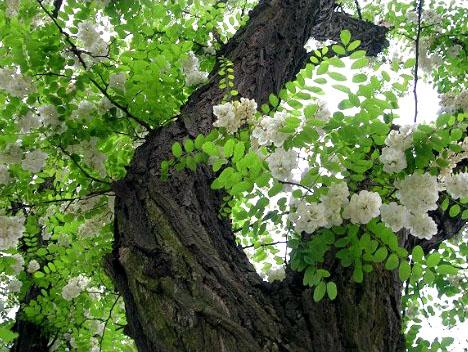
3. Fertilizing
The growth of the Japanese pagoda tree requires us to provide it with sufficient nutrients. During its growing season, sprinkle a little granular fertilizer around the potting soil, then water it.
4. Pruning
The Japanese pagoda tree grows at a moderate rate. During the seedling stage, pinch the tips promptly to encourage branching. We need to promptly cut off old branches and yellowing branches and leaves.
[How to Plant the Japanese Pagoda Tree] A Detailed Guide to Planting the Japanese Pagoda Tree
In this colorful global village where we live, all kinds of flowers, grasses, and trees grow. They are not only beautiful but also protect our ecological environment. As for the trees that have made great contributions to nature, do you also know a lot about them? The Japanese pagoda tree, I think everyone may know something about it, but how much do you know about planting the Japanese pagoda tree? Today, let the editor introduce the planting methods of the Japanese pagoda tree to everyone. Come and take a look with the editor.
Tree, 15-25 m tall. Pinnately compound leaves 15-25 cm long; leaf rachis hairy, enlarged at the base; leaflets 9-15, ovate-oblong, 2.5-7.5 cm long, 1.5-3 cm wide, apex acuminate with a fine cusp, base broadly cuneate, grayish-white beneath, sparsely short-pubescent. Panicle terminal; calyx bell-shaped, with 5 small teeth, sparsely hairy; corolla milky white, standard broadly heart-shaped, with a short claw, with purple veins; stamens 10, unequal in length. Pod fleshy, beaded, 2.5-5 cm long, hairless, indehiscent; seeds 1-6, kidney-shaped. It can be used as a street tree and is an excellent nectar plant. Japanese pagoda tree flower buds are edible, contain aromatic oil, and are also a cooling astringent hemostatic medicine; the seeds can also stop bleeding and lower blood pressure; the root bark, branches, and leaves are medicinal and used to treat sores and toxins; the seeds contain about 11% oil; the wood is used for construction. It is widely cultivated throughout northern and southern China, especially commonly on the Loess Plateau and the North China Plain; it is also found in Vietnam, Korea, and Japan.
Transplanting is best done after leaf fall in autumn or before bud break in spring. Water promptly after planting, and afterward water about 3 times depending on drought conditions to ensure survival. Fragrant rosewood has strong vitality. The survival rate of planting is high, and transplanted seedlings do not need to be kept with soil or treated with chemicals. To make the seedlings grow robustly, after transplanting, cut back at ground level, remove the aboveground branches, and leave one strong bud again from the base. After cutting back, fragrant rosewood not only has a high survival rate but also has a good tree shape and grows quickly. Fragrant rosewood naturally grows with an open crown and a beautiful tree shape, requiring no pruning. In the year of planting, the tree height can reach 2 — 3m , and the main and lateral roots can reach 2m . Generally, it blooms in the second year after planting.
Root burial propagation:
This is the most important propagation method. With proper management, the survival rate can be 85%-90%. For seed root preparation, the seed roots of fragrant rosewood can be introduced after leaf fall, and stored buried in sandy soil before planting. Master the moisture of the sandy soil well: the root segments must neither dehydrate and dry out, nor become moldy and rot from too much water. Spraying new high-lipid film on the surface of the branches can keep the branches from losing water through transpiration.
Seedling management:
After emergence, remove the film and water promptly. In case of continuous rainy weather, attention should be paid to drainage. During the seedling stage, weed promptly, remove side buds, and lightly loosen the surface soil. Be careful not to damage the tender, weak, short roots. Spraying new high-lipid film on the plant surface can prevent fungal infection, improve resistance to natural disasters, increase the intensity of photosynthesis, and protect the seedlings so they grow strong and healthy.
Growth management:
Apply fertilizer in appropriate amounts. In long droughts, use clear manure water for drought resistance while also applying topdressing to promote robust seedlings. Under the condition of maintaining reasonable water and fertilizer, spray new high-lipid film in a timely manner to preserve fertilizer and soil moisture. The seedlings are transplanted and planted after leaf fall in late autumn of that year or before bud break in the following spring. Dig holes and apply fertilizer according to the plan. After planting, fill with soil and compact it, and water thoroughly to settle the roots; the survival rate is generally above 95%. After autumn, the tree height can reach 2-3 m, with a diameter at breast height of 3-5 cm, and it blooms in the second year. Fragrant rosewood has a tall, straight trunk, an open crown, a beautiful tree shape, gorgeous flowers, and an attractive fragrance.
The content above is the planting method of the Japanese pagoda tree introduced by the editor. Through the editor's detailed introduction, everyone should have some understanding of the planting method of the Japanese pagoda tree. Since everyone basically understands it, why not try planting it and see whether you might be all talk and no action? If you still have any questions you do not understand, you can continue exploring online by yourself. When you encounter something you do not understand, you should not be ashamed to ask! Be a knowledgeable and well-informed person! I hope the editor's introduction can be helpful to everyone!
How to Plant the Japanese Pagoda Tree and When Does It Bloom
The Japanese pagoda tree is a common large tree. Its branches and leaves are lush, and every spring it also produces bright Japanese pagoda tree flowers. The flowers can not only be enjoyed but also have many medicinal values. So how do you plant the Japanese pagoda tree, and when does it bloom? Let's learn about it together with the editor!
How to Plant the Japanese Pagoda Tree
1. Japanese Pagoda Tree Information
The Japanese pagoda tree is a large tree, reaching 15-25 m in height, with pinnately compound leaves 15-25 cm long, a hairy leaf rachis, and an enlarged base. The Japanese pagoda tree can be used as a street tree and is an excellent nectar plant. The flower buds are edible and can also stop bleeding and lower blood pressure. Its root bark, branches, and leaves have medicinal value and are used to treat sores and toxins.
Transplanting is best done after leaf fall in autumn or before bud break in spring. Water promptly after planting, and afterward water about 3 times depending on drought conditions to ensure survival. Fragrant rosewood has strong vitality. The survival rate of planting is high, and transplanted seedlings do not need to be kept with soil or treated with chemicals. To make the seedlings grow robustly, after transplanting, cut back at ground level, remove the aboveground branches, and leave one strong bud again from the base. After cutting back, fragrant rosewood not only has a high survival rate but also has a good tree shape and grows quickly. Fragrant rosewood naturally grows with an open crown and a beautiful tree shape, requiring no pruning. In the year of planting, the tree height can reach 2 — 3 m, and the main and lateral roots can reach 2 m. Generally, it blooms in the second year after planting.
2. Root Burial Propagation
Root burial propagation of the Japanese pagoda tree is the most important propagation method, with a survival rate of 85%-90%. After the Japanese pagoda tree drops its leaves, seed roots can be introduced, and before planting they are stored buried in sandy soil. Master the moisture of the sandy soil well: the roots must neither dehydrate and dry out, nor become moldy and rot from too much water.
3. Seedling Management
After emergence, remove the film and water promptly. If continuous rainy weather occurs, attention should be paid to drainage. During the seedling stage of the Japanese pagoda tree, weed promptly and lightly loosen the surface soil, but be careful not to damage the young roots. It is also necessary to spray the seedlings with solution to prevent pest damage, improve resistance to natural disasters, and protect the seedlings so they grow strong and healthy.
4. Growth Management
During growth management of the Japanese pagoda tree, fertilizer should be applied in appropriate amounts. If drought occurs, use clear manure water for drought resistance, which can promote the robustness of the saplings. The seedlings of the Japanese pagoda tree are transplanted and planted after leaf fall in late autumn or before bud break in the following spring. Dig holes and apply fertilizer according to the plan. After planting, fill with soil and compact it, and water thoroughly to settle the roots; the survival rate is generally above 95%.
When Does the Japanese Pagoda Tree Bloom
1. The Japanese pagoda tree is often planted beside houses or roads. It is commonly cultivated throughout China, mainly in the north, and is more common on the Loess Plateau and the North China Plain. The Japanese pagoda tree generally blooms from April to May each year, and the flowering period is about 10-15 days.
2. The Japanese pagoda tree flower tastes slightly bitter and is non-toxic. It cools the blood and stops bleeding, clears the liver and reduces internal heat, and can treat conditions such as bloody stool, bloody urine, and sore, swollen throat. However, the Japanese pagoda tree flower is cool in nature, so people with weak and cold spleen and stomach should not eat it.
That is the introduction to how to plant the Japanese pagoda tree and when it blooms. I hope it is helpful to everyone! The Japanese pagoda tree has a tall tree form. Besides being ornamental, it can also provide us with shade and block the sun in summer, achieving two benefits at once.