How to grow Rosa multiflora? Detailed care measures and precautions
1. Sunlight
Rosa multiflora likes light and needs plenty of it, so make sure it gets enough sunlight.
2. Water
Rosa multiflora is slightly shade-tolerant but afraid of waterlogging, so when watering, pay attention to controlling the amount; do not water too much, and do not water too little. Just keep the soil moist, and never let water accumulate.
3. Fertilizing
Rosa multiflora likes fertilizer, so it should be fertilized at regular intervals, generally about once every half a month.
4. Pest and disease control
Rosa multiflora often suffers from insect outbreaks and viral infections, so prevention should be done in advance, generally by spraying some preventive chemicals. If pests have already appeared, spray insecticide immediately; if diseased branches are found, cut them off at once, then spray on a repair solution.
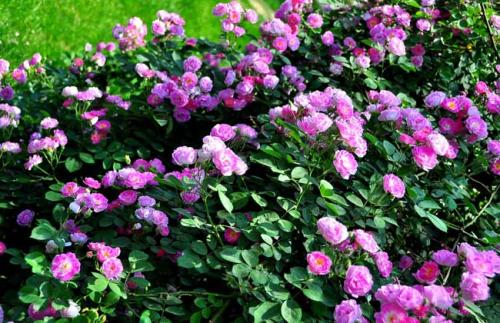
Well, that is all for today's content from the editor. I hope it helps you learn about the flowering period of Rosa multiflora and how to grow it. Thank you for reading!
Care measures for Rosa multiflora
1. Plenty of light
Rosa multiflora likes light and needs plenty of it, so make sure it gets enough sunlight.
2. Proper watering
Rosa multiflora is slightly shade-tolerant but afraid of waterlogging, so when watering, pay attention to controlling it properly; do not water too much, and do not water too little. Just keep the soil moist, and never let water accumulate, otherwise the roots are prone to rot.
3. Fertilizing
Rosa multiflora likes fertilizer, so it should be fertilized at regular intervals, generally about once every half a month.
4. Pruning
Rosa multiflora is a climbing shrub, so to keep its overall appearance attractive, it needs to be pruned.
5. Pest and disease control
Rosa multiflora often suffers from insect outbreaks and viral infections, so once pests and viruses are found, immediately spray insecticide and cut off the diseased branches; this is the fastest method.
6. Soil
Rosa multiflora likes loose soil with good drainage, which helps keep the soil moist.
These are the care measures for Rosa multiflora. If you want to grow it well, you can refer to these measures. Below, the editor would like to share the flower language of Rosa multiflora.
How to grow potted Rosa multiflora? Growing methods and precautions for Rosa multiflora
Rosa multiflora, also known as multiflora rose, Cilu, Qiangmi, etc., is a plant in the genus Rosa of the family Rosaceae. Its flowers are brightly colored and fragrant, with high ornamental value, and it is very suitable for indoor potted display. It is highly favored by flower and plant enthusiasts. So, how do you grow potted Rosa multiflora? The growing methods and precautions are introduced below.
Image: Rosa multiflora
1. Growing methods for potted Rosa multiflora
1. Potting soil preparation:When preparing nutrient soil for potted Rosa multiflora, attention should be paid to drainage, ventilation and the combination of various nutrients. The ratio is 5 parts garden soil, 3 parts leaf mold: 2 parts rice husk ash. It is suitable to repot, trim roots and change soil around overwintering each year, gradually increasing the pot diameter year by year, with clay pots being best.
2. Transplanting time:Potting Rosa multiflora is not restricted by season; as long as the seedling root system is suitably developed or is kept with a soil ball, it can be potted in spring, summer and autumn. For large field-grown Rosa multiflora plants, potting is best done during the dormant period after leaf fall in early winter or before bud break in early spring; otherwise normal growth and development are affected, tree vigor weakens, and it takes a long time to recover. For small Rosa multiflora seedlings, potting can be done at any time; as long as they have survived cultivation, they can be potted, to prevent leggy growth and weakening.
3. Potting method:For small Rosa multiflora seedlings, pick up the seedling and shake it gently to fully spread the roots. Large seedlings do not need this. Usually one plant per pot; when pots are few, two or three plants can be put in one pot (later, when they branch, there may not be enough space). When grown in a large pot, Rosa multiflora has thick stems, green leaves, large flowers, many stamens and bright colors.
4. Watering:Watering Rosa multiflora varies with the season. During the winter dormant period, keep the soil moist; just do not let it dry out completely. In early spring, before the branches sprout and as the branches and leaves grow, appropriately increase the amount of water, watering once each morning and evening. During the peak growing season and flowering period, increase watering. In summer, with high temperatures, water evaporation increases and the plant is in a weak semi-dormant state; it most fears drying out and dehydration, so water once each morning and evening and avoid exposure to strong sunlight. When watering at high temperatures, a small amount of water should seep from the bottom of the pot each time, indicating it has been watered thoroughly. When watering, do not splash water on the leaves, to prevent disease.
Image: Rosa multiflora
5. Fertilizing:Rosa multiflora likes fertilizer. The base fertilizer is mainly slow-release organic fertilizer, such as rotted cow manure, chicken manure, soybean cake, oil residue, etc. Add liquid fertilizer water once every half a month, which can keep the leaves thick, dark green and glossy. Before sprouting in early spring, apply a relatively concentrated liquid fertilizer once. Note not to fertilize during the flowering period. After the flowers fade in June, apply liquid fertilizer once more. In September, when the fourth or fifth axillary buds are about to sprout, apply a medium-strength liquid fertilizer once more. In December during the dormant period, apply rotted organic fertilizer to overwinter.
6. Pruning:After each season's flowering period ends, comprehensive pruning must be carried out. Generally, light pruning is suitable: promptly cut off spent flowers and thin, weak, crossing and overlapping branches, keep thick, young branches, leaving only 3-6 cm from the base, keep outward-facing buds, and prune into a natural open-center shape, making the plant shape attractive and extending the flowering period. In addition, for potted Rosa multiflora, choose varieties that are short, free-flowering and richly fragrant.
7. Disease prevention:Rosa multiflora is prone to many diseases, most of which are caused by fungi, such as powdery mildew, black spot and rust. In daily care, pay attention to pruning branches and leaves to facilitate ventilation. Before pests and diseases occur, spray chemical solutions for prevention, sterilization and disinfection. If pests and diseases have already occurred, take corresponding measures for treatment, so as not to affect the growth and flowering of Rosa multiflora.
Image: Rosa multiflora
2. Precautions for growing Rosa multiflora
Under conditions of frequent rain, humidity, poor ventilation and poor sunlight, Rosa multiflora is prone to powdery mildew. Once found, cut off and destroy the diseased branches to avoid infection, and spray low-concentration lime sulfur mixture or Bordeaux mixture or thiophanate solution to prevent the disease from spreading. The main pests and diseases of Rosa multiflora are powdery mildew and black spot, which can be sprayed with 1000-times diluted 70% thiophanate-methyl wettable powder. Pests include aphids and nettle caterpillars, which can be killed by spraying 2000-times diluted 10% chudongjing emulsifiable concentrate. At the same time, Rosa multiflora has high light requirements, so during cultivation, be sure to pay attention to this issue.
[Editor's conclusion]Rosa multiflora likes a warm and humid climate environment, fears wetness and avoids waterlogging, so special attention is needed during care. The above has introduced the growing methods and precautions for Rosa multiflora. Have you all learned them?