Are Lotus and Water Lily the Same Plant? An Analysis of Their Differences
Lotus and water lily are the same plant, mostly called lotus, which is also its earliest name, "On the mountain grows the mulberry, in the marsh blooms the lotus"
Lotus and water lily are the same plant, mostly called lotus, which is also its earliest name, "On the mountain grows the mulberry, in the marsh blooms the lotus."
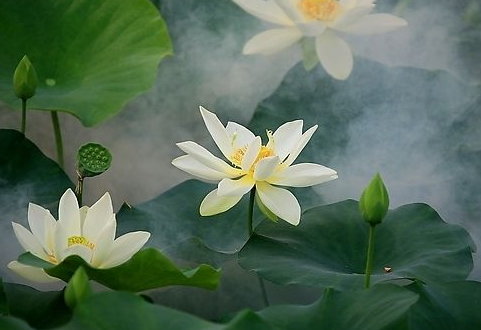
The Gentleman Among Flowers - The Lotus
The lotus is an aquatic herbaceous plant, treasured in every part, possessing both ornamental value and economic benefit. It blooms in the scorching heat of summer, graceful in form and lovely in color, with a delicate fragrance that carries far. In ancient times it was one of the precious flowers of imperial gardens and private courtyards; in modern landscaping it is widely chosen as the theme plant of water gardens. Its underground stem (the lotus root) and fruit (lotus seeds) are rich in nutrients and are traditional vegetables and tonics. The leaves, stems, root nodes, seed pods, stamens, and petals can all be used as medicine, while the leaves and stems can also serve as packaging and industrial raw materials.The lotus is hollow within and straight without, emerging unstained from the mud; through the ages poets and scholars have used it to praise noble character. Its flowers and leaves are full of grace, standing elegantly in the water, giving people a sense of purity and refinement. In Buddhism the lotus is regarded as a sacred symbol of purity and is deeply revered.
The lotus is also known as furong. Cao Zhi, a literary figure of the Three Kingdoms period, wrote "Ode to the Lotus," praising it as "surveying the finest of a hundred blooms, none possesses the unique spirit of this flower!" Legend has it that the 24th day of the sixth lunar month is the lotus's birthday, and the ancients would specially gather on this day to admire the lotus, establishing it as the "Lotus Viewing Festival" to share in the lotus's "unique spirit"!
The lotus belongs to the family Nymphaeaceae, genus Nelumbo. There are about 2 species in this genus worldwide; the other is the yellow lotus, native to the Americas, with yellow flowers, a faint fragrance, single petals, and round, dark green leaves that closely resemble the lotus. Its stem (root) is also edible, but the plant is shorter than the lotus. It has now been introduced to both China and Japan. There is also the so-called "Caspian lotus," found near the Caspian Sea, with white flowers and blunt petals, possessing no distinctive features; it is merely a white-flowered variety of the Asian lotus, and most botanists worldwide do not recognize it as a separate species.
The lotus is also called lianhua. It is extremely widely cultivated in our country, and because of its long history, many alternative names have been passed down, such as fuqu (from the Book of Songs), furong, handan (from the Erya), shuizhi (from the Materia Medica), zezhi (from the Records of Ancient and Modern Times), caofurong (from the Stone Forest Swallow Words), shuihua (from the Compendium of Materia Medica), shuifurong (from the Compendium of Flowers), and many others, which is truly rare among cultivated plants.
The lotus originated in the tropical regions of Asia and Oceania. Besides China, it is distributed in Japan, the former Soviet Union, India, Iran, Sri Lanka, Indonesia, and Australia. From unearthed artifacts, it is evident that wild lotus existed in China long before its artificial cultivation. In the 1940s, the paleobotanist Professor Xu Ren collected lotus leaf fossils in the Qaidam Basin. In 1973, fossil lotus pollen was discovered among artifacts unearthed from the "Hemudu Culture" site in Yuyao County, Zhejiang, dating back 7,000 years. In the same year, two carbonized lotus seeds were found at the "Yangshao Culture" site in Zhengzhou, Henan, dating back more than 5,000 years.
In the early Western Zhou period (11th century BC), the ancients consumed about 40 kinds of vegetables, and the lotus root was one of them. The Book of Songs contains the line "in the marsh blooms the lotus," meaning that lotus grows wherever there are marshes and waters across the land.
Japan once reported that lotus fossils were excavated from ancient strata. Hoshikawa Kiyochika pointed out in his book "The Origin and Spread of Cultivated Plants" that Japan's lotus was introduced from China via Korea during the reign of Emperor Yuryaku (5th century AD), and was subsequently introduced from China many times. Chinese and foreign evidence demonstrates that the lotus should be a plant of the same species from different origins, and southern China is one of the places of origin of the lotus.
However, before the 1960s, many Chinese and foreign botanists and horticulturists often stated in their monographs that the lotus originated in India, which may stem from the lotus's English name. In fact, Europe originally had no lotus; it is said that several hundred years ago the lotus spread from India to Indochina and then to Europe. Written records of Europeans introducing the Oriental lotus first appeared in 1787. At that time Europeans knew nothing about the lotus, so it is not surprising that it was named after the place from which it was introduced. To conclude from this that the lotus's place of origin is limited to India lacks scientific basis.
The lotus was introduced to the Americas and Africa even later. Today, cultivation of the lotus in Europe and America remains limited, mainly for ornamental purposes, with only Native Americans and some African countries occasionally cultivating it for food.
In China, the lotus is distributed from Hainan Island in the south to Yujin in Heilongjiang in the north, from Shanghai in the east to the northern foot of the Tianshan Mountains in the west. Except for the Tibet Autonomous Region and Qinghai Province, it is found in most regions of the country, with a vertical distribution reaching up to 2,000 meters. In Meishan County, Sichuan, there is the "Three Su Shrine," within which a lotus pond is built. In the shrine there is a pavilion called "Duanlian Pavilion." On its pillars hangs a couplet that reads: "The affectionate bright moon invites you to share, the masterless lotus blooms everywhere." Indeed, the lotus blooms everywhere across China with its distinctive charm!
The lotus possesses certain characteristics of ancient plants. Botanically it belongs to the dicotyledons, yet certain features are the same as those of monocotyledons: the two cotyledons are arranged alternately and are fused at the base; the vascular bundles in the stem are scattered; and except for one vein running to the leaf tip, all other veins are dichotomously branched. Seedlings have an upright stem axis and an undeveloped primary root; at the same time, they retain the requirement of aerial pollination characteristic of terrestrial higher plants.
It can thus be seen that the lotus's ancestors once lived on land, and later, to adapt to an aquatic habitat, certain organs of the body tended toward simplification or degeneration (such as the degeneration of the root), which again is consistent with the monocotyledon feature of an undeveloped primary root replaced by a root system of adventitious roots. Therefore the lotus has become material for botanists studying plant evolution and holds a certain value in plant taxonomy.
The lotus root is the underground stem of the lotus that grows horizontally in the mud, an organ for storing nutrients and for propagation. The cross-section of the lotus root has many ducts of varying sizes; these are air cavities formed by the lotus to adapt to aquatic life, and such air cavities can also be seen in the leaf stalks and flower stems. In the stem there are also many fine water-conducting vessels, and on the walls of these vessels there is thickened mucilaginous lignin cellulose that serves to fill out the lotus root flesh and maintain the vessels, possessing a certain elasticity. Therefore, when broken, many white connected lotus root fibers are formed.
Once people recognized this special tissue structure of the lotus root, they considered it deeply meaningful. In the Tang Dynasty, Meng Jiao wrote in a poem: "My heart is like the fibers in the lotus root, though broken, still connected." Thus, "the lotus root breaks but the fibers remain connected" became an idiom metaphorically describing a relationship that appears severed but in reality still has entanglements.
Lotus leaves come in three types: the leaf first produced from the terminal bud of the planted lotus root, floating on the water surface, called the "coin leaf"; the earliest leaf to grow from the lotus root band that is larger than the "coin leaf," also floating on the water, called the "floating leaf"; and the later leaf that grows from the lotus root band with a tall, thick stalk, standing out of the water, called the "standing leaf." Whether "coin leaf," "floating leaf," or "standing leaf," all are shield-shaped and round, with entire margins and a rough surface. Observed under a magnifying glass, the leaf surface is covered with short, blunt spines, and between the spines there is a thin layer of waxy white powder; this is the lotus leaf's self-protection mechanism. When rainwater falls on the leaf surface, it immediately condenses into droplets of various sizes that can roll with the wind without soaking through the leaf and causing damage.
The flower primordium develops within the bud at the node of the lotus root band, on the back side of the base of the young leaf. The newly formed flower bud has scales on the outside and grows alongside the standing leaf. The flower is solitary and bisexual, with single-petaled, semi-double, double-layer, and thousand-petaled forms. Flower colors vary among white, pale green, pink, rose red, deep red, white with red edges, or sprinkled with red dots, red stripes, and red patches. The flowering period is from June to September, with a single flower lasting only 3 to 4 days, and mostly opening in the morning and closing at noon; the thousand-petaled type can remain open for more than 10 days.
There are many cultivated varieties of lotus. The thousand-petaled lotus is a treasure among lotuses, with petals reaching more than 2,000, a single flower weighing 0.4 to 0.75 kg, and the stamens and pistils completely petalized. The outer petals clasp together, and the metamorphosed receptacle divides into two or more axes. When the flower opens, the outer petals fall away layer by layer while the inner small petals (i.e., small petals) continuously proliferate and rotate into two or more flower centers.
Those with two flower centers are commonly called "twin lotus," those with three flower centers are called "character 'pin' lotus," those with four flower centers are called "four-faced lotus," and those with many flower centers are called "five-seed lotus" or "hydrangea lotus," etc., none of which bear seed pods. In fact, these are all results of floral variation in the thousand-petaled lotus.
There is another twin phenomenon, in which the lotus flower bud, during differentiation, is affected by some external environmental condition and splits into two meristematic centers, then develops into two buds like twins, so that two flowers bloom on a single flower stalk and produce a pair of seed pods. This kind of accidental phenomenon is not a varietal characteristic and cannot be inherited. Although it appears from time to time in various places, it is truly rare. Therefore, Chinese folk regard the twin lotus as an auspicious token, calling it "auspicious lotus" or "fine lotus," and old records contain numerous accounts of it.
The fruit of the lotus is commonly known as the lotus seed. The seed coat surface of the lotus seed has stomata and guard cells; beneath the epidermis there is a firm and dense palisade tissue, and below the stomata there is a stomatal canal. In mature lotus seeds, the stomatal canal shrinks very small, preventing air and water from freely entering or exiting, and can even block microbial invasion. This tissue structure ensures the lotus seed's longevity; lotus seeds buried in strata for hundreds or even thousands of years (anciently called "stone lotus seeds") can still be sown and sprout.
In the 1950s, Chinese scientific workers discovered thousand-year-old ancient lotus seeds in the peat soil strata of Pulandian, Liaoning. At that time, scientists from the Beijing Botanical Garden of the Chinese Academy of Sciences as well as from the Soviet Union and Japan all used these seeds for germination and cultivation experiments, all of which succeeded, calling it the "ancient lotus." At the same time, Japanese scholar Oga Ichiro excavated 2,000-year-old ancient lotus (referring to seeds) from the strata of the Koshigawa in Chiba Prefecture, Japan, which also germinated and survived after planting; this was the "Oga Lotus" that caused a sensation and was hailed as the "Flower of Peace."
The lotus is a perennial root aquatic plant. Within its annual growth cycle, leaves come first and flowers follow, flowers and leaves emerge together, and individual flowers appear in succession. While flowering, it also sets fruit, with buds, flowers, and seed pods coexisting. After flowering, new lotus roots form, exhibiting a rhythm of growth-development-growth.
The lotus prefers moisture and relatively stable still water, disliking flowing water with drastic fluctuations. For pond cultivation of lotus, a water depth of 0.3 to 1 m is suitable; at a water depth of 1.5 m, only a few floating leaves are seen and no standing leaves appear, and without standing leaves it cannot bloom. When standing leaves are submerged for more than 10 consecutive days, there is a risk of destruction. If the lotus loses water during the growing season but the soil is still moist, it can recover after watering. If the soil dries and cracks persistently, the leaves will wither and scorch, growth will stagnate, and the plant will die.
The lotus prefers warmth; the temperature during the planting season should be at least above 15°C. The most suitable growing temperature throughout the growth period is 22 to 30°C. The lotus prefers light and does not tolerate shade. Under strong light it grows and develops quickly, blooms early, and also withers early; under weak light it grows and develops slowly and blooms late, but also withers late. The lotus is not demanding regarding soil, with fertile clay rich in organic matter being suitable. It has few pests and diseases, is strongly resistant to fluorine, and has a certain resistance to sulfur dioxide gas.
China has a long history of lotus cultivation. 2,500 years ago, King Fuchai of Wu had a "Flower-Playing Pond" built at his detached palace by the shore of Taihu Lake (present-day Lingyan Mountain in Wu County, Jiangsu) for his favored concubine Xi Shi to enjoy the lotus; this was the earliest artificial pond cultivation of lotus. During the Sui and Tang dynasties, near Ci'en Temple in Chang'an (present-day Xi'an) there was the "Furong Garden," where a specialized lotus garden appeared.
Potted lotus cultivation began before the Eastern Jin dynasty. Wang Xizhi's "Letter to Shutang" records: "This year I have planted several pots of the thousand-petaled variety in the open hall, and they have readily produced flowers in succession without cease; more than 20 stems have now bloomed." During the Ming and Qing dynasties, potted lotus flourished in the Jiangnan region. Small varieties of lotus "with flowers the size of a coin" were displayed for viewing alongside potted landscapes in private courtyards and were deeply loved by people.
During the Jiaqing reign of the Qing dynasty (1796-1820), China's first monograph on lotus, the "Lotus Manual," appeared, recording 33 lotus varieties, proposing classification standards for lotus varieties, and summarizing folk experience in pot cultivation techniques.
In seed propagation techniques, the working people of our country demonstrated astonishing creativity very early on. In the 6th century AD, the agricultural scientist Jia Sixie recorded in "Important Arts for the People's Welfare": "In the eighth and ninth months, collect hard black lotus seeds and grind the head of the lotus seed on a tile to make the coat thin. A thin coat sprouts easily, and they emerge before long. If not ground, the coat is firm and hard, and they cannot sprout quickly." This method of mechanically damaging the lotus seed coat before sowing is still in use today. The success of artificial sowing of lotus seeds created conditions for later seedling selection and breeding of new varieties.
After Japan introduced the lotus from China, it was initially cultivated for food and also for ornament, and only after the 16th century did lotus solely for ornamental purposes appear. According to Japan's "Flower Garden Brocade" (1695), there were only 45 varieties at that time. By the early 20th century, this had increased to 60 varieties. In recent decades, ornamental lotus cultivation in Japan has become very widespread, in pots and ponds, and lotus germplasm resources have been continuously introduced from various parts of Asia and America for crossbreeding. According to Kitamura Fumio's "Flower Lotus" (1978), Japanese flower lotus varieties number nearly a hundred. Among them are hybrids of Asian lotus and American lotus, namely the "Prince Lotus," "Noon Consort Lotus," etc., which bear yellow-red flowers and are extremely beautiful; some varieties have already spread to Europe and America.
In the United States, the cultivation of aquatic flowers leans heavily toward water lilies, yet Chinese lotus can often be seen in some gardens. However, the flower industry, from a commercial standpoint, is most interested in breeding new lotus varieties. For example, at a private aquatic garden in Florida, Snowhook and his son in 1965 crossed the American yellow lotus with the Chinese lotus "Red Thousand Petals" and obtained a semi-double new variety that opens rose-red flowers on the first day, orange-yellow flowers on the next day, and pale yellow flowers on the third day, truly deserving the name "beauty changing three times."
Indians believe the lotus symbolizes good fortune, cool ease, and pure unstainedness, and thus have made the lotus their national flower. India is also the birthplace of Buddhism, and the lotus is inextricably linked with Buddhism, but the lotus in Buddhism is not distinguished from the water lily of a different genus.
According to Buddhist scriptures, there are mainly seven kinds of lotus in India, called the "seven treasure lotuses," but only two are true lotuses, namely the white-flowered pundarika flower and the red-flowered padma flower; the other five are all water lilies: the utpala flower (blue water lily), the kumuda flower (yellow water lily), the nilotpala flower (variegated water lily), and two others that are white water lilies.
Egypt has a famous "Egyptian lotus," with white flowers, which is actually not a lotus but a kind of water lily, introduced from Asia 2,500 years ago. Although not native to the region, due to its long history of cultivation, good growth, and people's affection for it, it has been designated as Egypt's national flower.
Methods for Arranging Flowers and Plants in Home Courtyards
Some families live in single-story houses and have a small courtyard. Usually, the courtyard enjoys gentle breezes and warm sunshine, as well as rain and dew, and its larger area makes it far more favorable for growing flowers than a high-rise balcony. But to green and beautify the courtyard well and make it garden-like, one also needs to master some landscaping design and flower-growing knowledge. Reasonable planning, sensible selection of flowers and trees, and attention to vertical greening are all necessary to make the courtyard more garden-like in character.I.Principles for Arranging Courtyard Flowers and Trees
Garden plants include many types such as woody, vine, and aquatic plants, and their mutual arrangement should follow the principles below.
1. It must meet the functional requirements of the courtyard
2. The landscape design of garden plants must be consistent with the overall layout of the garden green space and in harmony with the environment
In formal courtyards, paired plantings and row plantings are often used; in natural-style courtyard green spaces, the natural postures of plants are more often used for naturalistic landscaping. For example, near main gates, main roads, formal plazas, and large buildings, formal plant landscaping is often used; at the edges of lawns and ponds in natural landscape gardens, naturalistic landscaping is more often adopted. On the plane, attention should be paid to the density and contour lines of the arrangement; vertically, attention should be paid to the contour lines of tree crowns; within groves, attention should be paid to sightlines. In short, there must be an overall effect of size, distance, and height levels in the plant landscape. Beautiful garden plant landscapes complement one another. Garden art composition requires a gradual transition among trees, shrubs, and herbaceous plants, while also forming contrasts among them to facilitate viewing.
3. Select appropriate plant species according to local conditions, based on the different ecological environment conditions of garden plants
For courtyard greening, one should choose plants that are easy to keep alive, tolerant of pruning, resistant to smoke and dust, tall in trunk, dense in branches and leaves, and fast-growing. For mountain greening, one should choose drought-tolerant plants that also help set off the mountain scenery; for waterside greening, one should choose moisture-tolerant plants that harmonize with the water scenery.
4. There must be a reasonable density
The density of plants directly affects the greening landscape and the functioning of the green space. In tree landscaping design, the mature crown size of the tree should be used as the basis for the optimal design of plant and row spacing, but attention should also be paid to combining immediate effect with long-term effect. Use fast-growing trees together with slow-growing trees, evergreens with deciduous trees, trees with shrubs, and foliage plants with flowering plants to create multi-layered greening while satisfying the ecological conditions of the plants.
5. Comprehensively consider the seasonal changes of garden plants and the unity and contrast of color, fragrance, and form
Plant landscaping should comprehensively consider differences in time, environment, plant species, and their ecological conditions, so that rich plant colors
appear alternately with the changes of the seasons, and each sub-area of the garden green space highlights the plant landscape of one season. In areas where visitors gather, there should be scenery to enjoy in all four seasons. The combinations of plant landscapes vary greatly in color, fragrance, individual form, and the morphological changes of leaves and flowers, but there must be a clear primary and secondary order, proceeding from function and highlighting one aspect to avoid a sense of clutter.
Methods for Arranging Flowers and Plants in Home Courtyards
II.Specific Arrangement of Courtyard Flowers and Trees
Generally speaking, the area of a courtyard is rather small, and every local greening element relates to the overall situation of the courtyard; therefore, every local greening element in the courtyard must be treated carefully. The following describes separately the garden gate, garden wall, garden path, water feature, rockery, lawn, flower bed, flower border, flower platform, tree grouping, vertical greening, balcony, terrace greening, and roof garden, etc.
1. Greening of the garden gate
Every courtyard has entrances and exits of different sizes, namely garden gates. The garden gate plays an important role in the combination, separation, penetration, and landscaping of courtyard space. Since the garden gate is the place of entry and exit and is exposed in position, the greening of the gate is the most eye-catching. Because owners differ in living habits and personality, the greening arrangement forms of the gate also differ. Generally speaking, outgoing owners are accustomed to conspicuous arrangements, allowing outside passersby to view the courtyard's interior landscape; introverted owners are accustomed to concealed arrangements, not wishing outside passersby to see the interior at a glance. In the greening of the garden gate, while ensuring convenient passage, attention should be paid to the difference between inside and outside scenery, adopting the technique of closing or opening to increase the depth of scenic layers and expand space; attention should also be paid to the creation of borrowed scenery and framed scenery.
Garden gate greening is often combined with hedges and green walls, and there are many forms:
First, directly using low-branching Chinese juniper, Platycladus orientalis, and coral tree as the main body, with a framework of wood or steel inside, then tying the trunks and branches of evergreen trees to the framework and shaping and pruning them, can create a lively green gate scene. It has an evergreen effect throughout the four seasons and is full of vitality.
Second, combining with the garden gate structure, using living flower and tree materials together with building materials to create a landscape, such as planting green plants on hollow gate pillars filled with soil, or letting them hang down, or creating flower-viewing and foliage-viewing gate scenes on the upper three sides. Attention should be paid to the height of the gate pillar; it is best if water can reach the plant roots by capillary action, otherwise attention must be paid to watering or directly choosing drought-tolerant plant varieties; potted form can also be placed directly on top of the gate pillar, or on both sides of the gate; a flower platform can also be set up at the base of the gate pillar with flowers and trees planted in the platform.
Third, the form of vertical greening, using steel, bamboo, wood, or cement to make a gate frame, with climbing plants planted on both sides. For a south-facing gate front, herbaceous flowers and flowering shrubs can be arranged in a balanced way; a north-facing gate front is relatively shady and cold with poor ventilation, so trees should be planted for greening to facilitate ventilation and provide shade in summer; for side gates, side doors, or east-facing and west-facing garden gates, deciduous trees can be planted on the ground in front of the gate or a vertical greening screen can be established.
In short, the greening of the gate should be concise, simple, and natural. Garden gate greening should have a clear sense of season; the color contrast between flowers and gate should be strong; the selected flowers and trees should have a long flowering period and small flower types.
Methods for Arranging Flowers and Plants in Home Courtyards
2、Greening of the garden wall
In order to create a quiet, sanitary, and beautified living space, or because of security needs, various styles of garden walls are set up on the periphery, thereby creating a courtyard landscape rich in layers and revealing the large within the small, which can both stand alone as scenery and combine with other elements to create various landscapes. There are many forms of garden walls, such as brick walls, stone walls, tree walls, flower walls, and retaining walls, among which tree walls and flower walls are the best.
A. Tree walls
On the periphery of a courtyard or around buildings, lively woody plants such as coral trees, privet, and boxwood are commonly used for greening and to form a wall effect, called a tree wall. Like brick, stone, and cement walls, tree walls have the effects of separating space, preventing dust, insulating sound, preventing fire, blocking wind, preventing cold, and screening sightlines, and moreover are convenient to manage, durable, and able to create lively shapes with a unique mountain forest landscape effect.
According to the different functional nature of the courtyard, various different tree species can be selected. For wind protection, fire protection, dust prevention, etc., taller or natural opaque tree wall forms can be used; to view the landscape inside the courtyard, a shorter tree wall, namely a hedge, can be used, or a semi-transparent tree wall; for special functions such as strengthening defense, trees with thorns such as citron, holly, climbing rose, Caesalpinia decapetala, and Banksia rose can be used as green walls. Tree species used as tree walls should have the characteristics of robust growth, easy management, and strong resistance to pests and diseases, such as citron, trident maple, and privet; in shady places, more shade-tolerant species such as photinia, coral tree, and gardenia can be chosen; at windward openings, deep-rooted species with strong wind and cold resistance such as cypress and hawthorn should be chosen; for shaped tree walls, pruning-tolerant species should be chosen, such as Chinese juniper, elder, coral tree, pyracantha, privet, water wax, camellia, photinia, and osmanthus.
B. Flower walls
Many courtyard walls are made into various flower walls using building materials such as cement, brick and stone, and iron railings. Although flower walls are built with various flower lattices, flower windows, and various different shapes, they are after all lifeless structures and cannot play a role in purifying air and improving the environment. To remedy these shortcomings, it is best to use climbing plants such as wisteria, Chinese trumpet creeper, ivy, and Banksia rose for greening beside the wall, draping the wall surface in a green coat and greatly increasing its vitality. Beautiful flowers and trees climbing over the top of the wall also beautify the environment outside the garden.
If it is a rough stucco cement wall surface, climbing plants with suckers, such as Boston ivy, Virginia creeper, ivy, hibiscus, climbing fig, Chinese trumpet creeper, and star jasmine, can be planted in the soil at the base of the wall, letting them climb on the wall to become a natural wall covering, not only beautifying the wall surface but also preventing wind and rain erosion and sunlight exposure. On a smooth wall surface, if green patterns are to be created, bamboo, wood strips, or wire flower trellises can be installed on the wall surface, and then vines such as grapes can be introduced to climb up, not only forming green pattern designs and a green wall covering but also rich in seasonal changes. For a sunny wall surface, Boston ivy and Chinese trumpet creeper can be chosen; for a shaded wall surface, ivy, climbing fig, and Fortune's euonymus can be chosen. If the wall surface is tall, Boston ivy, Virginia creeper, and Chinese trumpet creeper can be chosen; if the wall surface is short, Fortune's euonymus, climbing fig, ivy, star jasmine, and Chinese trumpet creeper can be chosen.
C. Retaining walls
To prevent rainwater scouring, at earthen slopes with relatively large differences in height, retaining walls can be suitably set up using materials such as cement, brick, and stone. On the earthen slope above, Boston ivy, winter jasmine, and jasmine can be planted to cover the topsoil and rocks; below the retaining wall (protective slope), plants with well-developed roots and luxuriant branches and leaves such as climbing fig, star jasmine, and honeysuckle can be planted, using the forms of hanging down and climbing up for greening; different height levels can also be created to form semi-three-dimensional flower platforms, and on each level of the flower platform, similar flowering shrubs can be arranged to express the characteristics of the group. Whether it is a flower wall or a retaining wall, when using climbing plants for greening, plant the climbing plants 15 cm to 100 cm away from the base of the wall, with each plant about 1.5 m apart. The soil depth should be about 50 cm. When planting, make the shoot tips extend toward the wall surface to facilitate the growth and routine management of the climbing plants.
Methods for Arranging Flowers and Plants in Home Courtyards
3、Passages and garden paths
For convenient walking, courtyards all have roads of different width grades, connecting the front and back gates and the various houses within the courtyard. Garden paths should be part of the courtyard landscape. Through plane layout, through undulation, materials, color, and greening arrangement, the artistic level of the courtyard is expressed, so garden paths not only have a traffic function but also a role in strolling and enjoying scenery. The main road from the house door to the main gate is called a passage; the strolling paths within the courtyard are called garden paths; in addition, there are steps, ramps, or platforms for going up and down slopes.
A. Passages
A passage is both a street landscape and a bridge connecting the street and the house door. Greening the passage must ensure convenient walking while also giving pedestrians a feeling of comfort. At present, because the building area is rather small, the passage is also relatively narrow. To facilitate drainage, the passage must be higher than the road or made as a slope with a very small gradient.
There are many materials for landscaping passage surfaces, such as natural stone, cement slabs, red bricks, and ceramic tiles. A north-facing passage has poorer light, so low-growing shade-loving flowers and trees can be planted beside it, giving the poorly lit passage a sense of brightness; a south-facing passage has bright light, and to make the yard appear full of vitality, various sun-loving flowers and trees and band-shaped flower borders can be planted on both sides or one side of the passage. Choose red and yellow flowers to give a feeling of warmth, enthusiasm, and welcome.
B. Garden paths
The small paths in a courtyard are highly practical, and after greening they are also ornamental and can invite people to stroll. There are many paving materials, such as grass, stone, slate, tiles, cement, and natural stone. The paving of the path surface should be in harmony with the courtyard environment. The path surface and the greening on both sides can be arranged in the form of lawn, flower border, and tree clusters. For example, for a stepping-stone path on a lawn, the stepping stones can be chosen at a size of 40 cm x 50 cm x 15 cm. They are generally arranged at 60 cm intervals, with a gap of 10 to 20 cm left between each stepping stone, where grass grows naturally.
Garden plant landscaping is the reasonable arrangement and creation of various beautiful landscapes according to the ecological habits of garden plants and the requirements of garden artistic layout, so as to fully bring into play garden functions and ornamental characteristics. It is an important part of garden planning and design. First is the arrangement among various plants, such as the selection of species, the combination of tree clusters, the composition of plane and elevation, color, seasonal aspect, and the creation of artistic conception, etc.; there is also the arrangement between garden plants and other elements in the garden such as rockery, water bodies, buildings, and garden paths. It relates to the functioning of urban garden green spaces and the artistic level of the entire cityscape. Its types can be roughly divided into two kinds: natural style and formal style. Natural-style arrangement mainly imitates nature and emphasizes change, with a lively, cheerful, and elegant natural mood, such as specimen planting, cluster planting, and group planting of trees, etc. Formal-style arrangement mostly uses a certain axis for symmetry or plants in rows, such as paired planting and row planting, etc., giving a feeling of intensity, majesty, and solemnity.
Methods for Arranging Flowers and Plants in Home Courtyards
4、Water features
Aquatic plants take water as their habitat, unfolding leaves, flowering, and setting fruit in the water, creating waterscape scenery. In garden ponds, aquatic plants are often arranged to beautify the water body, purify water quality, and reduce water evaporation. For example, water onion, water hyacinth, thistle, water mint, reed, and Alisma can absorb organic compounds in water and lower biochemical oxygen demand; they can also absorb phenol, pyridine, and aniline, kill Escherichia coli, and so on, removing pollution, purifying water sources, and improving water quality. Many aquatic plants such as Salvinia, water lettuce, Azolla, lotus, arrowhead, water chestnut, and Alisma can be used as food for people or as livestock feed. Therefore, arranging aquatic plants over a large area in garden water bodies can also achieve certain economic benefits. Because aquatic plants grow quickly and are highly adaptable, they can also save manpower and resources in cultivation and management. To do a good job in the landscape design of aquatic plants, one should grasp the ecological growth characteristics of aquatic plants in water and select according to the needs of the landscape. Floating-leaf aquatic plants such as lotus, water lily, and Japanese iris have their rhizomes attached in the mud of the pond while their leaves float on the water surface. Therefore, the design should refer to the proportion of the water body's surface size.
In order to ensure that the water surface plant landscape is alternately dense and sparse and does not affect the viewing of reflections of other scenery on the water's edge, it is not advisable to green the entire pond or design a full ring around the water body. Generally, ensuring greening of one-third to one-half of the water surface is sufficient. For this purpose, planting platforms, ponds, and vats must be set up in the water body. The height of the planting pond should be lower than the water surface, and its depth is determined according to different plant species. For example, since the lotus leaf stalk grows taller, its planting pond can be designed 60 to 120 cm deep below the water surface; the water lily's leaf stalk is shorter, so its planting pond can be 30 to 60 cm from the water surface; the Japanese iris leaf stalk is even shorter, so its planting pond can be 5 to 15 cm from the water surface. If planting vats or pots are used, they can be flexibly moved in the water to create certain water surface plant patterns.
Because Azolla, duckweed, Salvinia, and water hyacinth have the characteristics of rapid reproduction and the whole plant floating on the water surface, the landscaping of these aquatic plants is not affected by water depth. According to landscape needs, floating rings of various shapes can be made on the water surface, and the plants enclosed within them to create water surface scenery, embellish the water surface, and change the shape and size of the water body, making the water body winding and orderly. In addition, submerged plants such as water weeds have their roots attached in the mud of the pond and their stems and leaves can all grow submerged in the water. Placing such plants in a small pond clear to the bottom, embellishing with a few vats or pots and raising a few ornamental red fish, makes it even more lively and full of charm. This kind of water feature with both aquatic animals and plants is refreshing to the heart. Using marsh herbaceous plants such as reeds, water chestnut, arrowhead, iris, and water onion can create low waterside vegetation landscapes.
In short, in the water one can use floating-leaf aquatic plants in alternating dense and sparse, interrupted, advancing and retreating, rhythmic patterns to create a continuous composition rich in seasonal changes. On the water surface, floating aquatic plants can be used, concentrated in patches, to create green islands on the water. Moisture-tolerant trees such as bald cypress, pond cypress, willow, dawn redwood, Manchurian ash, mulberry, gardenia, and tamarisk can also be used in the water body or on the bank to create enclosed space, enriching the sense of layering and depth of the water surface, adding points of interest for visitors' boating and other water activities, and creating shade conditions.
Methods for Arranging Flowers and Plants in Home Courtyards
5、Lawns
A. Lawns
A lawn is a green area grown as a uniform, densely planted single perennial root grass species.
According to calculations, the leaf area of grass is more than 10 times larger than the ground area it occupies. Therefore, lawns can prevent dust from rising again and reduce bacterial hazards. Due to the transpiration of the leaf surface, the relative humidity above the lawn can be increased by 10 to 20%, reducing the sun's heat radiation; in summer the temperature can be lowered by 1 to 3°C, and in winter it is about 0.8 to 4°C higher, so lawns have the effect of being warm in winter and cool in summer. Lawn covering the ground can prevent soil and water erosion and maintain the green landscape of gentle slopes; in winter it can prevent the ground temperature from dropping or the surface from becoming muddy. Green lawns can also absorb ultraviolet rays in strong light that are harmful to eyesight, protecting people's visual health. Some grass species are very sensitive to toxic gases; for example, purple alfalfa and clover are sensitive to sulfur dioxide, moneywort is sensitive to hydrogen fluoride, and marigold is sensitive to chlorine gas, so they can be used to monitor environmental pollution. Especially the lawns in modern urban garden green spaces can connect various scenic areas, set off tree clusters, buildings, and water surfaces, making the green space broader and suitable for visitors to rest and enjoy the scenery; making visitors broad-minded, cheerful, relieving fatigue, lifting their spirits, and promoting physical and mental health.
They set off rockeries, buildings, and flowers and trees, thereby forming a beautiful and spacious courtyard landscape.
In order to ensure people's garden visiting activities, the slope of a formal lawn can be designed at 5%; the slope of a natural-style lawn can be designed at 5 to 15%, and generally the design slope is 5 to 10% to ensure drainage. To avoid soil and water loss, the maximum slope cannot exceed the soil's natural angle of repose (about 30%).
B. Lawn laying and management
There are many grass species suitable for lawn laying; their types and growth characteristics are shown in Table 4.5.1
Species Name Family Characteristics Application Distribution
Zoysia grass Poaceae Shade-tolerant, drought-tolerant, trample-tolerant, low-growing, no mowing needed Ornamental, recreation Throughout the country
Velvet grass Poaceae Sun-loving, asexual reproduction, not cold-tolerant, trample-tolerant, low-growing, no mowing needed Ornamental, tennis courts Yangtze River basin, South China region
Bermuda grass Poaceae Sun-loving, trample-tolerant, drought-tolerant, barren-tolerant, salt-alkali-tolerant Sports fields, recreation grounds Throughout the country
Centipede grass Poaceae Shade-tolerant, moisture-tolerant Pond edges, under trees South of the Yangtze River
Buffalo grass Poaceae Semi-shade-tolerant, drought-tolerant, trample-tolerant Recreation grounds, under trees Various parts of the north
Sheep fescue Poaceae Drought-tolerant, sandy soil, barren soil Ornamental Northwest
Red fescue Poaceae Shade-tolerant and cold-tolerant, needs mowing, cold-tolerant, drought-tolerant, shade-tolerant Ornamental, recreation Various parts of the southwest, Northeast
Bentgrass Poaceae Shade-tolerant, moisture-tolerant, disease and pest resistant, barren-tolerant, prefers acidic soil Ornamental, under trees Shanxi
Redtop Poaceae Cold-tolerant, prefers moisture, not shade-tolerant Pond edges Central and southwest China, Yangtze River basin
Bluegrass Poaceae Trample-tolerant, shade and moisture tolerant Under trees Nationwide
Sedge Poaceae Trample-tolerant, shade and moisture tolerant Under trees North
Methods for Arranging Flowers and Plants in Home Courtyards
6、Flower ponds, flower beds, flower borders, flower platforms, etc.
In urban greening, various herbaceous flowers are commonly used to create flower ponds, flower beds, flower borders, flower platforms, flower boxes, etc. of all kinds. They are living decorative patterns of flower groups. They are mostly arranged in parks, intersections, road plazas, in front of major buildings, and at boulevards, riverside green spaces, and other places where scenic sightlines converge, playing a role in decoration and beautification. They are of great significance for enlivening the environmental atmosphere and inspiring people's thoughts and feelings.
A) Flower ponds
A plot composed of turf, flowers, etc. forming a certain patterned picture is called a flower pond. Because the internal composition differs, it can be divided into lawn flower ponds, flower plant flower ponds, and comprehensive flower ponds, etc.
a. Lawn flower pond
A neatly and evenly trimmed piece of grassland, with edges slightly tidied or arranged into rows of vase ornaments, statues, decorative flower railings, etc., is called a lawn flower pond. It is suitable for arrangement in front of buildings and building platforms to form an open foreground, with the characteristics of simple arrangement and plain, elegant color.
b. Flower plant flower pond
A flower pond in which both grass and flowers are planted, and they can be used to form various patterns or animal shapes, is called a flower plant flower pond. The carpet plants in the pond should be pruned frequently, maintaining a height of 4 to 8 cm to form a dense covering layer. It is suitable for arrangement in street-center gardens, small pleasure gardens, and on both sides of roads.
c. Mixed flower pond
A flower pond that has both a felt pattern and low-growing annual or biennial flowers of a single color planted in the central part is called a mixed flower pond. For example, if brightly colored stock or phlox is planted in the center of the felt pattern of the flower pond, its distinctive features can be fully displayed when the flowers bloom. It is also interesting to add a few flowering shrubs or flower clusters in the center as an accent.
B) Flower bed
A flower pond whose outer plane outline has a certain geometric shape, planted with various low-growing ornamental plants arranged into various patterns, is called a flower bed. Generally, the central part is higher and gradually lowers toward the surroundings, with a slope of 5° to 10° for drainage, and the edge is made into a low geometric border with bricks, cement, bottles, porcelain columns, etc. According to different design forms, it can be divided into independent flower beds, ribbon flower beds, and flower bed groups; according to different planting methods, it can also be divided into flower-cluster flower beds and carpet-pattern flower beds.
a. Independent flower bed
A flower bed with ornamental plants planted inside and an outer plane with a certain geometric shape, also serving as the main body of a local composition, is called an independent flower bed. The ratio of the long axis to the short axis is generally preferably less than 2.5. The planting materials are often mainly annual or biennial or perennial flowering plants and carpet plants, mostly arranged in parks, small gardens, boulevards, the center of squares, intersections, and other places, with various shapes. Because the area is relatively small, visitors are not allowed to enter.
b. Ribbon flower bed
A flower bed whose plane length is more than 3 times its width is called a ribbon flower bed. Longer ribbon flower beds can be divided into several sections, and in addition to herbaceous flowers, woody plants can also be added as accents, forming a continuous composition of several similar independent flower beds. In urban gardens and green spaces, they are often used as the main scene, mostly arranged on both sides of streets and in the center of main park paths, and can also be used as a secondary scene arranged at building walls, squares, or grass edges.
A long ribbon flower bed with tree walls, enclosure walls, or buildings as the background is also called a border planting flower bed.
c. Flower bed group
A group of many flower beds forming an inseparable overall composition is called a flower bed group. In the central part of the flower bed group, pools, fountains, monuments, statues, etc. can be set up. They are commonly used in squares in front of large buildings or in the center of large formal gardens, and visitors may enter to tour them.
A rhythmic and inseparable overall composition formed by independent flower beds and ribbon flower beds arranged in rows is called a continuous flower bed group. There are plane and sloped forms. They are often arranged in the center of main road steps, on the central axis of long squares, or use pools, fountains, and statues to emphasize the starting point, climax, and ending of the continuous landscape.
An inseparable overall composition formed by combining several flower bed groups is called a flower bed complex. Fountains, statues, pools, colored lights, three-dimensional flower beds and flower platforms, etc. are often set up at the center of its composition. They are often arranged in large formal gardens or on large building squares.
A rhythmic and inseparable overall composition formed by many flower bed groups and continuous flower bed groups arranged in rows and progressing along a straight line is called a continuous flower bed woven group.
A flower bed group set in a low-lying area is also called a sunken flower bed. It is most favorable for viewers to enjoy from a commanding position.
d. Flower-cluster flower bed
Also called a blooming flower bed or mass-planted flower bed. The ratio of the long axis to the short axis is 1:1 to 3:1. It often mainly uses biennial bulb flowers with abundant blooms, gorgeous colors, and a uniform flowering period. The flower colors in the flower bed are required to be bright and harmoniously matched, mainly expressing
the beauty of the mass color of the flowers. In city parks, it is used more often in lively places with heavy foot traffic such as squares in front of large buildings, and is often set in key plots where sightlines are concentrated. It is required to have flowers blooming continuously through the four seasons, so flower varieties that grow well and are uniform in height must be selected, and they should be planted with soil or by inverted potting when the buds are about to open.
e. Carpet-pattern flower bed
Also called mosaic flower bed or pattern-style flower bed. It mainly uses foliage plants of different colors and ornamental plants with both beautiful flowers and leaves, arranged into various beautiful patterns and designs, elegant and quiet. In urban gardens and green spaces, it is often used as a secondary scene, arranged on various sloped sites.
In a flower bed, foliage plants are used to form various exquisite decorative patterns, and the surface is trimmed into a neat plane or curved surface to form a carpet-like pattern picture, which is called a felt carpet-pattern flower bed.
Trimming the flat surface of a flower bed into a concave-convex relief pattern is called a relief carpet-pattern flower bed. The convex patterns are usually trimmed from small evergreen shrubs, and the concave planes often use herbaceous foliage plants.
Foliage plants in a flower bed trimmed into images such as characters, portraits, animals, clocks, etc., so that they have a clear theme, are called title-style flower beds. They are often used in urban streets and gentle slopes of squares.
Foliage plants in a flower bed trimmed into knot styles imitating silk ribbons, with lines of equal thickness and often with lawn or colored sand as the base color between the lines, are called knot flower beds. If the pattern is trimmed into slender streamer-like bands, it is a streamer carpet-pattern flower bed. They are often used at solemn gates or on both sides of roads.
Using certain steel bars, bamboo, and wood as a skeleton, covering it with soil and planting foliage plants such as Alternanthera to create clocks, sundials, calendars, decorative vases, flower baskets, and animal images is called a three-dimensional carpet-pattern flower bed. They are often arranged at the intersection of visitors' sightlines in parks and courtyards as the main landscape for viewing.
In urban gardens and green spaces, in order to improve the ornamental effect of flower beds, the area and slope of the flower bed should be expanded as much as possible, and attention should often be paid to trimming the patterns. Commonly used foliage plants include: Alternanthera, red amaranth, small-leaved Sapium, lobelia, purslane, sweet alyssum, dwarfageratum, coleus, Echeveria, Alternanthera, Mesembryanthemum, growing grass, Sedum, Zizania, etc.
C) Flower border
A flower border is a long flower strip between formal and natural composition. In terms of plane arrangement, it is formal, while in terms of internal plant planting, it is natural. A flower border mainly arranged with perennial flowers is called a flower border of flowers; a flower border mainly arranged with shrubs is called a shrub flower border. Ornamental plants in a flower border are required to have graceful forms, bright flower colors, relatively long flowering periods, and simple management, so that the natural landscape of the group can be maintained for a long time without frequently replacing plants. In arrangement, attention should be paid both to the natural beauty of individual plants and to overall beauty. For example, if designing a multi-sided flower border that can be viewed from all around, the middle should mainly use taller flowering shrubs, with shorter perennial iris clumps arranged around them, and blue oxalis and other edging on the outer periphery, forming three layers of high, medium, and low. If designing a single-sided viewing flower border, taller flowers such as shrubs should be planted at the back, and shorter flowers and plants should be placed in front, so as to form a three-dimensional sense of layering. In order to achieve a relatively long ornamental effect, two kinds of plants with slightly earlier or later flowering periods can be used for arrangement, such as peony and dahlia, narcissus and phlox, iris and gladiolus, etc. To enhance interest, loose baby's breath and dense foxglove can also be arranged in one flower cluster. Attention should also be paid to changes in growing seasons and the pairing of deep-rooted and shallow-rooted species; for example, planting Lycoris and creeping sedum together has good results. In short, when arranging, one should consider consistent or slightly staggered flowering periods, clustered or alternately sparse and dense flowering, etc., so as to display the characteristics of the season.
Flower borders are mostly set around buildings, on slopes, on both sides of steps, by walls, and along roadsides. Behind the flower border, a white wall or neatly trimmed dark green shrubs are often used as a background to set it off, making the contrast sharp. For example, for a flower border in front of a red wall, plants with graceful branches and leaves and light flower colors can be selected; for a flower border in front of a gray wall, bright red and orange-yellow flower colors are suitable.
Commonly used plant materials in flower borders include: rose, rhododendron, mock orange, wintersweet, Spiraea, pearl bush, oleander,
Spiraea, dwarf flowering cherry, kerria, forsythia, winter jasmine, flowering almond, delphinium, cosmos, coreopsis, canna, hollyhock, dahlia, yellow mallow, snapdragon, phlox, verbena, coreopsis, daylily, aster, peony, etc.
D) Flower platform
Filling soil into a hollow pedestal 40 to 100 cm high and planting ornamental plants is called a flower platform. It mainly emphasizes the comprehensive beauty of the ornamental plants' form, flower color, fragrance, and the modeling of the flower platform. The shapes of flower platforms are various, including geometric forms and natural forms. Generally, small and exquisite plants with distinctive shapes are planted on top, such as pine, bamboo, plum, lilac, heavenly bamboo, creeping juniper, holly, peony, tree peony, rose, and so on. This form is often used in classical Chinese gardens. It is also commonly seen in modern parks, gardens, factories, offices, schools, hospitals, shopping malls, and other courtyards. It can also be combined with rockeries, seats, and wall bases as decoration beside gates, in front of windows, at wall bases, and in corners, but a blind ditch must be provided below the flower platform to facilitate drainage.
E) Flower box
A box made of wood, bamboo, porcelain, or plastic and specially used for planting flowering shrubs or herbaceous flowers is called a flower box. It can be made into various shapes and arranged into the appearance of various flower beds and flower platforms. It can be flexibly arranged indoors, in front of windows, on balconies, on rooftops, at gates, along roadsides, in the center of squares, and other places.
F) Arrangement and management
The design and modeling of flower ponds, flower beds, flower borders, flower platforms, and flower boxes should be coordinated with the surrounding terrain, topography, and buildings. The plane should be simple, and the edge decoration should be plain, without overshadowing the main feature. Among them, the form, color, flowering period, and other aspects of flowering plants change greatly during growth, so careful consideration and scientific arrangement are needed in design. For example, if using the same flower color, do not mix in other stray-colored flowers, and pay attention to highlighting the main body of a single color. If other colors are needed, attention should also be paid to the harmony of hues. For example, red, yellow, and orange are warm colors, giving a feeling of warmth, enthusiasm, and liveliness; blue, green, and purple are cool colors, giving a feeling of calm, coolness, and depth; when contrasting colors such as red and green, yellow and purple, orange and blue are used at the same time, there must be a primary and secondary relationship to form the main color tone; using white or light colors can reconcile contrasting conflicts. The height and size of plant forms should be matched reasonably. The tallest should be arranged in the center, and shorter ones should be arranged on the outer periphery or edge; if close to a building, taller plants can be placed at the back, gradually decreasing from back to front, to form changes in height levels. Different sowing periods, cutting periods, pinching, and pruning methods can be used to achieve the above purposes. In addition, perennial flowers are generally planted far from roads and squares, while annual and biennial flowers are selected for planting beside roads, by water, and around squares and buildings, used as seasonal decorative flowers.
For the construction and management of flower ponds, flower beds, flower borders, and flower platforms, a certain amount of effort is required. During construction, first cover with a layer of humus soil as base fertilizer, and prepare the soil to a depth of 20 to 25 cm, removing stones, tree roots, and weeds. Around flower beds, flower borders, and flower platforms, building materials should be used to make edge teeth or edge platforms to form a certain outline, so as to prevent soil erosion and trampling by foot traffic. The specific planting should be carried out carefully according to the construction design drawings. The grid method can be used to enlarge the pattern on the ground, or a slide projector can be used to project the pattern onto the ground for planting. In order to reduce water evaporation, do not plant under strong sunlight. The planting steps depend on whether it is a multi-sided flower bed or a single-sided flower bed. If it is a circular or polygonal multi-sided flower bed, planting should start from the center and gradually develop toward the surroundings, forming a three-dimensional landscape that is high in the center and low around the edges; if it is a single-sided flower bed against a wall, planting should start from the side against the wall and gradually proceed forward, making it low in front and high at the back, convenient for people to view from the front. After planting, water thoroughly the first time, and usually water timely according to the degree of soil dryness and wetness and plant performance. Watering time is generally in the morning or evening, and the water quality should preferably be natural rainwater or pond water. Do not use hard water from deep wells, seawater, or saline-alkali water. Usually, attention should also be paid to removing weeds, cutting off residual flowers and dead leaves, and maintaining the group beauty of the plants. In particular, the patterns of carpet-pattern flower beds should be trimmed regularly to avoid deformation or weed overgrowth.
Arrangement methods of flower plants in home courtyards
7、Tree group landscaping
Tree landscaping styles. In short, tree landscaping modes include combinations of tree numbers, density combinations of trees, formal combinations, natural combinations, ribbon forms, skyline expression, cross-section composition, landscape composition, and other aspects.
A. Combination styles by number of trees
a. Specimen planting
A single planted isolated tree. As the main scene, shade tree, or target tree of garden green space, it should display the beauty of the form of a single tree. A specimen tree, no matter where it is, does not exist in isolation; it always coordinates with various surrounding scenery to form a unified whole.
If the tree species for specimen planting is chosen appropriately and arranged properly, it will play a finishing touch role. First, tree species with tall forms, dense branches and leaves, spreading crowns, and graceful postures should be selected, such as ginkgo, pagoda tree, banyan, camphor, plane tree, lemon-scented gum, hackberry, white birch, soapberry, Chinese wingnut, willow, blue Japanese oak, horse chestnut, sawtooth oak, etc. In addition, attention should also be paid to selecting tree species with high ornamental value, such as deodar cedar, spruce, sabina, Norfolk Island pine, sago cycad, etc., whose outlines are upright and clear; Buddhist pine, Huangshan pine, Chinese cedar, etc., which have graceful postures; lacebark pine, white birch, etc., which have smooth and admirable trunks; sweetgum, trident maple, Japanese maple, Chinese tallow, etc., which have changes in red leaves; and royal poinciana, cherry blossom, crape myrtle, plum, southern magnolia, persimmon, citrus, etc., which have colorful flowers or lovely fruits. Each city should also choose, according to local conditions, tree species that are adaptable, robust, long-lived, and have few pests and diseases.
Planting 1 to 3 trees of the same species or same type close together can also create the effect of a specimen tree. Specimen trees are generally arranged as the main scene, and attention must be paid to coordinating the form, height, posture, etc. of the specimen tree with the size of the environmental space. For example, when arranging a specimen tree on open ground, lawn, or hilltop, an appropriate viewing distance must be left, and a single color background such as blue sky, water surface, or grass should be used to set off its beauty of form, posture, and color, thereby enriching the changes in the scenic skyline. Specimen trees can be arranged in natural-style green space layouts such as islands, banks, bridgeheads, the ends or turns of garden paths, rockery cliffs, cave entrances, building fronts, and rest squares, but they must harmonize and balance with the surrounding environment, avoiding being placed exactly in the center of a small environment. Specimen trees can also be arranged in formal green spaces such as flower beds, rest squares, road intersections, and building forecourts. If trimmed into a certain geometric shape, they can further emphasize the main scene.
Specimen trees should make use of existing large trees as much as possible, but if no large trees are available, transplanting large trees or large seedlings can be considered. For certain ancient single trees with historical commemorative significance, they should be carefully managed and protected, such as hanging an explanatory sign, setting up fences, benches, or planting twining plants around them, which has a special charm.
b. Two trees
Two trees planted opposite each other or connected to each other, used in front of buildings, planted symmetrically on the left and right in front of gates, or as accents in green spaces. For example, planting two trees or two clumps of trees symmetrically on the left and right according to a certain axis is called opposite planting. Opposite planting is mostly used on both sides of the entrances and exits of parks and large buildings, or on both sides of memorials, stone steps, and bridgeheads to set off the main scene; or to form secondary scenery and framed scenery to enhance the depth of perspective.
As tree species for opposite planting, any with a neat and beautiful appearance can be used. Opposite planting is mostly used in formal green space arrangements, but the tree species and specifications must be consistent, and the line connecting the positions of the two trees should be perpendicular to the central axis and bisected by it. Opposite planting can also be used in natural-style green space arrangements. With two trees or two clumps of trees, the arrangement can be somewhat freer, but the dynamic tendency of the tree postures should be concentrated toward the axis, making the left and right balanced and varied, while also echoing each other, forming a landscape that is more vivid and lively.
When designing opposite planting, the interrelationships between trees and buildings, traffic, and especially aboveground and underground pipelines must be handled well; the size, height, posture, color, etc. of the trees must all coordinate with the surrounding environment.
c. Three trees
Three trees planted in a clump. In solemn plots, use the same species, same form, and equal spacing, or the same species, different forms, and equal spacing; in natural plots, use the same species, same form, and unequal spacing, or the same species, different forms, and unequal spacing.
d. Five trees
A combination of five or more trees, that is, a combination of 2 trees and 3 trees. Combinations of 4 trees and 6 trees can also be used.
e. Group planting
Using five or more trees for various combinations. In addition, naturally combining a certain number of ornamental trees and shrubs together according to a certain compositional method is collectively called clump planting. The trees differ in size and posture, yet are unified in a gracefully modeled comprehensive body. Therefore, one appreciates both the beauty of the group and the beauty of the individual.
The number of trees forming a tree clump ranges from 3 to 10. The size, posture, color, etc. of the trees must be carefully selected and matched. Consideration should be given both to the future growth form of the plants and to the spacing within the tree clump, which should be suitable for canopy closure without affecting the growth and development of the plants among themselves. The principles for plant arrangement are: pair herbaceous flowers with shrubs, pair shrubs with trees, pair light colors with dark colors, etc. For example, using shrubs around a clump of trees can make the entire tree clump more compact, and adding herbaceous flowers around it will make it appear more natural. Due to differences in tree species, it can be divided into two types: same-species tree clumps and multi-species tree clumps.
A same-species tree clump is composed of the same species of tree, but there should be differences in form and posture. Overall, there should be both a primary and secondary relationship and mutual echoing. Using the same species of evergreen trees can create a background tree clump, which can make the set-off flower clusters or architectural features have clear outlines and sharp contrasts. Multi-species tree clumps often combine tall conifers with broadleaf trees, with flowering shrubs arranged around them, forming contrasts in shape and color tone.
Tree clumps are widely used in urban greening. They can be used to create the main scene and shade, and can also create secondary scenery, dividing scenery, and so on for viewing, especially commonly in parks and courtyards. For example, on park islands, red-leaf trees and flowering shrubs are often used to arrange tree clumps, with rich changes in landscape and color. Arranging large tree clumps on high ground and lower tree clumps in low-lying areas can enhance terrain changes. Using taller tree clumps in low places can weaken terrain changes. Arranging tall tree clumps on touring green spaces makes people feel they are right before their eyes; arranging short tree clumps gives a sense of depth. Arranging tree clumps at road turns, intersections, and ends also has the function of organizing traffic. When arranging tree clumps in parks, attention must be paid to leaving a viewing distance of 3 to 4 times the tree height, and on the main viewing side even more than 10 times the viewing distance. Tree clumps can also be combined with lake stones, etc., arranged in courtyard corners to create small natural scenes, turning dead corners into lively ones; arranged in front of a white wall, they can also create vivid pictures.
f. Mass planting
Group planting, using one or more kinds of trees planted in groups on a relatively large plot.
g. Pure forest
Planting a single tree species in patches on a large area of land.
h. Mixed forest
Planting two or more tree species in patches on a large area of land.
Planting a relatively large number (20 to 30) of trees and shrubs together according to a certain compositional method is called group planting. A tree group is a relatively large plant community in urban green space and can be used as the main scene or background. Two tree groups placed close to each other can also play a role in revealing scenery and framing scenery. In large-scale green spaces, they can also strengthen or weaken terrain undulations.
Because a tree group has many plants, the outer plants are more affected by climate, and the internal plants also affect one another, so tree species of different ecological types should be selected for arrangement in order to maintain the overall stability of the tree group. The number of tree species in a tree group should not be too many; use 1 to 2 species as the base tone, with a certain number of small trees and shrubs as accompaniment, and the number of species should preferably not exceed 10, otherwise it will create a sense of disorder. A tree group should preferably use evergreen trees more than 10 years old as the upper layer, about 5-year-old small trees or shrubs as the second layer, and low shrubs planted on the outer periphery. If the patterns of tree species changes are mastered, small trees can also be used for arrangement. For example, in the early stage, use deciduous trees as the upper layer and shade-tolerant evergreen trees as the second layer, and when the two layers grow close, then supplement with additional small deciduous trees as the second layer, which can achieve a certain stability. Near the edge of the tree clump, some tree clumps of different sizes should be arranged. For the concave parts of the edge of the tree group, tree species with large crowns, fast growth, and spreading branches and leaves should be selected for arrangement, so as to form a relatively stable overall appearance. The
plants in a tree group should be both sparse and dense, and should not be planted in rows or at equal spacing. Lawn can be laid within the grove, and skylights can be opened to allow light to enter and increase visitors' interest. The outlines of the canopy and forest edge should all have changes of height and undulation and winding detours.
The central main tree for viewing, and also the added scenery that sets off the main body. The second tree in front of the main body is the contrast tree, and the third tree is the added scenery. In order to achieve connection on the ground, add two low evergreen trees in front, and the added scenery can be placed behind.
Arrangement methods of flower plants in home courtyards
8、Vertical greening, balcony greening, veranda greening, roof gardens
Using vertical greening and arranging roof gardens can further increase the urban green area and give play to the role of greening in the urban environment. Especially in some ancient cities in China, buildings occupy a relatively large area and the area available for greening is relatively small, so it is even more necessary to apply vertical greening and develop roof gardens.
A. Vertical greening
Vertical greening means using climbing plants to green walls, balconies, trellises, garden corridors, stone slopes, rock walls, and other places. Because climbing plants grow attached to buildings or structures, they occupy little ground area but have a great greening effect. According to calculations, greening the wall surface of a five-story building gives a green area about 3 to 4 times the building's footprint. Therefore, in densely built cities, vertical greening of offices, schools, hospitals, factories, residential areas, courtyards, etc. has practical significance. Many climbing plants are not demanding regarding soil and climate, and they grow rapidly, with results visible in the same year. Therefore, vertical greening also has the characteristics of saving labor and showing quick results.
Climbing plants have different ecological habits and ornamental values, so in greening design, plant species should be scientifically selected and reasonably arranged according to different environmental characteristics and design intentions. For example, for gate flower walls, pavilions, corridors, trellises, fences, bamboo hedges, and other places, rose, banksia rose, akebia, Chinese trumpet creeper, wisteria, climbing fig, and fortune's euonymus can be selected, which are both beautiful and can provide shade and coolness. On white walls and brick walls, Boston ivy, star jasmine, etc. can be selected; they grow quickly and have good effects, can form vivid pictures, and in autumn their leaf color changes can also be enjoyed.
Vines for vertical greening can be appropriately selected according to different forms of use, whether edible or ornamental.
a. Edible
For vertical greening of flower trellises, green corridors, and flower gates mainly for edible viewing, grape, kiwifruit, etc. can be selected.
b. Ornamental
(i) Ornamental flowering period: in spring, select multiflora rose, blood vine, evergreen mucuna vine; in summer, select Chinese trumpet creeper, Chinese wolfberry, jasmine; in autumn, select morning glory vine, hawk's claw flower, Bauhinia, ivy; in winter, select evergreen vines (see Table 4.8.1).
(ii) Ornamental flower color: for example, red ones include periwinkle, rose, morning glory vine; yellow ones include jasmine orange, rose, hawk's claw flower, Bauhinia; purple ones include Vinca, evergreen mucuna vine; green ones include blood vine; white ones include morning glory vine, jasmine.
For vertical greening on various terraces, earth slopes, stone slopes, and cliff faces, rose, jasmine orange, ivy, hawk's claw flower, evergreen mucuna vine, etc. can be selected. In addition, different regions can choose woody vines for vertical greening according to need (see Table 4.8.1).
B. Roof garden
A garden created on a roof is called a roof garden. Roof gardens have existed since ancient times. It is said that during the Spring and Autumn period in China, King Fuchai of Wu built Gusu Terrace by Lake Taihu, 300 zhang high and spanning 5 li, on which not only beautiful flowers and trees were planted, but also an artificial lake was built for boating. As early as around 600 BC, King Nebuchadnezzar of the Neo-Babylonian Empire built a hanging garden along the Euphrates River near his palace, as high as 25 m, divided into three levels from top to bottom. On its upper level, a palace was built and various famous flowers and rare plants were planted, forming an environment of natural mountain forest wild charm, with flowers and trees lush all year round and fresh flowers in all four seasons; seen from afar, it was like a garden suspended in the air, hence it was also called the "Hanging Garden."
In today's scientifically advanced world, countries around the world have built various hanging gardens on the rooftops or balconies of high-rise buildings. For example, the city of Ziegel in Switzerland built terraced housing, with each household having roof gardens on the east, west, and south sides. In Guangzhou, Nanning, Shanghai, and other places in China, roof gardens have also begun to be built on top of department stores, guesthouses, and hotel buildings, with various flower gate towers, trellises, flowers and trees, lawns, flower platforms, pools, fountains, benches, quiet walking paths, rest areas, and so on.
The key to building a roof garden is to reasonably design and arrange flowers, plants, trees, and feature structures through the scientific and artistic methods of the garden designer. In engineering, the first thing is to correctly calculate the load-bearing capacity of the garden on the roof and reasonably build flower ponds and drainage systems. The soil should be 30 to 40 cm deep; depending on tree size, 60 to 100 cm deep can be designed locally, and 20 cm is enough for lawns. In the planting pond, fertile loam with good drainage performance should be selected, or artificially prepared lightweight soil, such as 1 part loam, 1 part porous shale sandy soil or 1 part humus soil and mixed soil, or decomposed sawdust or vermiculite soil, etc. Sufficient organic fertilizer should be applied as base fertilizer, and topdressing can also be applied when necessary, with a nitrogen, phosphorus, and potassium formula of 2:1:1. Lawns do not need frequent fertilization; covering with fertilizer soil once or twice a year is enough. The method is to mix 1 part loam and 1 part humus soil, dry them in the sun, crush them, and evenly spread them on the lawn with a sieve. There are many ways to supply water, including subsurface water supply and surface water supply. Generally, lawns and shorter flowers and plants can use subsurface pipeline water supply, using a water level adjustment gauge device to control the water surface at a certain position and using the capillary principle to ensure the water needs of flowers and plants; surface water supply can use manual spraying or automatic sprinklers. Usually, attention should be paid to the moisture content in the soil, and the amount of water supplied should be determined according to the degree of soil moisture. Special attention must be paid to smooth subsurface drainage, and local water accumulation above or below must never be allowed, so as to prevent plants from being waterlogged. For the selection of plant species, generally choose flowering shrubs, bulb flowers, and bamboos with graceful posture, short stature, shallow roots, and strong wind resistance.
The establishment of a roof garden should preferably be carried out simultaneously with the building project and constructed in a unified way, which is more reasonable, safe, and economical. On ordinary small balconies, flower boxes or wooden packing boxes can be used to plant flowers and trees, and the effect is also good.
C. Propagation of commonly used vines
There are two propagation methods for vines: one is sexual propagation, that is, sowing seeds in a nursery or flowerpot to cultivate large seedlings and transplanting them in late winter and early spring; the second is asexual propagation, that is, cutting propagation and layering propagation. In spring or the plum rain season, cut about 30 cm of biennial branches and insert them in the nursery for cultivation, or directly insert them into the soil at the base of pavilion or corridor pillars or at the foot of walls. Bury the trailing stems on the mother plant in nearby soil, leaving part of the tip exposed. Because it is not separated from the mother plant, the branches and stems are very likely to take root and sprout, and only when the new plant can grow independently should it be cut away from the mother plant and transplanted to the needed place; when the vine grows to a certain height, it can be artificially guided in the needed direction to help it climb onto a wall or trellis. On too smooth walls and pillars, nails can first be driven in, and lead wires or rope nets can be pulled up to guide it to climb upward along the net. For vertical greening on balconies and windowsills, seedlings can be planted in flower pots, flower ponds, or flower boxes that can drain water, usually keeping the soil from becoming too dry, and then carrying out artificial guidance as above.