What are the precautions for growing Serissa japonica?
High temperature
During the hot summer months, water frequently and spray the leaves with clean water, and provide appropriate shade; do not place it in direct sunlight.
Pruning
Because the branches of Serissa japonica are soft and very easy to train and bend, be sure to promptly remove the suckers sprouting from the roots, so as to maintain a graceful tree shape and enhance its ornamental value.
Growing Serissa japonica and Precautions
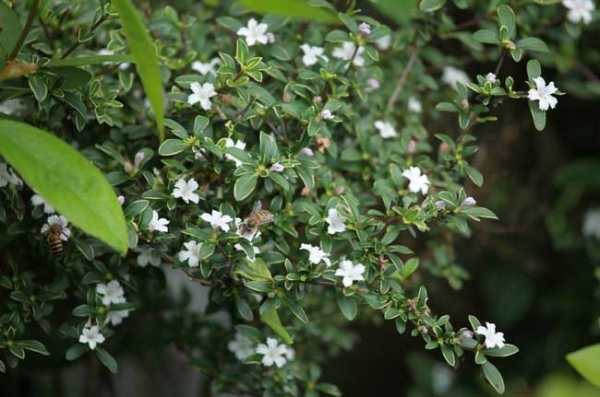
Serissa japonica is one of the trees commonly used in Chinese bonsai and is a favorite bonsai plant among gardening enthusiasts. The flower meaning of Serissa japonica is love and longing. What are the methods for growing Serissa japonica? What are the precautions for growing Serissa japonica? Today, the editor will take everyone through the cultivation of Serissa japonica and have a look together.
Growing methods
How to grow Serissa japonicaSerissa japonica has no strict requirements for soil and is suitable for growing in loose, well-drained soil (fertile soil is even better). However, flower lovers should note that slightly acidic soil is more favorable for the growth of Serissa japonica, which is fairly similar to Gardenia jasminoides. The environment is crucial for growing flowers, and Serissa japonica is no exception. Serissa japonica grows wild in the Yangtze River basin of China and other regions (there are quite a few planted in the open ground), distributed in forests or by streams, mostly on shady slopes. It likes a warm and humid environment, is relatively cold-tolerant, likes sun and also tolerates shade. However, if it is a potted Serissa japonica, during the growing season it should be placed in semi-shade and humid places such as under tree shade; otherwise, too strong light will affect its growth and be unfavorable for ornamental display.
Serissa japonica relatively likes fertilizer, and in daily care it should be given more fertilizer. However, it must be remembered that although Serissa japonica likes fertilizer, if too much fertilizer is applied, it will cause excessive branching and easily lead to leggy new shoots. Therefore, generally apply decomposed cake fertilizer water only once before winter and once after flowering.
Serissa japonica has a certain drought tolerance and also relatively likes water, but it is not tolerant of waterlogging. Watering should follow the principle of checking dry and wet, and not watering if not dry. During the rainy season, prevent water accumulation in the pot; in rainy weather, the pot should be placed on its side. In hot and dry summer weather, spray water on the leaves in the morning and evening to cool them and increase air humidity, so as to benefit its growth and flowering. (Many flower lovers truly do not understand watering; one moment it is said to be dry and the next wet. Flower lovers should learn to understand that potted cultivation is different from ground cultivation. Potted cultivation is limited by many factors, such as pot depth and soil permeability, so when watering, flower lovers must not refer to time, but should touch the soil. The best state should be moist but not wet, occasionally a little dry, which is more favorable for plant growth.)
Precautions
Precautions for growing Serissa japonicaGenerally speaking, February to March is the best time for transplanting, and of course the plum rain season and late autumn are also good seasons. When transplanting, it is preferable to use purple clay pots and glazed pots, and the pot color should be dark so it can form a sharp contrast with the flower color. The potting soil should be sandy soil, preferably loose, rich in organic matter, and with good drainage and aeration. In addition, for fertilizer selection, pine needle soil, humus soil, and peat can be mixed together, and adding about 10% rice husk ash is best.
Water and fertilizer management for Serissa japonica should be appropriate, neither too dry nor too wet, keeping the potting soil moisture moderate. In winter, reduce watering frequency; in summer, generally spray water on the leaves, 1-2 times is fine. In addition, April to May every year is the best period for fertilizing, and it can be watered with 0.5% phosphorus-potassium fertilizer solution. In winter, additional topdressing can be carried out, and thin organic fertilizer can be irrigated, but other than that, no fertilizer should be applied. Concentrated fertilizer is a major taboo.
Repotting every other year can make the soil looser and more suitable for plant growth. At the same time, removing old soil and properly pruning the roots can also enhance its ornamental value. In winter, shaping and pruning should be carried out, pruning long and short branches and thinning or thickening branches. This can not only remove messy branches and leaves to improve ornamental beauty, but also cut off branches and leaves affected by pests and diseases. At the same time, through pinching, bud removal, and branch removal, maintain a certain shape that is elegant and moving.
Serissa japonica generally has few pests and diseases, though occasionally there may be aphids. At this time, it can be sprayed with essential balm to kill the aphids, but be sure not to use too high a concentration; diluting 500 to 600 times is more appropriate. In addition, root rot sometimes occurs. At this time, irrigate it with 800 times solution of Genfuling or 600-1000 times solution of 12% copper abietate emulsifiable concentrate, spraying once every few days, three times in succession.
Growing methods for Serissa japonica, precautions for growing Serissa japonica
Serissa japonica fears strong light, so in usual care it needs shading and should be placed in a cool place to prevent direct sunlight, allowing it to absorb scattered light. Growing Serissa japonica requires careful attention before you can see its most flourishing appearance. Below, we will introduce in detail the growing methods and precautions for Serissa japonica.
Growing methods for Serissa japonica 1. Growing Serissa japonica: soil selectionSerissa japonica does not have strict soil requirements and grows best in soil that is loose and has good water permeability and aeration.
2. Growing Serissa japonica: wateringKeep the potting soil moist throughout the year. In summer, when it is hot and dry, in addition to watering every day, it is also necessary to spray the leaves with clean water, or spray the nearby ground, to maintain relative air humidity. In autumn, as temperatures drop, watering should be gradually controlled, watering once every 2 to 3 days. In winter, watering once every 7 to 10 days is sufficient.
3. Growing Serissa japonica: transplanting and pottingGenerally speaking, February to March is the best time for transplanting, and of course the plum rain season and late autumn are also good seasons. When transplanting, it is preferable to use purple clay pots and glazed pots, and the pot color should be dark so it can form a sharp contrast with the flower color. The potting soil should be sandy soil, preferably loose, rich in organic matter, and with good drainage and aeration. In addition, for fertilizer selection, pine needle soil, humus soil, and peat can be mixed together, and adding about 10% rice husk ash is best.
4. Growing Serissa japonica: water and fertilizer managementWater and fertilizer management for Serissa japonica should be appropriate, neither too dry nor too wet, keeping the potting soil moisture moderate. In winter, reduce watering frequency; in summer, generally spray water on the leaves, 1-2 times is fine. In addition, April to May every year is the best period for fertilizing, and it can be watered with 0.5% phosphorus-potassium fertilizer solution. In winter, additional topdressing can be carried out, and thin organic fertilizer can be irrigated, but other than that, no fertilizer should be applied. Concentrated fertilizer is a major taboo.
5. Growing Serissa japonica: light and temperature requirementsSerissa japonica likes a warm climate and can tolerate cold slightly. In winter, when temperatures are relatively low, it needs to be moved indoors for cultivation, and the indoor temperature should not be lower than 0°C. If Serissa japonica is frozen, it can easily die. Serissa japonica likes sunlight, warmth, humidity, and ventilation. Therefore, during the growing season, it should be cared for under these conditions. In summer, it should be properly shaded, and must not be placed in direct sunlight. In winter, it should be moved indoors and kept at a certain temperature, for example 5 to 12°C is sufficient.
6. Growing Serissa japonica: repotting and pruningRepotting every other year can make the soil looser and more suitable for plant growth. At the same time, removing old soil and properly pruning the roots can also enhance its ornamental value. In winter, shaping and pruning should be carried out, pruning long and short branches and thinning or thickening branches. This can not only remove messy branches and leaves to improve ornamental beauty, but also cut off branches and leaves affected by pests and diseases. At the same time, through pinching, bud removal, and branch removal, maintain a certain shape that is elegant and moving.
7. Growing Serissa japonica: pest and disease controlSerissa japonica generally has few pests and diseases, though occasionally there may be aphids. At this time, it can be sprayed with essential balm to kill the aphids, but be sure not to use too high a concentration; diluting 500 to 600 times is more appropriate. In addition, root rot sometimes occurs. At this time, irrigate it with 800 times solution of Genfuling or 600-1000 times solution of 12% copper abietate emulsifiable concentrate, spraying once every few days, three times in succession.
Precautions for growing Serissa japonica: frequent topdressingIn addition to normal fertilization, foliar topdressing should also be carried out frequently. During the growing season, topdressing can be done 3 to 4 times, spraying the leaves with 1% potassium dihydrogen phosphate solution to adjust the pH and add nutrients to the plant.
Avoid sun exposure in summerIn summer, the plant should be placed in a cool place. A shade shed allowing half-light can be built with small-hole nylon netting or plastic window screen, which can both maintain ventilation and allow absorption of scattered light.
Pay attention to ventilation in summerIf placed indoors for care in summer, ventilation needs to be increased; otherwise, the branches will become leggy, the leaf color will turn yellow, and many lower leaves will drop.
Repotting is needed in springEvery year in March, Serissa japonica can be moved outdoors. Before that, it needs to be repotted with leaf mold soil, and hoof and horn pieces should be used at the bottom of the pot as base fertilizer.
Propagation methods for Serissa japonicaThe propagation of Serissa japonica is mainly by cuttings, and layering and division can also be used.
Cutting propagation:Serissa japonica is extremely easy to root. When making small or miniature bonsai, in order to promote it to take shape as quickly as possible, it is often done in the plum rain season from June to July. Cuttings from dormant branches are taken from February to March, and semi-mature branch cuttings are taken from June to July. Generally, hardwood is used in early spring, but in the plum rain season, either hardwood or old branches can be used, and shade frames are needed in all cases. After inserting, pay attention to watering and keep the seedbed moist; it roots extremely easily. When making small or miniature bonsai, in order to promote it to take shape as quickly as possible, often in the plum rain season from June to July, take perennial branches with a graceful posture and a large-tree form, cut the lower end into a horseshoe shape, insert them into vermiculite or sand, cover with film to keep warm, pay attention to misting, and they can root in about 40 days. At this time, transplant them, and with a little binding and pruning they can take shape. Because this plant is easy to find in mountainous and wild areas everywhere, some flower growers often dig it directly from the woods and pot it up.
Broadcast cutting methodUsing vacant green space, loosen the soil, break up the clods finely, and level it. Evenly scatter the trimmed one- to two-node branches (about three centimeters) over the ground prepared in advance, press the surface soil firmly with feet or an object, and water thoroughly. After that, spray water once every other day, and rooting and sprouting will begin after ten days. After twenty-five days, apply the first dilute liquid fertilizer. At fifty days, apply 1:1000 urea once to promote seedling growth. After two months, it can be transplanted and established. After four months, it can be potted for cultivation, and initial insertion can also be carried out at the same time. After one year, it can form a relatively ideal tree-stump bonsai with exposed roots. If used as a hedge, it will take shape in just half a year.
Cultivation managementGround cultivation management of Serissa japonica is simple and extensive. In the south, it can be planted in patches in gardens to form shrubbery. In summer, viewed from afar, it is as white as snow, giving a sense of coolness and elegance. It is usually mostly used for shaped potted ornament or for making tree-stump bonsai. First train the plant into a single-trunk form, then prune and bend the side branches according to the styling concept to make various bonsai, all of which can achieve ideal results.