Detailed Explanation of Gardenia Cuttage Methods and Steps
Timing for Gardenia Cuttage
The usual time for gardenia cuttage is mid-April, when the temperature is very suitable for gardenia rooting. It can also be done at other times such as June, August, October, and November, but because the temperature is harder to control, the survival rate will be greatly reduced.
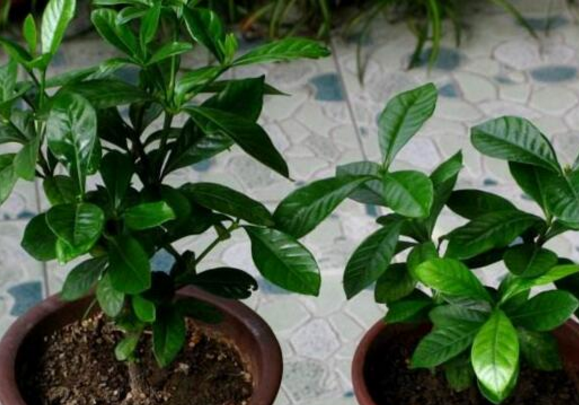
Specific cuttage methods:
1. Soil cuttage
Preparing the plant for cuttage:
Select a plant with good growth and no pests or diseases as the cuttage material. Then disinfect it with potassium permanganate solution, generally soaking for half an hour is enough, then place it in a ventilated place to dry for later use.
Pot soil preparation:
Gardenia prefers slightly acidic soil, so when preparing the soil, you need to prepare loose, fertile, well-drained and airy acidic soil with a pH value of 4.0-6.5, which is very important for gardenia rooting. For the flowerpot, generally a ceramic pot with good air permeability is needed.
Potting:
Insert the prepared branch into the pot soil, generally to a depth of 3-4cm, then water thoroughly, and place it in a ventilated place with sufficient scattered light for care. Keep the pot soil moist, and it will generally root in about half a month, after which it can enter routine care.
2. Water cuttage
Water cuttage is far superior to soil cuttage, with a survival rate close to 100%. Carry it out from April to July. Cut off the cutting and keep only the top 2 leaves and the apical bud, and insert it into a container filled with clean water. Change the water frequently to prevent the cut from rotting, and it will begin to root after 3 weeks.
Interested friends should quickly try it at home. Cut a branch from another flower lover's home and you can get a large pot of gardenias!
Gardenia Cuttage Methods, Gardenia Cuttage Propagation Techniques
Gardenia has bright green leaves, remains evergreen all year round, has large pure white flowers, and is richly fragrant. It also has a certain tolerance for shade and resistance to toxic gases. It is very suitable for balcony greening, potted flowers, cut flowers, or bonsai.
Gardenia is suitable for growing in loose, deep soil with good aeration and water retention, and a pH value of 5.5 to 6.5. Before cuttage, the soil must be disinfected by spraying the soil with a 0.125% solution of 50% carbendazim wettable powder, then covering it with plastic film for 3 to 4 days. After removing the film, wait 1 week for the chemical odor to volatilize before use. For the slightly acidic coniferous humus soil in the south, lime powder can also be used for disinfection.
Gardenia Cuttage Methods Best Cuttage TimeMid-April, the survival rate can reach the highest, and the temperature is most suitable. Other times: June, August, October, and November are also possible, but the temperature needs to be controlled a bit better
Cuttage soil: grow in loose, deep soil with good aeration and water retention, and a pH value of 5.5 to 6.5. Before cuttage, the soil needs to be disinfected
Gardenia Cuttage Steps1. Branch selection: use 1- to 2-year-old branches that are robust, fully lignified, and free of pests and diseases as cuttings
2. Cutting treatment: cut the branches into cuttings 10 cm to 15 cm long, keep only 3 to 4 leaves on the upper part, cut the upper cut of the cutting into a flat cut and the lower cut into a slanted cut, to increase its contact surface with the soil and help it absorb water. The upper cut should be 1 cm to 2 cm from the bud, and the lower cut should be 0.5 cm from the bud. The cuts should be smooth to prevent splitting.
3. The cuttings can be soaked in rooting liquid.
4. Insert them into the soil prepared in advance. It is best to insert them as soon as they are cut, without drying the wounds.
5. After cuttage is completed, water thoroughly once, and they will root in about 30-40 days.
Gardenia Cuttage MethodsGardenia cuttage propagation is generally mostly done in April—May, but in a greenhouse, it can also be propagated in October—November. After cuttage, they can root in 1—2 months. In the Shanghai area, cuttage is mostly done during the plum rain season, with a survival rate as high as 85%—90%. Doing green plant cuttage between summer and autumn can also achieve a relatively high survival rate.
Gardenia, besides sand cuttage and soil cuttage, can also be water-cuttaged. For water cuttage, summer is better, and it can also be done between summer and autumn. Other times: June, August, October, and November are also possible, but the temperature needs to be controlled a bit better
a. Cuttings
Cut 1—2-year-old robust gardenia branches, 10—12 cm long, remove the basal leaves, and keep only 3—4 leaves on the upper part. After the cuttings are trimmed, treat them with the following methods:
(1). Vitamin treatment
Dip the base of the trimmed branch into the original solution of vitamin B12 injection, then wait about 1—2 minutes for the liquid to be absorbed into the cutting, dry it slightly, and then insert it into the cutting bed.
(2). Auxin treatment
For summer cuttage, treat with indoleacetic acid at a concentration of 25—50ppm. Immerse the base of the cutting in the solution for 24 hours, and after the solution is absorbed, it can be inserted.
b. Cutting bed
The cutting bed can use coarse sand as the substrate. After cuttage, use a plastic shed to keep warm and moist. At a temperature of 20℃ and a relative humidity above 85%, they can root in about 30—40 days. Besides sand cuttage, sandy soil can also be used to root them. In addition, there are two water cuttage methods that use water as the cuttage substrate.
1. Water tank cuttage
In some places in the south, water tank cuttage is used for propagation. Generally, reed stems or bamboo are woven into a round basket or box, the gardenia cuttings are inserted at the bottom of the basket, and it is placed floating on the surface of a pond. The cuttage survival rate is very high.
2. Bottle water cuttage
In North China, bottle cuttage can be used, generally carried out in summer. Place the cuttings in a glass bottle filled with water and put it in the sunlight. The bottle mouth should be tightly plugged with a cork or cloth to fix the cuttings. When there is little water, add water in time. If the water becomes cloudy, change the water in time. When callus tissue and adventitious roots grow, they can be moved into a pot. Pay attention to shading, spray and irrigate water in time, and they can survive in one month.
Gardenia Cuttage Methods, Gardenia Cuttage Precautions
Gardenia likes light and can also tolerate shade. Under shaded conditions, the leaf color is dark green, but flowering is somewhat poorer; it likes a warm and humid climate, tolerates heat and also slightly tolerates cold (-3℃); it likes fertile, well-drained, acidic light clay loam, and also tolerates drought and poor soil, but the plant is prone to aging; it has strong resistance to sulfur dioxide. Its sprouting and budding ability are both strong, and it tolerates pruning and renewal.
Gardenia Cuttage Methods:
1. Cuttage time:In the first half of the year, in April, and in the second half of the year, in August-September. These two periods are the best seasons for gardenia cuttage, and also the best time for gardenia propagation. The temperature is generally between 15-35℃, the climate is mild, and it is suitable for cuttage growth. Generally, they can root and sprout in 30-40 days after cuttage.
2. Land preparation: Choose land that is relatively convenient for watering, and ensure there is a water source. Choose fertile land with loose soil and good aeration.
3. Cuttage branch selection:For cuttings, choose 1-2-year-old branches with good bark color, green leaves, and no pests or diseases.
4. Cuttage branch pruning:Since the nodes on branches may be sparse or dense, generally it is appropriate to keep 3 nodes in length, remove the bottom leaves, keep 1-2 leaves on the upper node, cut the bottom node diagonally at 1-2 cm, and cut the upper node flatly at 1-2 cm.
5. Inserting cuttings into the soil:Insert the trimmed branches directly into the prepared ground, with two nodes in the soil and the upper node just exposed above the ground, then water thoroughly. ④ Watering. Water once each morning and evening to ensure the humidity after cuttage. The cuttage density is 100-200 plants per square meter.
4. Field management:To ensure the survival rate, a shade shed should also be set up to provide shade and moisture retention. Around the cuttage area, insert 50-60 cm wooden stakes, build a frame with branches, and cover it with straw-like covering material. On rainy days, open the covering at any time, and when the sunlight is strong, cover it again.
Gardenia Cuttage Precautions:
1. Transplanting time:Generally, early to mid-March is suitable. After transplanting, water thoroughly, then cover with a layer of fine soil.
2. Watering:Because gardenia likes moisture and fears drought, after transplanting, water once every evening for one week, and afterward water once a week. ② Topdressing. Two months after transplanting, apply some containing
3. Pests:Spraying dichlorvos on the leaf surface in autumn and winter can effectively prevent pests.