What are the precautions for growing bowl lotus? These key points you need to master
1. Light
During the care of bowl lotus, it cannot be kept indoors for a long time, otherwise it will grow slowly, so it should be placed outdoors to receive light often, and the plant will grow more vigorously.
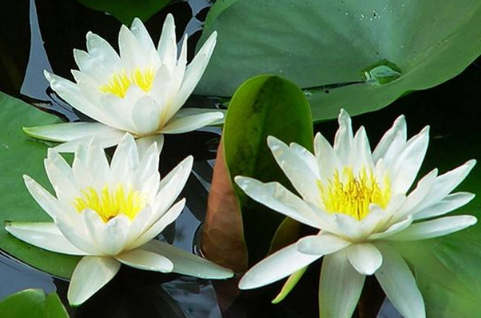
2. Fertilizing
Bowl lotus likes fertilizer, and plants lacking fertilizer will lack vitality. Before planting, a small amount of decomposed cake fertilizer and other base fertilizer should be added. Although bowl lotus likes fertilizer, do not overdo it; adding base fertilizer during cultivation is enough to meet its growth needs.
3. Pruning
During the vigorous growth period of bowl lotus, the leaves are dense, which affects the plant's growth and flowering, so some leaves should be properly cut off to promote plant growth.
How to grow bowl lotus and precautions
I. How to grow bowl lotus
The growing method of bowl lotus is different from that of ordinary flowers, because the seeds of bowl lotus are relatively hard and need shell-breaking treatment. For shell-breaking treatment of the seeds, the seed coat of the lotus seed has a special structure that is hard and thick. After the seed is fully mature and dried, water and air are not easy to penetrate, respiration is very slow, and it is in a state of forced dormancy.
Lotus has an anatropous ovule, and the embryo bud is born at the top of the seed. When breaking the shell, the basal end of the seed should be broken, that is, the end where the seed is attached to the receptacle, which is also the concave end of the lotus seed. It can be cracked with scissors or pliers. Before sowing, generally it is enough to wear through the seed coat until the brown seed coat is seen; when cracking the shell, just make a 2-3 mm crack at the base, and do not crack too deep, so as not to damage the embryo. After soaking the seed for one day, when the embryo absorbs water and swells and the seed coat softens after absorbing water, you can peel off 1/3 of the seed coat by hand along the broken shell area to expose the embryo, so as to facilitate the elongation of the embryo bud. It must be noted that the broken shell area must not be too large or too many. If the entire hard shell of the lotus seed is removed, the embryo bud will lose protection and is very likely to rot and die.
II. Growing methods of bowl lotus
1. Sowing time: Lotus seeds have no dormancy period. As long as the water temperature can be kept above 16°C, they can be sown in all four seasons. Under suitable temperature and light conditions, from sowing to flowering, lotus seeds need 60-80 days in spring. The best sowing time: March to early May.
2. Seed treatment: The outer shell of lotus seeds is hard and dense, so artificial cracking must be carried out before soaking. One end of the lotus seed has a small pointed tip, and the other end has a small concave dot. Grind the end with the small concave dot on rough cement ground or crack a small opening with pliers. Be careful not to damage the seed embryo or remove the shell.
3. Soaking seeds to promote germination: A summer water temperature of 20°C-30°C is very suitable for lotus seed germination. Depending on the number of seeds, use a bowl or basin to hold water, just enough to soak the seeds. Place indoors and change the water twice a day; they can germinate within 1 week. After sprouting, place in a sunny spot, strengthen light, and do not let them lack water. After 2 weeks, fine roots and 2-3 young tender small lotus leaves grow. When the leaves are coin-shaped and the root system has formed, they can be transplanted separately.
4. Transplanting seedlings: Choose a bottomless ceramic pot or plastic flowerpot with a diameter of 18 cm-30 cm. Add half a pot of garden soil or river-pond mud without chemical pollution, add water two weeks in advance to soak, and do not fertilize. When transplanting, press the fine roots of the small lotus seedling into the mud, one plant per pot, and after transplanting add an appropriate amount of water, with the water not covering the small lotus leaves.
5. Management: 2-3 weeks after transplanting, when it enters the vigorous growth period, if the leaves turn yellow, a small amount of nitrogen, phosphorus, and potassium ternary compound fertilizer can be applied as a top dressing, applied frequently in dilute form. Lotus likes warmth and light, and is not tolerant of shade. When the outside temperature is below 16°C, growth is slow, and it should be moved into a sunlight greenhouse.
III. Precautions for growing bowl lotus
1. Bowl lotus is delicate. At noon in summer, avoid the scorching sun and move it to a shady place. Also, the time for enjoying flowers indoors or displaying it should not be too long, no more than 3 days at a time.
2. Bowl lotus most of all dreads being cared for in a shady place, and even more, it cannot be kept indoors like indoor foliage plants. With insufficient light, the lotus leaves will grow leggy and lose green color, and cannot form buds. When cultivating bowl lotus in a courtyard, the flowerpot must be placed in a place with sufficient light or on the outer edge of a south-facing balcony. In the flowering season, if it needs to be placed indoors for viewing, you can take it in early and out late, or in late and out early, and it should still maintain a certain amount of light every day. Bowl lotus needs relatively sufficient light, but also avoids sudden bright sun after rain.
The above isbowl lotus growing methodsintroduced above. I hope it is helpful for everyone growing bowl lotus. Bowl lotus blooming in midsummer brings you a poetic and picturesque feeling.
Is bowl lotus easy to grow? Growing methods and precautions for bowl lotus
Flower Bonsai Network introduction: Today Flower Bonsai Network editor shares with you an article about whether bowl lotus is easy to grow? Growing methods and precautions for bowl lotus. Let's take a look.
Bowl lotus is a mini type of lotus, less than a chi tall, with round leaves like butterflies, especially suitable for planting in containers with a smaller diameter. So when should the bowl lotus seeds you bought be planted? How to plant them? And what needs to be prepared before planting bowl lotus?
Preparation for growing bowl lotus
Planting time
Many flower lovers like to grow bowl lotus at home. It is as beautiful as lotus, and although it does not have the proud posture by Daming Lake, a small pot of bowl lotus at home is enough to let you feel the beauty of being there. But the question comes: when to buy seeds, and when to plant?
Actually, bowl lotus seeds can be sown in all four seasons. As long as the water temperature is controlled at around 16°C, the seeds can germinate normally. After the seeds germinate, the suitable growth temperature is 15-30°C. For households with lower indoor temperatures in winter, sowing can be chosen in spring.
Material preparation
Bowl lotus seeds, file, silt, white flowerpot, sand.
Growing methods of bowl lotus
Seed treatment
First carry out shell-breaking treatment on the seeds. When eating lotus seeds, you will notice that lotus seeds have a green outer skin. After the lotus seed matures, the outer skin turns black and hard. It is said that as long as this layer of white skin is retained, lotus seeds can be buried in soil for a hundred years or even a thousand years without rotting. If you do not treat the seeds before planting bowl lotus, I am afraid you will never see them germinate in this lifetime.
One end of the lotus seed is pointed and one end is round. Make a small opening at the round end. You can grind it on rough cement ground or crack it with a file. In short, an opening must be made to let water seep into the seed and germinate as soon as possible.
Soaking seeds to promote germination
The next step is to soak the already shell-broken seeds in 30°C warm water to promote germination, soaking for 2-7 days, changing the water 2-3 times a day. Ordinary seeds will grow small sprouts by the 5th day. If they have not sprouted by the 7th day, they will no longer germinate, so throw away this type of seed.
In addition, the water temperature for soaking seeds should be controlled at around 30°C, and cannot be higher than 40°C or lower than 20°C, otherwise the seeds will germinate slowly.
Hydroponic seedling raising
After the seeds germinate, place them in a 25°C environment for hydroponics for 5-7 days. During the hydroponic process, ensure the water is about 10 cm, with sufficient light, and do not frequently change the water or turn them, so as not to affect leaf growth.
After a period of hydroponics, the first leaf unfolds, the second leaf is about to unfold, and white roots grow. At this time, they can be planted in mud.
Choosing a pot and planting
According to planting needs, put the prepared silt or fine sand into the flowerpot, add soil, clear water, and fertilizer, stir evenly, and let it stand. After the water surface is clear, plant the bowl lotus seeds. The seeds should all enter the mud, and the leaves should spread freely on the water surface. The water must not cover the leaves. In addition, during planting, handle them gently and do not break the leaf stalks.
For home planting, for the sake of beauty, after the seeds are planted, spread a layer of small stones on the water surface to keep the water surface clear and increase ornamental value.
Flowering
Different bowl lotus varieties have different flowering times. Generally speaking, bowl lotus slowly begins to show flower buds after growing 5-17 standing leaves. However, some varieties quickly grow flower buds and bloom after growing standing leaves. As long as they are well cared for, bowl lotus flowering is only a matter of time!
Precautions for growing bowl lotus
The container should be large
The container for growing bowl lotus should be appropriately larger. If you only use an ordinary bowl at home, it is too small and too shallow, and the nutrient soil it holds is too little. Bowl lotus cannot grow fully, and neither the root system nor the leaves can spread well, so growing bowl lotus this way is meaningless!
Sunlight should be sufficient
When caring for bowl lotus, you cannot only focus on placing bowl lotus indoors to decorate the environment. With long-term indoor care, bowl lotus cannot see sunlight and grows slowly. Often take bowl lotus outdoors to receive sunlight. Only when the pot soil is warmed by the sun will it grow more vigorously.
Fertilizing should be light
Bowl lotus likes fertilizer and prefers nitrogen fertilizer. During the growth period, sufficient nutrients must be ensured. In addition to adding enough nutrients to the soil before planting, timely top dressing is also needed. Top dressing depends on the size of the flowerpot. If the plant is small and the flowerpot is small, fertilize less. If too much fertilizer is applied, the phenomenon of only growing leaves without flowering will occur, and in more serious cases, the plant will wither and die.
Long leaves should be cut
During the care process, the leaves of bowl lotus will become denser and denser, which to a certain extent affects the growth of bowl lotus. A portion of the leaves should be properly removed to promote respiration and air circulation of the plant.
Cultivation methods and precautions for bowl lotus
The growing technique of bowl lotus is different from that of other flowers. Now let's take a look at the growing techniques and precautions for bowl lotus. See how bowl lotus grows.
I. Conditions for the growth of bowl lotus
1. Soil
For cultivation soil, fertile river-pond mud is the most ideal choice. If it is difficult to obtain river-pond mud, Xiantu can also be used (black Xiantu is better)
2. Sunlight
Lotus must be given sufficient sunlight. Flower growers must not only place bowl lotus indoors to decorate the environment and admire it. Keeping it indoors for a long time makes it unable to see sunlight, forgetting that it is a plant that loves sufficient sunlight. Only when the pot soil is warmed by the sun can it grow rapidly.
3. Water amount
The amount of water varies according to the stage. When bowl lotus is first planted, water should not be too much. Too much water will lower the temperature, which is unfavorable for the rooting and development of small seedlings, and affects their respiration and air permeability, and may even cause root rot. When the plant's leaves grow larger, clear water needs to be gradually added to the bowl to adapt to its need for leaves to float on the water surface for photosynthesis. Otherwise, the phenomenon of leaf edges scorching, withering, and turning yellow will appear.
II. Key points for growing bowl lotus
1. Sowing time:Lotus seeds have no dormancy period. As long as the water temperature can be kept above 16°C, they can be sown in all four seasons. Under suitable temperature and light conditions, from sowing to flowering, lotus seeds need 50-60 days in spring and 60-80 days in autumn.
2. Seed treatment:Carry out shell-breaking treatment on the seeds. The seed coat of lotus seeds has a special structure that is hard and thick. After the seed is fully mature and dried, water and air are not easy to penetrate, respiration is very slow, and it is in a state of forced dormancy. Therefore, lotus seeds can be buried in soil for hundreds or even thousands of years without germinating or rotting. This is the reason for the longevity of lotus seeds. In order for lotus seeds to absorb water and oxygen after sowing, break the forced dormancy state, and enter germination and growth, shell-breaking treatment must be carried out before seed germination.
Lotus has an anatropous ovule, and the embryo bud is born at the top of the seed. When breaking the shell, the basal end of the seed should be broken, that is, the end where the seed is attached to the receptacle, which is also the concave end of the lotus seed. It can be cracked with scissors or pliers. Before sowing, generally it is enough to wear through the seed coat (that is, the hard shell of the lotus seed) until the brown seed coat is seen; when cracking the shell, just make a 2-3 mm crack at the base, and do not crack too deep, so as not to damage the embryo. After soaking the seed for one day, when the embryo absorbs water and swells and the seed coat softens after absorbing water, you can peel off 1/3 of the seed coat by hand along the broken shell area to expose the embryo, so as to facilitate the elongation of the embryo bud. It must be noted that the broken shell area must not be too large or too many. If the entire hard shell of the lotus seed is removed, the embryo bud will lose protection and is very likely to rot and die.
3. Soaking seeds to promote germination:A summer water temperature of 20°C-30°C is very suitable for lotus seed germination. Depending on the number of seeds, use a bowl or basin to hold water, just enough to soak the seeds. Place indoors and change the water twice a day; they can germinate within 1 week. After sprouting, place in a sunny spot, strengthen light, and do not let them lack water. After 2 weeks, fine roots and 2-3 young tender small lotus leaves grow. When the leaves are coin-shaped and the root system has formed, they can be transplanted separately.
4. Transplanting seedlings:Choose a bottomless ceramic pot or plastic flowerpot with a diameter of 18 cm-30 cm. Add half a
pot of garden soil or river-pond mud without chemical pollution, add water two weeks in advance to soak, and do not fertilize. When transplanting, press the fine roots of the small lotus seedling into the mud, one plant per pot, and after transplanting add an appropriate amount of water, with the water not covering the small lotus leaves.
5. Autumn and winter management:2-3 weeks after transplanting, when it enters the vigorous growth period, if the leaves turn yellow, a small amount of nitrogen, phosphorus, and potassium ternary compound fertilizer can be applied as a top dressing, applied frequently in dilute form. Lotus likes warmth and light, and is not tolerant of shade. When the outside temperature is below 16°C, growth is slow, and it should be moved into a sunlight greenhouse.