Osmanthus Tree Cultivation Methods and Precautions
1. Watering
The osmanthus is drought-tolerant and waterlogging-tolerant, and watering once a day is good. In the high-temperature period of summer, we choose to water in the early morning and evening when the temperature is low, and in winter we choose to water at noon when the temperature is high. We need to pay attention to the amount of watering and must not water too much.
2. Light and Temperature
Potted plants can be grown outdoors in southern regions. In winter, they should be placed in a sunny spot so they can fully receive direct sunlight, and the room temperature should be kept above 5°C, but must not exceed 10°C. The suitable room temperature for osmanthus to overwinter is 0-5°C.
3. Potting Soil
The osmanthus has no special requirements for potting soil; ordinary garden soil mixed with sand and mud is sufficient.
4. Fertilizing
The osmanthus is grown mainly for its flowers, so it should be given sufficient fertilizer. During the vigorous growth period, nitrogen fertilizer can be applied 1-2 times, and before flower bud differentiation and flowering, phosphorus fertilizer should be the main application. Note that we should loosen the soil first and then fertilize.
5. Pruning
The best time for pruning is after autumn. Prune the tightly growing branches, and after flowering, cut off the leggy branches, dead branches, diseased and pest-infested branches, and dense weak branches. If the osmanthus plant grows too unsightly, we can choose to cut off branches to reshape the tree form.
6. Pests
Common pests of osmanthus include sawflies, whiteflies, mites, long-tailed mealybugs, and yellow stinging moths. Sawflies, whiteflies, and mites can be killed by spraying dimethoate. For long-tailed mealybugs, besides manual brushing, in the first and second instar nymph stages, they can be killed by spraying omethoate or fenitrothion.
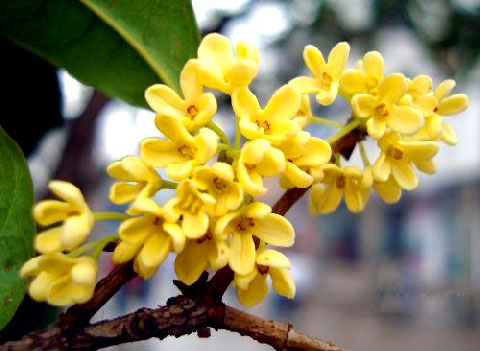
How to Grow an Osmanthus Tree: Cultivation Methods and Precautions for the Osmanthus Tree
The osmanthus tree, also called the linxi tree, has a cultivation history of 2500 years in China. The osmanthus tree is a long-day plant, suitable for planting under conditions of sufficient light, fertile soil, and good drainage. It has high ornamental value, and the flowers of some varieties are edible. This article shares the cultivation methods and precautions for the osmanthus tree with everyone.
Cultivation Methods for the Osmanthus Tree
In China, the osmanthus tree is mostly seen in garden ornamental plantings. The more common varieties include golden osmanthus, silver osmanthus, red osmanthus, and four-season osmanthus, among which golden osmanthus has higher economic value. Osmanthus trees are generally propagated by cuttings, layering, and grafting, but because the survival rate is not high, the development of osmanthus is limited to a certain extent.
Osmanthus trees are mostly planted in early spring. First dig a large pit in a place with fertile soil and sufficient sunlight, and apply some organic fertilizer. At the same time, some plant ash can also be applied. After they survive, apply fertilizer water once or twice in July or August. Before winter arrives, apply decomposed compost. In March of the following year, apply a quick-acting nitrogen fertilizer. In July, apply a quick-acting phosphorus and potassium fertilizer again. In October, apply organic fertilizer once more. During routine care, pay attention to weeding, watering, and the prevention and control of pests and diseases. In this way, the osmanthus tree can bloom abundantly year after year with a lasting fragrance.
In addition, for potted osmanthus trees, even more attention should be paid to selecting soil and pots, watering and fertilizing, as well as pruning and preventing and controlling pests and diseases.
Precautions for the Osmanthus Tree
When watering the osmanthus tree, note that before new shoots grow out, water less; on cloudy and rainy days, water less; in the dry weather of summer and autumn, water more. When the osmanthus tree blooms in autumn, control the amount of watering to keep the pot soil moist; too wet will cause flowers to drop.
The osmanthus tree should be fertilized sufficiently. In particular, insufficient phosphorus fertilizer will affect the branching of the osmanthus tree, and the flowers will be few and not fragrant. The osmanthus tree has a well-developed root system, and adult osmanthus trees send out new shoots every spring and autumn, so attention should be paid to pruning to keep the plant shape attractive. It can also balance the physiological nutrition of the osmanthus tree and promote flower bud growth.
To grow an osmanthus tree well, in addition to routine daily management, careful maintenance is also needed, and attention should be paid to the prevention and control of pests and diseases, with timely spraying for control. The cultivation methods and precautions for the osmanthus tree are introduced here. For more flower cultivation information, please follow the planting encyclopedia of China Agricultural Chemical Investment Network.
Further Reading:
Osmanthus Tree Planting Techniques, Cultivation Methods, Osmanthus Flower Language, Uses and Effects
How to Grow a Potted Osmanthus Tree? Cultivation Methods for Potted Osmanthus Trees
The fragrance of osmanthus spreads for ten li and is loved by many friends. Many friends choose to grow a pot of osmanthus tree at home. So how should a potted osmanthus tree be grown? Below, I will introduce the cultivation methods for potted osmanthus trees.
1. Placement of the Potted Osmanthus Tree:
Osmanthus bonsai is suitable to be placed in a warm, sunny place. In summer, it should be properly shaded to avoid direct strong light. North of the Yangtze River, it must be brought indoors to overwinter in winter, and a room temperature of 0-5°C is relatively safe. Around the time of Awakening of Insects in the following spring, it can be brought outside.
2. Watering Methods for the Potted Osmanthus Tree:
For the potting soil of the osmanthus tree, grasp the principle of not watering when dry and watering thoroughly when watering. Generally, in spring and autumn, water once every 3-4 days; in summer high temperatures, water once a day; in winter, water once every 7-10 days. In summer, water in the morning and evening; in winter, water around noon, so that the water temperature is close to the soil temperature and does not cause sudden cold or heat that damages the root system. In autumn, watering should be moderate, and during the plum rain season, prevent the potting soil from becoming too wet or waterlogged.
3. Fertilizing Methods for the Potted Osmanthus Tree:
Osmanthus bonsai is grown mainly for its flowers, so it should be supplied with sufficient fertilizer. When new shoots appear, nitrogen fertilizer can be applied 1-2 times to promote the growth of branches and leaves; before flower bud differentiation and flowering, phosphorus fertilizer should be the main application. Before fertilizing, the potting soil should be slightly dry, and it is best to loosen the soil first to facilitate fertilizer absorption. On the second day after fertilizing, water once. If compost or barnyard manure is used, it must be fully decomposed before use. If using the chemical fertilizer superphosphate, its concentration must not exceed 2%.
4. Pruning Methods for the Potted Osmanthus Tree:
Shaping and pruning the osmanthus tree is best done after autumn, cutting off overly strong upper branches to balance the tree vigor. Dense branches should be thinned out, and diseased and weak branches removed, so that nutrients are concentrated and flowering is favored. Shaping and pruning combined with water and fertilizer management can improve the robust growth of osmanthus bonsai and maintain an elegant posture.
5. Repotting the Potted Osmanthus Tree:
Osmanthus bonsai can be repotted and have its soil changed once every 2-3 years. The new pot should be somewhat larger to facilitate the growth of the osmanthus root system. In conjunction with repotting, cut off part of the old roots and dead roots, remove part of the old soil with a bamboo stick, replace it with loose and fertile new culture soil, and place decomposed cake fertilizer at the bottom of the pot as base fertilizer. When filling with soil, it must be compacted, which can promote lush flowers and leaves in osmanthus.
6. Pests and Diseases to Prevent and Control for the Potted Osmanthus Tree:
Common diseases of osmanthus include leaf spot disease, sooty mold, algal leaf spot, root rot, and iron deficiency, which should be prevented and controlled according to the disease situation.
1. Leaf spot disease, sooty mold, and algal leaf spot can be prevented and controlled by spraying 0.5 Bordeaux mixture or 5% carbendazim 500-1000 times solution;
2. For the prevention and control of root rot, attention should be paid to keeping the soil loose and breathable, and do not let water accumulate; if root rot is caused by fungi, irrigate the roots with 200-300 times solution of amobam.
3. Common pests of osmanthus include sawflies, whiteflies, mites, long-tailed mealybugs, and yellow stinging moths. Sawflies, whiteflies, and mites can be killed by spraying 40% dimethoate 1500-3000 times solution. For long-tailed mealybugs, besides manual brushing, in the first and second instar nymph stages, they can be killed by spraying 40% omethoate 1000 times solution or 40% fenitrothion 500 times solution.
The above are the cultivation methods for potted osmanthus trees. Friends who like potted osmanthus trees can refer to the above methods for reasonable cultivation.