What causes a kumquat tree to drop its leaves?
The first reason - insufficient nutrients
If too little nitrogen fertilizer is applied to the kumquat, the kumquat tree will drop its leaves. Or, after it enters the dormant period, too much fertilizer is applied, which burns the roots and causes leaf drop.
The second reason - improper watering
When watering the kumquat, too much water is given, causing the roots to rot, which leads to leaf drop in the kumquat tree. Or the water given to the kumquat tree is not acidic enough; generally, a specific type of water is used for watering.
The third reason - pests
Kumquat trees are relatively prone to pests. If the pests are not discovered in time, in severe cases it will lead to leaf drop, so pay attention to pests.
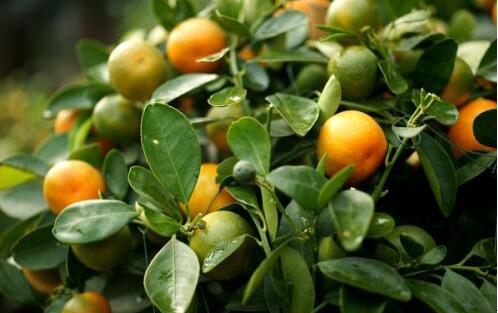
Reasons for kumquat tree leaves turning yellow
The first reason - physiological leaf drop
If no mistakes were made during the process of growing the kumquat tree, then the yellowing of the kumquat tree's leaves is a natural part of growth. There is no need to worry too much about this situation, as new leaves will grow again later.
The second reason - improper watering
Kumquat trees are not tolerant of waterlogging, so if watering is improper, it can easily cause the kumquat tree to wither, which causes the kumquat tree's leaves to turn yellow.
The third reason - temperature management
Kumquat trees like high-temperature environments, so once the temperature is too low, it will cause problems such as yellowing of the kumquat tree's leaves.
The fourth reason - improper fertilizing
If too much fertilizer is applied to the kumquat tree, it will cause the kumquat tree's leaves to turn yellow. Or, when fertilizing, if fertilizer is accidentally sprinkled on the leaves, it burns the leaves and causes them to turn yellow.
These are the reasons for kumquat tree leaves turning yellow. Next, the editor will introduce the correct methods for growing kumquat trees.
What to do when a kumquat tree drops its leaves
Chinese scientific name: kumquat. Alternative names: jinzao, jindan, jindan, jingan, Mashui tangerine, kumquat, kumquat, crisp-skin tangerine. Division: Angiosperms. Class: Archichlamydeae. Suborder: Rutineae. Subfamily: Aurantioideae. Subspecies: kumquat. English name: kumquat. Latin scientific name: Fortunella margarita (Lour.) Swingle. Kingdom: Plantae. Class: Dicotyledoneae. Order: Rutineae. Family: Rutaceae. Genus: Fortunella. Distribution area: Yangshuo, Guangxi, Jinshuo kumquat, Qinling, south of the Yangtze River
Light: likes a sunny, ample-light environment, slightly tolerant of shade.
Temperature: suitable growing temperature 22-28°C.
Soil: likes fertile, loose, acidic sandy loam. For potting soil, it is best to mix 4 parts leaf mold, 5 parts sandy soil, and 1 part cake fertilizer.
Watering: in spring, during the peak growing season, keep the potting soil moist. In summer, when the temperature is high, water in the morning and evening, and frequently spray water around and on the leaves to increase air humidity. After autumn begins, reduce watering. In winter, keep the potting soil moist but tending dry.
Fertilizing: in spring, apply fully decomposed cake fertilizer water once about every 10 days. In early summer, apply alum fertilizer water once every 7-10 days to increase the acidity of the soil. Before autumn, apply enough fertilizer based mainly on phosphorus fertilizer, and spray 1-2 times with a 0.1%-0.2% potassium dihydrogen phosphate solution to increase the fruit-setting rate. In winter, apply to the leaf surface once every half month a mixture of 0.1% magnesium sulfate, 0.3% urea, and 0.2% potassium dihydrogen sulfate.
Precautions
Avoid spraying water during the flowering period. Prevent rain during the flowering period, and do not spray water on the flowers that are blooming, as this is not conducive to pollination and easily causes flower rot. Avoid insufficient light. Kumquats like a warm, humid, and sunny environment. If placed indoors in a low-light spot for a long time, the plant grows weakly, which affects flower bud differentiation and fruiting. Avoid soil alkalinization. Kumquats like acidic soil. In northern pot cultivation, water once a week with fertilizer water, or apply potassium dihydrogen phosphate as a top dressing, or once a week combine fertilizing with watering using 200-250 times diluted vinegar water, which helps the leaves become dark green, the growth luxuriant, and the fruiting abundant. Kumquat trees require some care knowledge to ensure their ornamental value. The growing methods and precautions introduced above are hoped to be helpful to friends who want to grow kumquat trees!