Why do the leaves of a kumquat tree turn yellow?
The first reason - physiological leaf drop
If no mistakes were made while growing the kumquat tree, then yellowing leaves are just a natural part of growth, and there is no need to worry too much, as new leaves will grow later.
The second reason - improper watering
Kumquat trees are not tolerant of wet conditions, so improper watering can easily cause the tree to wither, which leads to the yellowing of its leaves.
The third reason - temperature management
Kumquat trees like high temperatures, so once the temperature is too low, it will cause problems such as yellowing leaves.
The fourth reason - improper fertilizing
If you fertilize the kumquat tree too much, its leaves will turn yellow, or if you accidentally sprinkle fertilizer on the leaves when fertilizing, it will burn the leaves and cause them to turn yellow.
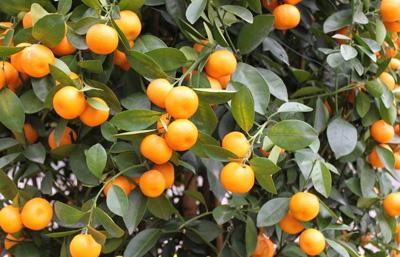
These are the reasons why kumquat tree leaves turn yellow. Next, the editor will introduce the correct methods for growing kumquat trees.
Feng shui plants for the home: the feng shui role of the kumquat tree
Kumquat, also known as golden citrus, belongs to the Rutaceae family and is a well-known ornamental fruit plant.
During festivals and holidays, many people place a pot of kumquat tree at home for good luck. Its golden fruits give off a fresh fragrance that makes people feel relaxed and happy.
So inhome feng shui, what role does the kumquat tree play? Let us find out.
For kumquat, "ju" sounds like "ji," meaning good luck, and "jin" means money, so kumquat thus carries the meaning of good fortune and attracting wealth. Ordinary families usually buy kumquat trees mainly to place in the living room, to invite auspicious sayings such as "lucky" and "adding brilliance to one's splendor," making it a very good way to bring good luck and prosperity.
There is particular attention to be paid when choosing a kumquat to use as a home feng shui plant; it cannot be done too casually. From the perspective of feng shui, the tree shape, tree posture, leaf color, and even the number and size of the oranges may directly affect the luck of the new year, so it must be taken seriously.
1. Even oranges and plump fruit.
When choosing a kumquat tree, you should choose one whose fruits are evenly distributed and look round, plump, and abundantly fruiting, and you should not buy one whose fruits are sparse, few in number, unevenly distributed, and with gaps that are too wide. This is because sparse fruit carries the meaning of "more bad luck than good," and if you buy such a kumquat tree, it implies the ominous sign of "more bad luck than good," which is extremely unfavorable to the family's fortune in the new year.
2. Green leaves attract wealth and prosperity.
If the leaves of the kumquat tree grow emerald green, it has a vibrant air, foretelling that the individual or the whole family will have especially good luck in the new year, not only good wealth luck, but also good business and good relationships. But if the leaves of the kumquat tree turn yellow and look sickly, then the luck it reveals will certainly not be good. This is the principle behind what the ancient "I Ching" says: "Heaven sends down signs, revealing good and bad fortune."
3. Straight trunk, all matters favorable.
The tree shape of the kumquat can reflect a person's luck. A kumquat tree with luxuriant branches and leaves, abundant fruit, and a beautiful shape foretells booming business, abundant wealth, easy success in all plans, and getting what one wants in the coming year; but if the tree shape is crooked and slanted, looking more like an old bonsai, it foretells blocked luck, many setbacks, half the results for twice the effort, and failure in nine out of ten plans. Therefore, when choosing a kumquat tree, it is very important to choose one with a straight and upright shape.
4. Big oranges, fast promotion.
When buying a kumquat tree, you should choose those whose fruits grow relatively large, with a golden yellow or red color and a glossy sheen. For the four-season mandarin, red is considered beautiful, while for kumquat and golden egg, golden yellow is best.
Conclusion: In feng shui, it is believed that the living room is a very important place. Generally speaking, the wealth position in the living room cannot be suppressed, and it is best to place evergreen ornamental plants there, which will enhance wealth luck. The kumquat tree is beautiful in appearance, can serve a decorative role, and can also bring good luck and attract wealth, making it an ideal choice for a home feng shui plant.
Grafting and care methods for kumquat tree bonsai
Introduction to grafting and care methods for kumquat tree bonsai: generally branch grafting is used, with the cut-grafting method in March to April; bud grafting is carried out from June to September; approach grafting is carried out in June, and this method is commonly used for potted plants. After the graft survives, it can be transplanted before budding in the second year, and more original soil should be kept. For potted kumquat, when the weather turns cold, as long as it is moved indoors, it can generally survive the winter safely. The room temperature should not be too high, as too high a temperature will instead cause decline in growth. Every 1-2 years, change the soil when it is moved outside in spring, and after changing the soil, keep it in a shaded place for half a month, then place it in sunlight to grow.Kumquat should be pruned reasonably, carried out in February to March, cutting off densely growing branches, thin and weak branches, crossing and overlapping branches, drooping branches, and diseased and dead branches. Strong branches do not need to be cut, leggy branches should be pinched at the top, and aging branches should be cut short to promote renewal. After pruning, the branches should not be messy, but a considerable density should still be maintained to form a good round-headed canopy. In July, when autumn shoots newly sprout, tender branches that are too dense or affect the tree shape should be removed in time. Water and fertilizer management should be appropriate. If the leaves turn yellow, it may be too wet, so "withhold water" immediately; if the leaves dry and curl, water should be replenished immediately. In order to achieve the goal of ornamental fruit, phosphorus fertilizer should be appropriately increased. During care, attention should also be paid to phototropism. If the flower pot faces south, it still needs to face south after being moved, and the light cannot be disrupted, otherwise the tree will not grow vigorously.
The kumquat tree has an elegant posture, far-reaching floral fragrance, and exquisite golden fruits. Planted under courtyard windows or grouped around lawn shrubs, it adds color to the bleak winter. It has strong resistance to carbon dioxide and can also be used as a greening tree species for factories. The fruit and flowers of kumquat are used in medicine and can regulate qi, relieve depression, resolve blood stasis, and sober one up. The root is used in medicine and has the functions of promoting qi flow, resolving phlegm, and dispersing nodules.
Care methods for kumquat tree bonsai
1. Water control to promote flowering. When the spring new shoots have grown for about one month and the branches have not yet become woody, carry out water control, that is, drought treatment, on potted kumquat, preferably when the leaves curl inward but have not yet curled to the point of meeting at the midrib. If they curl severely, leaf drop may occur. After that, from 11 a.m. to 5 p.m. every day, spray water on the leaf surface 3-4 times, so that the leaves become moist and open and then lose water and curl again. After one week, observe the axillary buds on the branches. If the axillary buds swell and become light green round-headed protrusions, it indicates that they have become flower buds, and the water control treatment to promote flowering can be ended. After that, normal fertilizer and water management can be carried out. After a few days, the leaves develop normally, and the axillary buds quickly produce buds and become flowers.
2. Pruning techniques. In early March, carry out one heavy pruning on potted kumquat, and cut off all fruits, retaining only 4-5 main branches. When 10 leaves have sprouted, pinch once to promote new branch growth. Branches that grow in summer can all become fruiting branches, while branches that grow in autumn should be cut off. After fruiting, newly sprouted branches should also be removed to avoid competing with the fruit for nutrients. Generally, 2-3 fruits are retained per branch, and flowers and fruits should be appropriately thinned to promote uniform fruit size.
3. Ring cutting to promote flowering. The timing of ring cutting depends on the growth vigor of the kumquat, and it is carried out when the summer sprouted branches have grown for about 25 days. Generally, one ring is cut. After cutting, control water to the extent that the leaves do not curl. After half a month, the leaves turn yellow, and after 20 days, flower buds will form. Ring cutting is only suitable for vigorous trees and vigorous branches, not for weak trees and weak branches.
4. Plant growth regulators for fruit retention. After flower thinning of kumquat, spraying gibberellin 20mg/L or 2.4-D 10mg/L + 0.3% urea is beneficial for fruit set. Spraying 0.3% monopotassium phosphate + fruit-setting hormone 40mg/L during the young fruit stage is beneficial for young fruit development. During the fruit-swelling stage, 0.3% urea + 2.4mg/L-D 20mg/L can be sprayed.
5. Fertilizer and water management. In spring and autumn, water thoroughly once every 2-3 days; on clear days in summer, water once a day. Before budding, apply a compound fertilizer mainly based on nitrogen fertilizer. After fruiting, apply nitrogen fertilizer and potassium fertilizer, but do not use too much nitrogen fertilizer. After fruiting, follow the principle of not watering when the potting soil is not dry, and watering thoroughly when watering, and apply alum fertilizer water containing phosphorus and calcium or fermented cake fertilizer. During the summer shoot growth period, if the potting soil moisture is too high, it will cause flower and fruit drop. The potting soil should also not be too dry; during the fruiting period, too much water will also cause fruit drop.
The main pests and diseases of kumquat include canker disease, scab disease, yellow swallowtail butterfly, citrus swallowtail butterfly, red spider mite, leaf miner, rust mite, citrus aphid, star longhorn beetle, etc., and they should be controlled in time.