Home › Growing Techniques › Article

Monochoria korsakowii cultivation methods and care tips

Growing Techniques 0 views
1. Light: Monochoria korsakowii loves light. In spring, autumn and winter it can be given direct sunlight, which is more conducive to plant growth and flowering, while in summer the light is intense, so shade treatment should be done well to avoid direct strong light, and it can be placed in a bright indoor spot for care. 2. Temperature: Monochoria korsakowii prefers warmth, and excessively high summer temperatures are not conducive to plant growth

1. Light

Monochoria korsakowii loves light. In spring, autumn and winter it can be given direct sunlight, which is more conducive to plant growth and flowering, while in summer the light is intense, so shade treatment should be done well to avoid direct strong light, and it can be placed in a bright indoor spot for care.
2. Temperature

Monochoria korsakowii prefers warmth, and excessively high summer temperatures are not conducive to plant growth; when the temperature is above 34°C, cooling measures should be taken in time; in winter, take care, as the plant will stop growing below 10°C, and it can be moved indoors for care to prevent frost damage.

3. Soil

For potted Monochoria korsakowii, humus-rich pond mud can be chosen, generally prepared by mixing leaf mold, river mud and garden soil.

4. Water

Monochoria korsakowii has a relatively large water requirement, and the water should be watered thoroughly to keep the soil moist, alternating between drying and moisture.

Cultivation methods of Monochoria korsakowii

  Monochoria korsakowii, Monochoria korsakowii of the family Pontederiaceae, genus Monochoria, is distributed in all provinces north and south of China and in East Asia.

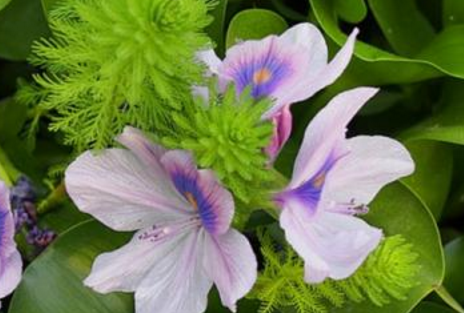
  Perennial herb, plant height 30-80 cm, with short creeping rhizomes, aboveground stems upright. Leaves ovate-cordate, with long petioles, sheathing at the base. Flower stems emerge from the base, raceme, tepals 6, blue-purple. Anthers 6, one of which is larger and light blue, the rest yellow. Capsule ovoid.

  Vigorous, cold-resistant, mostly growing on swampy ground, ditches and the edges of ponds.

  Cultivation: both sowing and root division are possible, and it survives very easily.

  Both sowing and root division are possible, and it survives very easily. Planted in ponds, pot cultivation is also possible, and no special management is needed.

  Both flowers and leaves are attractive, and it is very distinctive when arranged at the edge of a waterside pond.

Monochoria korsakowii cultivation methods and care tips

Chinese scientific name: Monochoria korsakowii

Latin scientific name: MONOCHORIA KORSAKOWII REGEL ET MAACK

Kingdom: Plantae

Family: Pontederiaceae

Genus: Monochoria

Monochoria hastata (Monochoria hastata), family Pontederiaceae, genus Monochoria. Produced in Xishuangbanna and Hekou, Yunnan, growing at an altitude below 700 m in ditches, ponds, pools, paddy fields and swamps.

1. Alternative names

Yanmeng flower (Hekou, Yunnan)

2. Morphological characteristics

Perennial aquatic herb, 50-100 cm tall; rhizome elongated, branched, often forming very large clumps, 1-2 cm thick, internodes 2-4 cm long, often with persistent leaf sheaths; fibrous roots numerous. Leaves of mature plants triangular-ovate, base sword-shaped or hastate, very rarely cordate, 7-25 cm long, 4-20 cm wide, basal lobes divergent and spreading, acuminate or narrowly pointed; petiole 30-50 cm long, usually shorter than the petiole bearing the inflorescence, sheath-like and enlarged at the base. Flower stem 30-100 cm long, upright; scale leaves on the outer part of the inflorescence oblong-lanceolate, 10-15 cm long, acute, with a linear tail tip about 1.5 cm long; terminal bract leaf petiole 10-20 cm long, sheath-like at the base for 2-4 cm, bracts papery, spathe-like, 2-4 cm long, 2-3 cm wide, acute; raceme shortened, nearly umbellate, elongating when fruiting; inflorescence stalk 1-2 cm long, extending horizontally from the sheath mouth, then curving downward, flowers 15-60, very densely arranged, lower pedicels 15-30 mm long, upper ones 7-20 mm long; flowers pale blue, opening successively, petals 15-18 mm long; filaments white, stigma densely covered with short hairs. Capsule elliptical, about 1 cm long; seeds oblong, about 0.8 mm long, brown, with about 10 longitudinal ridges, between which are densely covered extremely fine transverse striations. Flowering period April-July.

Related Articles