Detailed Guide to Kumquat Cultivation Methods and Precautions
1. Light
Kumquats like sunlight and a warm, humid environment, so it is best to place them in a spot with plenty of sunlight, but in summer pay attention to moderate light exposure so the kumquat will grow well.
2. Watering
Kumquats are not tolerant of waterlogging, so when watering there must be no standing water, otherwise the kumquat roots will rot. It is best to keep the potting soil moist.
3. Pruning
For kumquats, pruning is a very important matter, and it must be done according to requirements so the kumquat maintains a beautiful plant shape.
4. Fertilizing
Kumquats like fertilizer, so during cultivation they should be fertilized frequently, roughly once every 10 days.
5. Pest and disease control
The most common problem for kumquats is pest damage, so once pests are found, insecticide should be sprayed, which is relatively quick.
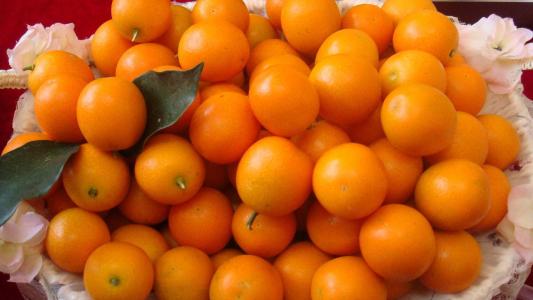
These are the correct ways to cultivate kumquats. Have you learned them? Next, the editor will introduce the edible uses of kumquats.
Kumquat Cultivation Methods
Kumquat aliases: Yangnai kumquat, Niunai kumquat, Jinzao, Jindan, Jindan, Jingan, Mashuiju, Jinju, Jinju, of the Rutaceae family, genus Fortunella, is a well-known ornamental fruit plant. Especially in Guangdong and Hong Kong, China, many citizens buy them during the Spring Festival for good luck. The kumquat is an evergreen shrub. Flowers are solitary, white, and fragrant. The fruit is mostly oval, golden yellow, and glossy, and some varieties are edible. It is mostly propagated by grafting.Cultivating kumquats generally requires attention to four points:
1. Proper light
Kumquats like a warm, humid climate with plenty of sunlight, and during care should be placed in a spot with ample sunlight. If light is insufficient and the environment is shady, it often causes excessive growth of branches and leaves and fewer flowers and fruits. Because kumquats like a cool climate in summer, or when summer sunlight is intense, it is better to place them in a slightly shaded spot at this time. In winter, the room temperature should be such that it does not freeze. If the room temperature is too high, the plant cannot get sufficient dormancy, and the next year's growth will be weak, with easy falling of flowers and buds.
2. Skillful pruning
Pruning is an important technical measure for making kumquats bloom abundantly and bear plentiful fruit. To make the tree shape beautiful and bear more fruit, each year before the sap begins to flow and before spring buds sprout, carry out one heavy pruning, cutting off dead branches, diseased and pest-infested branches, overly dense branches, and excessive-growth branches, keeping 3 to 4 robust, evenly distributed branches from the previous year, leaving only 2 to 3 buds at the base of each branch and cutting off the rest. In this way, more than 10 full spring shoots can sprout. When the new shoots grow to 15 to 20 cm, pinch off the tips to make the plant shape full, and at this time apply a fast-acting phosphorus fertilizer once to promote flower bud differentiation. When blooming, appropriately thin the flowers to save nutrients. After young fruits form, when the young fruits grow to about 1 cm in size, fruit thinning can be carried out, leaving 2 to 3 fruits per plant on thick branches and one fruit per branch on weak branches, and making the fruits on the whole plant even. Promptly cut off autumn shoots so as not to let them bear fruit a second time, so as to benefit uniform fruit size and ripeness and improve ornamental value.
3. Apply sufficient fertilizer
Kumquats like fertilizer, and when potted, a culture soil mixed with 4 parts leaf mold, 5 parts sandy soil, and 1 part cake fertilizer should be chosen. When repotting, apply hoof pieces or decomposed cake fertilizer at the bottom of the pot as a base fertilizer. From the beginning of new bud sprouting until before flowering, apply once every 7 to 10 days a decomposed dilute light soy sauce residue water, with several waterings of alum fertilizer water in between. After summer begins, it is better to apply more phosphorus fertilizer to benefit bud formation and fruiting. At the early fruiting stage, fertilization should be paused, and when the young fruits grow to about 1 cm in size, liquid fertilizer can be continued once a week until the end of September.
4. Water well
Kumquats like moisture but avoid standing water, and overly wet potting soil easily causes root rot. Therefore, during the growth period it is best to keep the potting soil moderately moist. Spring is dry and windy. It is necessary to spray water on the leaf surface once a day to increase air humidity. In summer, spray water 2 to 3 times a day and also spray water on the ground. But avoid spraying water during the flowering period to prevent flower rot and affect fruiting. In the rainy season, promptly pour out standing water in the pot to avoid root rot. When placed outdoors in summer, it is best to prop up the flower pot with bricks to facilitate drainage. Kumquats are more sensitive to water requirements from the white flower stage to the young fruit stage. If the potting soil is too dry at this time, the flower stalks and fruit stalks easily form abscission layers and fall off; if watering is excessive and the potting soil's water permeability is poor, it also easily causes flower and fruit drop. Therefore, at this time it is best to keep the potting soil in a semi-moist state that is neither dry nor wet.
Kumquat Cultivation Methods
Kumquat, also known as Jingan, Jindan, Jinzao, etc. An evergreen shrub or small tree of the Rutaceae family. Native to tropical Asia and China's Fujian, Taiwan, China, Guangdong, Guangxi, and other places.
Ornamental cultivated species in the same genus include:
Jindan: Leaves thick and hard, fruit large and round, sweet taste with few seeds, excellent quality.
Jindou: Fruit small like a bean. Plant shape dwarf, leaves also small, not edible.
Round kumquat: Fruit small and round, fresh pure yellow.
Longevity kumquat: Also known as four-season kumquat, monthly orange. Fruit obovoid, apex concave and base slightly pointed, pale yellow, fragrant.
Long-leaf kumquat: Leaves long lanceolate, fruit round, thin skin, not cold-tolerant.
1. Morphological characteristics: Much branched, usually with thorns, branches slender. Leaves oblong, surface deep green and glossy, back of leaves scattered with oil gland dots. Flowers solitary or 2〜3 clustered in leaf axils, white and fra grant. Fruit small, oblong or obovoid, golden yellow when ripe. Flowering period June〜August, fruiting period November to the following
February. In spring, some fruits will turn from yellow back to green and continue to remain on the branch tips growing.
Growth habits: Likes a warm, humid climate and conditions with sufficient sunlight. Has a certain cold resistance; in the Yangtze River basin area, under good microclimate conditions it can overwinter outdoors. Relatively drought-tolerant, slightly shade-tolerant, likes deep soil layers, good drainage, and fertile, slightly acidic sandy loam.
Propagation methods: Kumquats are mostly propagated by grafting, with common rootstocks being orange or trifoliate orange (Zhique). Commonly used methods include approach grafting and cut grafting. Often carried out in March〜April, with strong one-year-old branches selected as scions. After grafting, they survive in about 20-plus days; the key is aligning the cambium, and after putting on a plastic bag, use a 5 cm shade net for shading when sunlight is strong.
Cultivation and care: For kumquat cultivation, focus on doing the following work well:
It is advisable to choose an unglazed pot with good drainage and good air permeability.
The culture soil should be well-drained sandy loam mixed with about 20% rice hull ash or peat soil; the former needs to be old stock that has been leached with water.
Irrigation and fertilization can refer to the requirements for finger citron.
In high-temperature seasons, provide appropriate shading and spraying; potted kumquats should be moved indoors to a sunny spot in winter. Move them out after Qingming.
—Generally, after moving out, carry out the first pruning, and all old branches should be heavily pruned, and all weak branches, diseased branches, and redundant branches should be cut off. Combine pruning with comprehensive shaping; generally keep 3〜4 main branches, extending evenly in all directions. The second is in May, when new branches grow to 15〜20 cm, carry out comprehensive pinching to make them sprout secondary branches. In early June, carry out the third pruning, pinching the secondary branches again to promote the growth of tertiary branches, so as to expand the crown and increase fruit-bearing positions. After flowering, appropriately thin the flowers, and after fruiting keep 1〜2 fruits per branch, and promptly remove small fruits and diseased fruits. Branches that have not borne fruit should also be cut off.
In addition, potted kumquats should have their pots turned and soil changed once every 1〜2 years, cutting off redundant roots along the pot edge, to achieve rejuvenation of the root mass and improve the ventilation and air permeability of the potting soil.
For pest and disease control, refer to the finger citron section.
Gardening uses: The kumquat tree has an elegant posture, stays green all year round, its flower fragrance spreads far, and its golden fruits shine brightly. It has extremely high ornamental value and is a traditional ornamental-fruit Lantern Festival flower wood in China. It can also be used for courtyard landscaping. Its flowers can be used to make tea, fragrant and tasty. The fruit is edible and can be processed into preserves, jam, and so on. The kumquat's peel, seeds, and roots can all be used as medicine.