What details should be paid attention to when growing White Butterfly indoors?
1. Avoid placing potted White Butterfly plants in indoor spots that children can reach
Children have low cognitive ability and are always curious about unfamiliar things, especially in early childhood, when they like to put anything in their mouths. If a child accidentally eats the leaves of White Butterfly while playing, it could very likely endanger their life. Therefore, even when growing it indoors, you must choose a spot that children cannot reach in order to grow White Butterfly.
2. Take care to protect against splashing sap during pruning
White Butterfly grows vigorously. Sometimes, in order to keep the potted plant looking neat, you have to prune it. At this time, be sure to put on gloves and a mask before pruning, to prevent sap from splashing or branches from piercing the skin during pruning. After pruning, you should also wash your hands as soon as possible and disinfect them.
3. Fallen White Butterfly leaves should be dealt with promptly
White Butterfly has broad leaves that can raise air humidity and absorb large amounts of formaldehyde and ammonia. Therefore, many people choose to grow it in hanging baskets or suspended containers. However, during cultivation, you will inevitably run into problems such as yellowing leaves or rotting and falling leaves. At this time, you should promptly clean up the fallen waste leaves, so that sap does not leak out and cause danger.
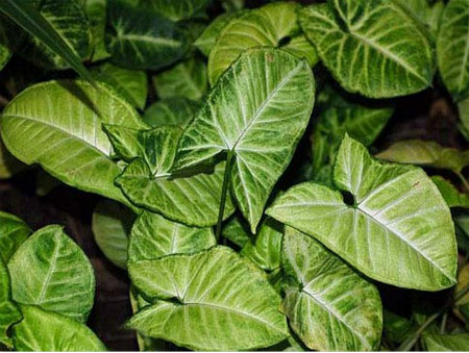
The above is the editor's introduction to White Butterfly. White Butterfly is toxic, but as long as we take care not to come into contact with its sap during cultivation, it is very safe. To learn more about plants, please pay more attention to the Four Seasons Plant Network!
What should you do if you accidentally touch White Butterfly sap?
If during cultivation you accidentally get the sap on your skin, or it enters your mouth or splashes into your eyes, you should immediately rinse with plenty of clean water, supplement with some cooling liquids, and use simple self-rescue methods such as drinking plenty of boiled water, exercising to sweat, and urinating. If the effect is not obvious, then you need to seek medical treatment promptly to avoid delaying treatment.
Now that we know White Butterfly is toxic, what details should we pay attention to in order to grow White Butterfly safely and with peace of mind? Below we will explain how to safely grow White Butterfly indoors!
Phalaenopsis suitable for indoor cultivation - have you grown one?
Phalaenopsis is a plant suitable for indoor cultivation, with flowers shaped like butterflies. Elegant and delicate. Among flowers, it enjoys the reputation of "Queen of Orchids." The flowers of Phalaenopsis are the part with the greatest ornamental value. Since most Phalaenopsis come from humid Asia, this also determines the growth characteristics of Phalaenopsis. An environment with ventilation and air permeability, moderate temperature, and high humidity can be said to be very suitable for growing Phalaenopsis. So, how do you grow Phalaenopsis?
I. Introduction to Phalaenopsis flowers
Butterfly flower, also known by the aliases orchid grass, Japanese iris, Kaihoujian, flat bamboo orchid, and sword grass, and also called Qionghua. It is a perennial herb with creeping rhizomes and long branches, blooming from April to May. It is scattered in shady, damp places under forests and beside streams. It originates from the vast areas south of the Yangtze River in China, and is also found in Japan. The flowering branches spread widely, and the crown is spherical. The leaves are opposite, ovate or elliptical, with fine teeth along the edges and sparse stellate hairs on the underside. Around the inflorescence are large white sterile flowers, with fertile flowers in the middle. The drupe is elliptical, first red and later fruiting. The flowering period is April.
Butterfly flower is the common name for a herbaceous flowering plant. This flower consists of a perianth made up of 6 petal-like parts, 3 to 6 stamens, and an ovary enclosed at the base. It is named after the messenger of God and the rainbow that connects the earth with other worlds. According to legend, the butterfly flower once saved the life of the 6th-century Frankish king Clovis - at the time he saw butterfly flowers growing in the Rhine River, so he inferred that the river was shallow and could be crossed, thereby escaping his enemies' pursuit. Butterfly flowers bloom between April and May, with flowers as large as a plate and as white as jade. The cyme grows at the branch tips, with eight surrounding sterile flowers developed from sepals and small bisexual flowers in the middle. Butterfly flowers grow in Japan, China, and most countries with mild climates. They are distributed in Sichuan, Gansu, Jiangsu, Henan, Shandong, and areas to the south.
II. The role of Phalaenopsis
1. It has a powerful effect in beautifying the home environment. Its plant is very peculiar, with neither creeping stems nor pseudobulbs. Each plant grows only a few broad leaves as thick as spoons, alternately stacked above the base. The thick white aerial roots are exposed around the leaves, and some climb on the outer wall of the flower pot, full of natural wild charm. When the New Year arrives, a flower stalk up to a full chi long emerges from the leaf axil, and then opens one after another. Each flower has 5 sepals, with a lip embedded in the middle. The flower colors are bright and dazzling, including pure white, goose yellow, and crimson, as well as light purple, orange-red, and azure blue. Many varieties combine two or three colors; some look like embroidered patterned stripes, while others look as if evenly sprayed with colored dots. Each stalk blooms with seven or eight flowers, and as many as twelve or thirteen, and can be enjoyed continuously for sixty or seventy days. With such a beautiful appearance, could you still resist it?
2. From the outside to the inside, it can make the home full of vitality. The name "butterfly flower" has connotations that many people do not know. The scientific name of Phalaenopsis means, according to its original Greek meaning, "an orchid like a butterfly." It can absorb nutrients from the air to survive, proving its dynamic role in the home, flying around in the air like a butterfly. Vitality and liveliness are generated right here, and although its appearance does not move, it is so beautiful and eye-catching that it can add a lot of atmosphere to a home, festive like a holiday.
3. It has many very interesting flower meanings, making the home style more poetic. The flower meaning of Phalaenopsis is "I love you, happiness flies to you." Therefore, many people give Phalaenopsis to the bride when they marry. Also, Phalaenopsis corresponds to the zodiac signs Aquarius & Sagittarius, representing loyalty, wisdom, rationality, and virtue. Such a romantic flower placed at home is sure to add a lot of good atmosphere to the home.
III. How to grow Phalaenopsis
1. The growing soil for Phalaenopsis
Soil is essential for plant growth. When choosing to plant Phalaenopsis, choosing the soil is very important. Phalaenopsis has high requirements for soil: it must be breathable, rot-resistant, slightly acidic, and watery. Generally, we can choose materials such as pine needles, peanut shells, bark shreds, and clay balls as the substrate for growing Phalaenopsis. If you cannot prepare these materials yourself, the editor suggests going directly to a flower market to buy special orchid soil for Phalaenopsis, which is more conducive to the growth of Phalaenopsis.
2. Choose a suitable temperature environment for Phalaenopsis
Temperature is very particular for the growth of Phalaenopsis, especially for Phalaenopsis cultivated indoors. The daytime temperature is best kept between 25 and 28 degrees, and the nighttime temperature needs to be kept between 18 and 20 degrees. Phalaenopsis originates from the subtropics, so a high-temperature, high-humidity environment is very suitable for its growth (when the summer temperature is above 32 degrees, Phalaenopsis will directly enter a semi-dormant state, so high temperatures must be prevented. When the temperature is lower, the growth of Phalaenopsis will be suppressed, so suitable temperature is also very important. If at home in the north, anyone with radiators must be careful to place Phalaenopsis away from the radiators! This avoids excessive high temperature affecting the growth of Phalaenopsis.
3. How to water Phalaenopsis
High humidity is what Phalaenopsis loves most. Avoid letting Phalaenopsis be in a state of water shortage, especially during its growth period. Once water shortage occurs frequently, it will cause the leaves to turn yellow, and it is very difficult to recover. Usually, you can water Phalaenopsis with a spray bottle. Just water until water flows out from the bottom of the pot; avoid watering too much.
4. Frequent ventilation and shading are more conducive to the growth of Phalaenopsis
In flower-growing forums, you often see some flower-growing problems about Phalaenopsis root rot, and this may also be caused by the lack of a ventilated environment. Phalaenopsis is delicate, and choosing a ventilated environment will be more conducive to its growth. A stuffy and hot environment is also not suitable for growing Phalaenopsis, especially in the summer in the south, where attention must be paid to shading Phalaenopsis. Phalaenopsis is an epiphytic orchid and likes semi-shade. In winter, when the temperature is low, use the midday time to ventilate it, but do not let the vent blow directly toward the orchid plant. In spring and autumn, pay attention to protecting the orchid from light. In this way, by ensuring good light and ventilation, the flowers that bloom will be even more delicate and beautiful!
Finally, the above is a detailed answer to how to grow Phalaenopsis for everyone, and we hope it is helpful to the broad community of flower lovers. Phalaenopsis is one of the plants suitable for indoor cultivation, with flowers shaped like butterflies, elegant and delicate, enjoying the reputation of "Queen of Orchids." However, most Phalaenopsis come from humid Asia, which also determines the growth characteristics of Phalaenopsis. It must have ventilation, air permeability, and moderate temperature. An environment with high humidity can be said to be the perfect environment for growing Phalaenopsis.