How does Thalia dealbata reproduce? Introduction to common propagation methods
Division propagation
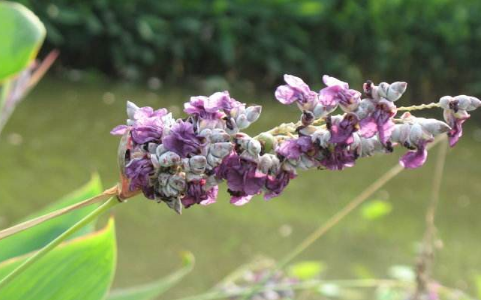
The most common propagation method for Thalia dealbata is division propagation. First dig out the plant, break its roots apart, and select the more robust plants for planting. Thalia dealbata can also have one or two rhizomes cut from the mother plant's rhizome, and planting the rhizomes can grow new plants.
Sowing method
Thalia dealbata can also be propagated by sowing. Generally, the seeds are collected for sowing after the flowers mature, and it is suitable to do this in spring. After sowing, keep the soil moist and maintain a warm environment; it will sprout in about half a month.
That is all we have to share about the cultivation methods and propagation methods of Thalia dealbata. Thalia dealbata is gorgeous and elegant and is very easy to cultivate, so do not miss out.
Cultivation methods of Thalia dealbata
1. Substrate
For the substrate for cultivating Thalia dealbata, you can choose silt from lakes and ponds, or use garden soil, and it is best to mix in some organic fertilizer as a base fertilizer.
2. Light
Thalia dealbata is a type of plant that very much likes sunlight, but it is also very shade-tolerant. It should be kept out of light for about a week after planting, especially in summer, when light should be reduced, otherwise it will affect the plant's flowering.
3. Water
Thalia dealbata is an aquatic plant. When planting, use a moderate and smaller amount of water in spring to promote rooting and sprouting; in summer, water heavily to prevent high temperatures from harming the plant; in autumn and winter, also appropriately control water so it can overwinter safely.
4. Fertilization
The cultivation space for Thalia dealbata is relatively small, and nutrients may not be enough for the plant's growth. In addition to the base fertilizer, fertilizer should be applied twice a month, at low concentration, mainly inorganic fertilizer.
Cultivation methods of Thalia dealbata
Flower viewing: pomegranate, Michelia alba, Chinese rose, hibiscus, Serissa japonica, Hydrangea macrophylla, Magnolia grandiflora, jasmine, Aglaia odorata, oleander, hydrangea, Sorbaria kirilowii, gardenia, night-blooming cestrum, Hypericum, Epiphyllum, gladiolus, Hippeastrum, Begonia semperflorens, Begonia coccinea, Catharanthus roseus, Coreopsis tinctoria, Calendula officinalis, daisy, Zinnia elegans, Alcea rosea, Papaver rhoeas, Phlox drummondii, petunia, Sinningia speciosa.
Cuttings: chrysanthemum, Monstera deliciosa, Ficus elastica, Begonia semperflorens, Euphorbia milii, rhododendron, camellia, Michelia alba, Aglaia odorata, Osmanthus fragrans, Campsis grandiflora, Lagerstroemia indica, oleander, gardenia, Weigela florida, Trachelospermum jasminoides, Sabina chinensis, Serissa japonica. Softwood cuttings include Sabina chinensis 'Kaizuca', Metasequoia glyptostroboides, Buxus, Ginkgo biloba.
Division: Daphne odora, Zantedeschia aethiopica, bamboos, ferns.
Grafting: Chinese rose, camellia, Michelia alba, Michelia figo.
(1) Annual and biennial herbaceous flowers For herbaceous flowers sown in spring, May is the seedling stage. For flowers to be transplanted, after 2 true leaves, move them into plug trays or seedling cups, and place them in a slightly sunny, ventilated place to prevent the seedlings from becoming thin and weak or damping-off due to being too crowded or insufficient light; large-flowered purslane, which grows quickly and blooms early, can be directly moved into the final planting pot or application site. For direct-sown flowers that do not need transplanting, such as Papaver rhoeas and Eschscholzia californica, thin them in time. Seedlings should be maintained in a shed or on a balcony to prevent damage from heavy rain and strong sun. Weak seedlings should have fertilizer and water management strengthened, with a diluted liquid fertilizer applied once a week. Begonia semperflorens seedlings avoid strong light and need 50% shading. For those that need pinching to promote branching, such as Catharanthus roseus, Salvia splendens, Coleus, Tagetes erecta, and Tagetes patula, pinch when there are more than 10 leaves, and this can be done 2~3 times in succession.
For biennial flowers such as Dianthus chinensis, Papaver rhoeas, Eschscholzia californica, ornamental kale, Cheiranthus cheiri, Matthiola incana, Primula, and Pericallis hybrida, collect seeds before the fruits split and scatter, and store them in a ventilated, dry place.
(2) Perennial herbaceous flowers
Tree peony blooms in May, and each cultivar has a flowering period of 7~10 days.
Chinese peony blooms in May after the tree peony, with a flowering period of 10~15 days, and early-flowering and late-flowering cultivars together have a flowering period of 20~30 days. Those in bloom include Da Fugui, Zhusha Pan, Dahongpao, Danfeng, Hong Xiujiu, Xuefeng, Yanzhi Dianyu, Shajin Guanding, and others. In early April, disbud, leaving only one flower at the top of each stem, and set up supports before flowering. As with the tree peony, apply fertilizer once before and once after flowering. Chinese peony is drought-tolerant and afraid of waterlogging, and in open-field cultivation it is rarely watered. If it is dry after fertilizing before flowering, it can be watered to make the flowers large and vivid.
Nasturtium Sow in April~May, with a night temperature of 15°C, and it germinates in 10 days; cuttings take root in 10 days at 13~16°C. Before flowering, use chicken manure liquid fertilizer or 1% potassium dihydrogen phosphate; after flowering, use 10% cake fertilizer water. Nasturtium likes moisture and hates waterlogging, so water little and often, once every 2~3 days in May. After budding, the water amount can be larger and the frequency less; it needs sufficient sunlight, appropriate shading in midsummer, and a trellis. Common cultivars include the Dutch Miaotiao and Aomi.
Geranium There are cultivars such as Guiji, Xiayu, Longjuanfeng, light purple afterglow, hot pink, dancing pink, Nano, ice cream, and Madong. Early spring sowing can be pinched to promote branching, and cuttings take root in 10~15 days at 13~18°C.
Chrysanthemum In May, cultivate mother plants, cut off overly dense and thin weak branches, and provide sufficient fertilizer and light. Pinch or lightly prune 3~4 weeks before cuttings so that thick new shoots grow for use as cuttings.
(3) Bulbous flowers
Freesia The flowering period has passed. Before the plants die back, dig up the corms, dry them in a ventilated, shaded place, and store them indoors with ventilation until autumn planting. Ranunculus asiaticus has passed its flowering period; collect seeds in time. The mother plants should be placed in a semi-shaded, cool place so the leaves do not wither early, which helps the underground part develop. Gladiolus is suitable for planting corms.
Hippeastrum Planted in the open field, it blooms in May. Dry bulbs planted in May bloom in July. Clivia should be repotted and divided in time after flowering. April~May is the suitable sowing period; at 18~25°C it germinates very quickly, and it can be sown in pots and transplanted after emergence.
Lily Lilium longiflorum blooms in May. Dutch lilies are fertilized in May to promote flowering, and early-flowering cultivars can also bloom.
(4) Foliage plants May is a good season for foliage plant growth. Move them outdoors early, apply a fast-acting fertilizer mainly based on nitrogen fertilizer once every 10 days, generally with 30%~50% shading, and May~August is a good season for cuttings. English ivy, lucky bamboo, Aglaonema modestum, and Tradescantia cerinthoides root easily in water; change the water once a month, they can root in 10 days, and transplant before the roots grow well and age. Rhapis excelsa, Rhapis humilis, and Cycas revoluta can be sown; rhizomatous begonias and Sansevieria can be leaf-cuttings; Cordyline and Dracaena can be stem cuttings; Fittonia, Syngonium, Gynura aurantiaca, and Pilea cadierei can be leaf-bud cuttings.
May is the season for repotting foliage plants. For substrates: palms use 40% peat, 30% garden soil, 30% river sand; bromeliads: 40% leaf mold, 30% tree shavings and coconut coir, 30% river sand; ferns: 50% leaf mold, 25% peat, 25% river sand; begonias: 40% leaf mold, 30% garden soil, 30% river sand; asparagus fern and spider plant: 50% garden soil, 25% leaf mold, 25% river sand.
(5) Cacti and succulent plants May is the season for cactus growth and propagation. For grafting, use Hylocereus undatus (suitable for Echinocactus and Mammillaria), Pereskia, Echinopsis, and Harrisia as rootstocks. Carry it out on sunny days at 20~25°C. For flat grafting, make a horizontal cut on the rootstock, then cut along the edge at 20~45 degrees, make a horizontal cut on the lower part of the scion with a thickness of at least 1/3~1/4 of the diameter, immediately place it on the rootstock, align the vascular bundles of scion and rootstock, and tie it lengthwise with fine thread. Cleft grafting is used for Schlumbergera and Zygocactus; cut horizontally 15~30 cm above the pot surface, make a wedge-shaped cut at the top or on the side near the edge, cut the scion into a duckbill shape, insert it into the rootstock, fix it with needles, spines, or wooden clips, and place it in a wind-protected, shaded place, keeping it at 25°C and covering it.
For cuttings, use river sand, vermiculite, or perlite as the substrate; they root easily at 20~24°C. For winter-dormant types, cuttings are best taken from mid-April to early June; for summer-dormant types, late September to early October is best. Leaf cuttings, stem cuttings, or root cuttings can be used. The cuttings are 5~10 cm long; wait until they dry before inserting, and for wounds that exude white sap, apply sulfur powder, then insert 1/3~1/2 into the soil.
Cacti have two ecological types. One is epiphytic on tree trunks and rock walls, with flat leaf-like or slender columnar stems, growing in tropical rainforests, such as Epiphyllum, Epiphyllum, Schlumbergera, Schlumbergera, Aporocactus, and Hylocereus. They like to be planted in moist substrates rich in humus, loose, and well-drained, like semi-shade and high air humidity, and avoid direct strong sunlight; in summer they need shading and frequent misting, and a potassium-containing liquid fertilizer once every 15~30 days. The other type is native to deserts and among gravel, spherical or flat, propagated by offsets, and suitable for planting in substrates with lower nutrients such as sandy soil and gravel and with good drainage. They prefer light relatively more; except for 30% shading in hot summer, they can take direct sunlight, are extremely drought-tolerant, and should be kept moist during the growing season; apply low-concentration fertilizer once a month so they can grow luxuriantly, with more and larger offsets. In May, many cacti begin to bloom.
Succulent plants need sufficient sunlight and a moist substrate in May, and a liquid fertilizer once every half month to promote the growth of branches and leaves.
(6) Woody flowers
Western azalea The flowering period of Western azalea ends in May. If management is poor, it is very easy for it to die, so attention should be paid to management after flowering.
Chinese rose April~May is the spring flowering period, and fertilizer should be applied before the first flowers bloom. Chinese rose extremely likes light; with good light, black spot disease is mild. Attention should be paid to the control of black spot disease, powdery mildew, and aphids. Alternating use of 75% chlorothalonil at 1000 times and 70% thiophanate-methyl has an especially good disease-prevention effect.
Jasmine In May, jasmine enters the new shoot growth period, so fertilizer and water management should be strengthened; therefore, water frequently but avoid waterlogging.
Michelia alba Michelia alba blooms in May, and the pot soil should be kept moist but not waterlogged. Michelia alba has large leaves and thick stems, likes fertilizer but avoids concentrated fertilizer.
Hydrangea In May, current-year leafy branches (with 2~3 pairs of leaves) can be selected for cuttings. Hydrangea likes moisture and must not lack water during the growing period; when lacking water, the leaves wilt and recover quickly after watering, but this affects flower bud differentiation. Hydrangea likes nitrogen fertilizer. From April, apply fertilizer with a nitrogen:phosphorus:potassium ratio of 2:2:1~3 2~4 times per month. After May, apply less fertilizer to avoid overly vigorous growth that affects flower bud differentiation. From May~September, provide 20%~50% shading. During the vigorous growth period, spray the leaves with 1000 mg/L paclobutrazol to dwarf it.
Bergamot, fragrant citrus, bitter orange, and lemon are prone to flower and fruit drop in May. To prevent fruit drop, pinch the tender shoots and spray 40 mg/L naphthaleneacetic acid, fruit-setting hormone, or 100 mg/L gibberellin 2~3 times. For trees and branches that grow too vigorously, girdle or ring-bark the trunk or branch base, with a width of 0.2~0.5 cm.