How to grow and care for wintersweet bonsai: methods and precautions
1. Light
Wintersweet loves sunlight, so place the wintersweet bonsai in a sunny spot, but be careful not to expose it to scorching sun in summer.
2. Watering
Wintersweet does not tolerate waterlogged conditions, so when watering, make sure there is no standing water. Only then can the wintersweet bonsai grow healthily; otherwise, the bonsai may wither.
3. Soil
According to the growth habits of wintersweet, the soil for a wintersweet bonsai must be loose, well-draining and nutrient-rich, as this promotes the growth of the bonsai.
4. Pruning
For wintersweet, frequent pruning not only keeps the plant shape attractive but also promotes an increase in the number of flowers, so the wintersweet bonsai should be pruned regularly.
5. Pest and disease control
Wintersweet bonsai often suffers from certain pests and viruses. If pests are found, spray insecticide immediately; if a viral infection is found, cut off the diseased branches immediately. This is not only fast but also very effective.
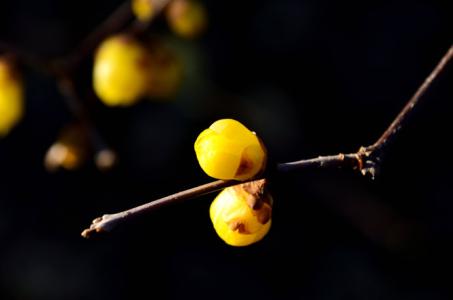
These are the ways to grow a wintersweet bonsai. Have you learned them? Below, the editor will also share the flower language of wintersweet.
How to care for a wintersweet bonsai
Everyone knows that wintersweet is a flower that blooms in winter, and the proud plum in the snow symbolizes the noble character of plum blossom. Many people fall in love with plum blossom because of its tenacious perseverance. Plum blossoms have a rich fragrance and very graceful branches, giving them high ornamental value. A wintersweet bonsai is a way to grow wintersweet at home. Below, here are some methods for caring for a wintersweet bonsai.
How to care for a wintersweet bonsaiI. How to care for a wintersweet bonsai——Watering
Wintersweet has always been a flower that blooms in severe cold, so it can grow even in relatively harsh environments, and even in dry, cold conditions. Therefore, wintersweet is actually very drought-tolerant, which also means it should not be deliberately watered too much. When growing wintersweet in a pot, excessive watering can instead cause root rot.
II. How to care for a wintersweet bonsai——Fertilizing
Only with sufficient nutrients can plants grow healthily. Although wintersweet has strong vitality, it still needs proper fertilizing when grown in a pot. Caring for a wintersweet bonsai also requires attention to basic fertilizing methods. Wintersweet itself also likes fertile soil. When growing a wintersweet bonsai, do not fertilize too much; regular light fertilizing is enough.
III. How to care for a wintersweet bonsai——Pruning
Wintersweet is a tree-type plant, and its branches will spread out during growth, so basic pruning is necessary. If wintersweet is not pruned, its growth will become too lush and its appearance will be unattractive.
How to care for a wintersweet bonsai
Regarding the art of shaping a wintersweet bonsai, many flower lovers ask how to care for it correctly. Below, Zuihua Web gives a detailed introduction:Placement location: Wintersweet bonsai should be placed in a wind-sheltered, sunny spot, and avoid cold wind. In summer, slight shading is needed. In winter, potted plants should be moved indoors to overwinter when the temperature is below 1°C.
Watering: Wintersweet is relatively drought-tolerant and is known as "the wintersweet that cannot die of drought," but it should not be too dry either. Usually the pot soil can be slightly dry. Water according to the principle of "water when dry, and water thoroughly when watering." During the dog days, which is the flower bud formation period, water must not be lacking, and it should be watered once in the morning and once in the evening. When leaves fall after autumn, the pot soil can be on the drier side, watering once every 5-7 days.
Fertilizing: Wintersweet likes fertilizer. From April to June, in the early stage of flower bud formation, it is suitable to apply cake fertilizer water once every 10 days. From the end of June to before the dog days begin, apply a diluted fertilizer water combining nitrogen and phosphorus once a week to promote flower bud formation. During the dog days, apply 1-2 times, with light fertilizer. After autumn, apply just once more. When repotting, sufficient base fertilizer such as bone meal and soybean cake can be applied at the bottom of the pot.
Pruning: To make wintersweet flourish with abundant branches and flowers year after year, pruning and bud pinching are extremely important. Pruning is generally done from March to June, and stops after August. After flowering each year, the old flowering branches should be shortened immediately, leaving only 15-20 cm at most per branch. After the new branches grow 2-3 pairs of buds, pinch off the terminal bud. Soon side branches will grow again. After they reach 10 cm, pinch the buds once more. Repeat this several times until the flower buds are basically formed. Also thin out various crossing branches, parallel branches, overlapping branches, opposite branches, leggy branches, and overly dense or weak branches that affect the attractiveness of the tree shape. There is a saying among flower growers that "wintersweet has no lack of branches," so wintersweet can be heavily pruned.
Repotting: Wintersweet bonsai should be repotted once every 1-2 years, preferably in late winter or early spring after the flowers fade. Before repotting, the already sprouted buds can first be removed. After about 5 days, when the latent buds begin to swell, transplant it. When repotting, remove 1B3 of the old soil, cut off rotten roots and dead roots, and trim away overly long old roots. Replace with frost-crumbled pond mud or leaf mold rich in humus, mixed with an appropriate amount of rice husk ash and sandy soil.
Pest and disease control: Wintersweet has relatively strong resistance to pests and diseases. Occasionally there are pests such as slug moths, bagworms, aphids and scale insects, which can be controlled by spraying 80% dichlorvos at 1500 times dilution or 90% crystal trichlorfon at 1000-1500 times dilution.
Through the introduction to wintersweet bonsai in this article, we hope you can gain something from it! Thank you for your attention!