How to grow Acorus calamus? I'll teach you the correct cultivation methods
1. Soil
Acorus calamus likes loose, breathable sandy soil. You can mix vermiculite, river sand and nutrient soil. For cultivation, loam rich in humus is best.
2. Water
Acorus calamus likes a moist environment. For daily watering, keep the soil moist and also keep the environment humid. You can spray water on the leaves and surroundings to prevent drought.
3. Light
Acorus calamus likes sunlight but cannot tolerate direct sun exposure. Especially in summer, pay attention to shading. In other seasons, it can be placed outdoors by the water or in a shady spot.
4. Fertilizing
Acorus calamus likes nitrogen fertilizer. Fertilizing with decomposed soybean cake water is best and can effectively promote growth. Before heading and flowering, applying extra phosphorus and potassium fertilizer can enhance resistance.
How to grow Iris pseudacorus
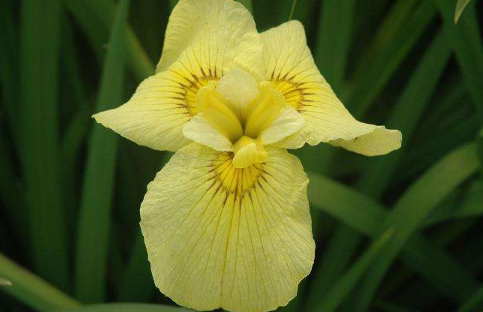
Iris pseudacorus
Scientific name: Iris pseudacorus L.
Aliases: water candle, yellow iris, aquatic iris, yellow-flowered iris
Family and genus: Iridaceae, Iris.
Morphological characteristics: perennial emergent herb. Rhizome short and thick with many nodes. Leaves sword-shaped, flowers yellow to milky white. Flowering period May to June.
Origin and distribution: distributed across countries in Europe and West Asia. It is now introduced all over the world. It has been introduced in some gardens and nurseries in Yunnan Province; it is introduced and cultivated in various parts of China, and prefers to grow in wetlands or marshes along river and lake shores.
Growth habits: it likes a warm, wet environment and also likes fertile soil, and has strong cold tolerance.
Propagation method: division propagation is mostly used with bud-bearing rhizomes, and seed propagation is also possible.
Cultivation and management: before planting, the soil in the pot should be given decomposed fertilizer as a base fertilizer, which can promote lush plant growth.
Landscape use: it can be planted in patches in shallow water of ponds in parks and scenic areas, with good landscape effect.
Species in the same genus: one is Iris ensata (I. kaempferi). Leaves sword-shaped, dark green, flowers large in diameter, flower color red-purple or yellowish-white with a blush, double-petaled, nearly horizontal or drooping with narrow claws. Flowering period June to July. The other is Iris sibirica (I. sibirica), with a short rhizome, strong clumping habit, and flowers blue-purple to violet-purple. Flowering period June. Native to the north temperate regions of Europe and Asia.
How to grow Acorus calamus | Cultivation methods for Acorus calamus
Acorus calamus (scientific name: Acorus calamus L.): also called white acorus and Tibetan acorus. Perennial herb, rhizome thick and strong. Leaves basal, sword-shaped, midrib distinctly raised, base leaf sheath folded, with membranous margins. Grows by marshes, streams or paddy field edges.
Acorus calamus is one of China's traditional flowers. Together with orchids, narcissus and chrysanthemums, it is called the "four elegant flowers and plants." In recent years it has become very popular in the flower market and has gradually become a new favorite of consumers. But Acorus calamus is not easy to grow, so below we introduce in detail from various aspects how to grow Acorus calamus. Once you understand these cultivation methods for Acorus calamus, you can grow a beautiful and elegant pot of it.
Pots
Small pots are suitable. An inverted trapezoid shape is recommended, with a wide mouth and narrow bottom being best.
Soil
Acorus calamus is not picky about soil. Generally choose soil that is loose, breathable and good at retaining water.
Ventilation
Strong wind is not necessary; fresh air circulation is enough, but this does not mean air circulating internally in a closed space.
Moisture retention
This refers to the relative humidity of the growing environment. In the Jiangnan region, long-term use of water trays is not recommended, first because it rots leaves, and second because it breeds insects. In northern regions, refer to this as appropriate. If the environment is overly dry, a small warm shelter can be built to retain moisture, but pay attention to regular ventilation to avoid localized overheating.
Temperature
In summer it must be shaded, and in winter it must avoid snow. Acorus calamus can tolerate an extreme temperature of minus 5°C for a short time. In the Jiangnan region it can overwinter outdoors; north of the Yangtze River it is recommended to move it indoors.
Light
Year-round, it can accept an outdoor environment without direct sunlight. In summer it must be shaded or placed in a cool, ventilated spot outdoors under a wall corner or eaves. For indoor growing, it must be regularly moved outside to receive appropriate light.
Watering
Better moist than waterlogged; it is best if the soil feels humid when pinched by hand. Too much water makes the leaves large and coarse, lacking elegance. It is best to water generously with a spray; after watering thoroughly, ventilate immediately to dry the water accumulated between the leaves so they do not stick together. On hot summer days, water after the sun has set and the heat has receded, and it must be watered thoroughly with plenty of water. In low-temperature weather, reduce water appropriately to keep warm, and watch out for freezing inside the pot.
Fertilizing
In traditional Acorus cultivation, fertilizing is generally unnecessary. You may also apply a little slow-release fertilizer or liquid fertilizer during the growing season or one month before summer, using half the dosage stated in the instructions, or according to experience, or you may decide as you see fit based on your expectations.
Trimming
This can be done in spring and autumn, namely from April to June and from October to November. If you want short, slender leaves, choose around November. Seedlings do not need trimming before they grow into a ring. When the condition is poor, you may skip trimming; when the leaves are fine and dense, you may also skip trimming. If there are insect pests and spotted leaves, you can also trim promptly, and the day before trimming you must water thoroughly.
Before trimming, the leaves must be kept dry, and the scissors disinfected; after trimming, leave it in a bright spot, the leaf tips must not touch water, and after one or two days soak the pot, then continue routine care.
Pest control
Mainly red spider mites, scale insects and fungus gnats; generally the use of chemicals is not advocated. Acorus calamus is not afraid of water. When pests occur on a small scale, you can soak the whole pot in tobacco-stem water for several hours to kill the pests; when there is a large-scale outbreak, you can appropriately spray "Huhuashen" or other chemicals for control.
Dividing pots
Acorus calamus can be divided year-round. Beginners can choose around Qingming. First wash the roots, then use clean scissors to separate according to the growth points, carefully separating the rhizomes along their natural direction. Larger divisions grow faster later; the smaller the division, the slower the later growth. After planting, water thoroughly, place in a cool, ventilated spot, and after one week resume normal care.