How Do Cherry Trees Reproduce? A Detailed Guide to Common Propagation Methods
Cuttings Propagation
When carrying out cuttings propagation, different branches should be selected according to different seasons. Usually, one-year-old hard branches are selected in spring, and one-year-old soft branches are selected in summer. Note that when planting, the soil should be kept breathable and watered frequently.
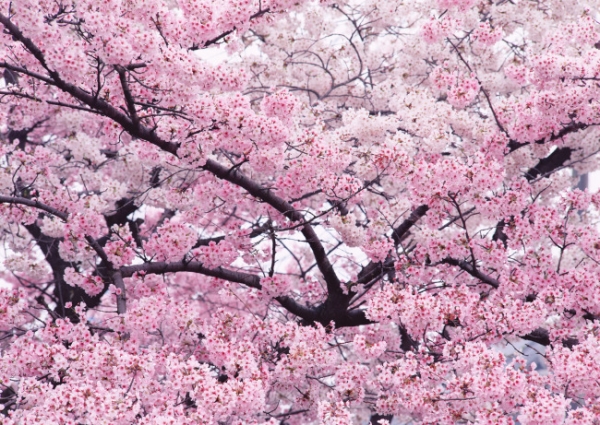
Seed Propagation
Sow seeds collected from cherry blossoms. Be careful not to let the seeds become too dry and dehydrated; they should be sown and planted immediately after collection.
Have you all learned the cultivation methods for cherry trees? Note that during the planting process you must water frequently to prevent them from dying of drought! If you want to learn more, please pay more attention to the Four Seasons Plants website!
Key Points for Cultivating Cherry Trees
The cherry tree is a plant with medicinal value. Cherry trees are very precious. When planting cherry trees, you must master the basic methods. Below, we share the key points for cultivating cherry trees.
Key Points for Cultivating Cherry Trees1. Key points for cultivating cherry trees——Temperature
The temperature requirement for cherry trees is high temperature and humidity. Both moisture and temperature are important parts of cherry tree growth. The temperature is best kept relatively warm at above 20 degrees. If it is higher than 32 in summer or lower than 15 degrees in winter, the cherry tree will enter a dormant stage.
2. Key points for cultivating cherry trees——Watering
Cherry trees need a relatively large amount of water. Cherry trees like a humid environment, so keeping the soil always moist is very important for cherry trees. Next, cherry trees should be watered about every 3 days. In hot seasons or under high-temperature conditions, watering twice a day and necessary misting operations are indispensable. In winter, the watering interval can be extended to about once every half month.
3. Key points for cultivating cherry trees——Light
Cherry trees love sunlight. Under sufficient light, the leaves will be glossy green. If placed in a shaded environment for too long, the leaves will fade. In summer, avoid exposure to direct sunlight at noon to prevent burning the leaves. In winter or in areas with less sunlight, you may choose to use auxiliary lights or bulbs to increase light intensity.
4. Key points for cultivating cherry trees——Soil
The most important thing for cherry tree soil is that it be breathable and drain well. Under conditions where these two properties are satisfied, simply increase the soil's oxygen content as much as possible to grow healthy cherry trees.
How to Grow Potted Cherry Blossoms
Many flower lovers are especially fond of cherry blossoms. In fact, cherry blossoms can be grown in pots. Although in many areas of our country they are chosen to be planted in the ground, potted cherry blossoms are not impossible. The editor will introduce to you the cultivation methods and precautions for potted cherry blossoms.
Potted Cherry Blossoms
Soil To grow potted cherry blossoms, you must first prepare the soil. Generally, homemade leaf mold can be used (made by collecting leaves and acidic soil, chicken manure, charcoal powder, and microorganisms and composting them). Homemade leaf mold has good drainage and aeration, and is suitable for the growth of potted cherry blossoms.
Pruning Special attention should be paid to pruning potted cherry blossoms. Before and after flowering, appropriately thin out branches that are too dense, and cut off inner branches, dead branches, thin and weak branches, and diseased and pest-infested branches. Throughout the entire growth period, sprouting branches and leggy branches should be cut off at any time to avoid consuming nutrients. After pruning, an antiseptic must be applied to prevent the wounds from rotting, because cherry blossom wounds heal relatively slowly.
Watering Cherry blossoms taboo waterlogging. Water reasonably according to different seasons and seedling size, and grasp the principle of watering when dry and stopping when wet. The soil must not be too wet or waterlogged, otherwise it will cause root rot, ranging from leaf drop and affected flowering to the death of the whole plant in severe cases.
Fertilizing Potted cherry blossom management must be careful. Try to achieve frequent watering and sufficient fertilizing to ensure the water and nutrients needed for their growth and development, so that the plants have lush branches and leaves and bright flower colors. Newly potted cherry blossom branches should be cut back to promote more new branches and differentiate more flower buds. Generally, apply decomposed liquid fertilizer once a week. In the early stage, mainly use nitrogen fertilizer to promote vegetative growth. In the later stage, pay attention to applying phosphorus fertilizer in combination to prevent excessive vegetative growth from affecting flower bud differentiation. In May-June, combine foliar spraying with 0.1%-0.2% potassium dihydrogen phosphate. Apply base fertilizer once each before flowering and after flowering to lay the foundation for flowering in the second year.
Pest prevention Cherry blossoms have gummosis and root rot. For both of these diseases, timely treatment is required, improving the soil, strengthening water and fertilizer management, and pruning reasonably. During one year of growth, cherry blossoms can be harmed by aphids, red spiders, and scale insects. Generally, spray 3-4 times: the first time in the early flowering stage, the second time in the late flowering stage, and the third time in July-August. Careful observation and timely prevention and control must be achieved to obtain better results.