How do you fix yellowing leaves? Keep these points in mind
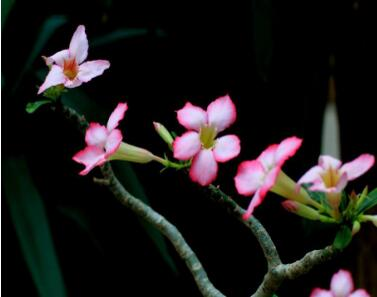
1. Sometimes yellowing leaves on a desert rose are normal, for example when a desert rose has just been moved to a new environment and has not quite adapted yet; in this situation, do not make a fuss.
2Besides the points mentioned earlier, yellowing leaves on a desert rose can also be caused by applying too much fertilizer.
Bamboo palm leaves turning yellow: analysis and solutions for the problem of bamboo palm leaves turning yellow
Cause 1 of bamboo palm leaves turning yellow: too much lightBamboo palm leaves are emerald green, but they cannot stand direct sunlight. During care, if the light is too strong, the water in the leaves quickly evaporates completely, and then the leaves turn yellow and the leaf tips dry up.
SolutionBamboo palm likes shade, so place it in a bright spot out of direct sun; any corner of the living room will do, and try to avoid direct sunlight. For leaves that have turned yellow because of too much light, you can cut off the yellowed parts, and once the plant grows new leaves, simply cut off the whole leaf; this will not affect its ornamental value.
2. Alkaline soilSoil in most parts of the north is alkaline, but bamboo palm likes to grow in slightly acidic soil, and when the soil becomes alkaline the leaves turn yellow. In addition, when the plant is not repotted for a long time, the soil lacks nutrients, the soil structure becomes uniform, and the soil may even become compacted; new roots have difficulty growing, the bamboo palm's absorption capacity weakens, its growth declines, and the leaf edges become scorched.
SolutionRepot every 2 to 3 years, and when repotting replace part of the soil with new soil to ensure the soil always has enough nutrients to supply the plant's growth. (For detailed repotting methods, you can refer to ☛ How to repot a bamboo palm)
During care, you can occasionally water with a little diluted vinegar water or lemon water; the concentration should be low, and as long as it does not contaminate the soil, it will change the soil's acidity and alkalinity. As for leaves that have already turned yellow, some will gradually recover after the soil becomes acidic.
3. Improper wateringToo much or too little watering will both affect the growth of the bamboo palm's root system and affect the plant's respiration, thus causing the leaves to turn yellow. Of course, when the air is too dry, the leaves will also gradually turn yellow, especially in varieties with thinner leaves.
SolutionControlling watering is essential; the soil must not be too dry, nor waterlogged. The best state is when the potting soil is moist but not sticky to the touch. Spray water often to ensure sufficient air humidity; if the humidity in your home can be similar to that of a bathroom, the bamboo palm will grow very well. Spray water frequently, and ventilate promptly when there is too much water.
4. Improper fertilizingIf no fertilizer is applied for a long time or concentrated fertilizer is applied, the bamboo palm's leaves will gradually turn yellow from the bottom up. This is caused by damage to the roots, which weakens their absorption capacity. Many people think that more fertilizer is better, but in fact, the more fertilizer there is, the higher the concentration, and instead it becomes harmful; the roots get burned, causing the leaves to wither and turn yellow.
SolutionFertilize appropriately; during the growing season apply a thin liquid fertilizer once every 15 to 20 days, and a lower concentration is fine. Try to fertilize in the evening, and water appropriately the next morning to dilute the leftover fertilizer in the potting soil. When pouring the fertilizer solution, do not let it touch the leaves, so as to avoid burning them.
How to grow bamboo palmLarge bamboo palms can be grown as potted plants and placed in the living room or at the office entrance as ornamental plants, while small bamboo palms can be placed on the living room table, beside the TV, or even in the office, where they help purify the air. So how do you grow bamboo palm?
1. Temperature management: As a plant that grows in the warm southern regions, bamboo palm generally grows at ambient temperatures of 20-30°C. According to tests, bamboo palm can grow at roughly above 0°C, and with suitable humidity it can generally also grow at 40°C. So there is usually no need to worry about temperature.
2. Light control: Based on its original growing environment, bamboo palm likes a semi-shaded, semi-lit environment, and daily scattered light is enough, but remember it must not be exposed to intense sun; in summer it needs shading and ventilation. Generally about 2 hours a day is recommended.
3. Watering control: Generally in spring water once a day, while in summer you can water about twice a day, choosing noon, and pay attention to shading. After autumn, water about once every 2 days, and in winter reduce it further, but keep the humidity up.
4. Soil choice: If growing it in a pot, there actually are not that many choices for soil; just keep the soil on the acidic side, generally around 6.5.
5. Fertilizer use: Bamboo palm likes light fertilizer, and the main fertilizing season is during the growing period, generally spring and summer; in winter it is best not to fertilize, because this will cause leggy growth or damage the roots.
6. Understanding diseases: Generally bamboo palm rarely gets sick; it is mostly just yellowing leaves or pest problems, and the usual pest is scale insects, which only need a pesticide mixed to the right humidity. There is also a kind of brown spot disease, caused by long-term growth in shade; it is best to spray appropriate medicine and then provide a certain amount of light. Anthracnose is a disease that plants can get, mainly showing brown spots on the leaves. Generally, corresponding disinfectants are sold on the market.
Solutions for pothos leaves turning yellow
1. Pothos is a plant that loves a warm and humid growing environment, so the soil conditions during cultivation are very important; it is best to grow it in loose, fertile, well-drained soil, which effectively reduces the chance of leaves turning yellow. When growing pothos in a pot, the point to note is to choose fertile, loose, well-drained leaf mold soil, and if it is on the acidic side, all the better.
2. Because pothos is a very shade-tolerant vine-type plant, unsuitable light conditions can also cause its leaves to turn yellow. So what do you do when pothos leaves turn yellow? At this time we need to give the pothos suitable light conditions; growing it in a sunny spot indoors is best, and remember it must not be exposed to intense sun or strong light, nor should it be kept completely without light.
3. Pothos also has high requirements for water, and unsuitable watering can also cause its leaves to turn yellow. Therefore we need to water it in the right amount, not too much, and follow the rule of "water when dry, and water thoroughly when you do." The water quality is best if it is clean tap water; do not just casually pour leftover drinking water into the pot. Soil that is too wet will prevent the plant's roots from breathing, causing yellow leaves and rotting leaves.
4. To prevent pothos leaves from turning yellow, fertilize in the right amount and at the right time; it is best to apply light fertilizer frequently, in small amounts and multiple times, and remember not to apply too much fertilizer at once, otherwise it will cause excess nutrients that the plant cannot fully absorb, leading to root burn, yellow leaves, and similar problems. When fertilizing, it is best to use more organic fertilizer, and you can also appropriately use beer as fertilizer; just mix beer with water at a 1 to 1 ratio and spray it on the stems and leaves of the pothos.
The above is an introduction to the causes of pothos leaves turning yellow and the solutions. If the pothos you are growing also has this problem, try the solutions above, and after a period of time your pothos will revive! To learn more, please follow Four Seasons Plant Network!