How to care for a Radermachera sinica? Detailed guide to care methods and precautions
1. Temperature
The Radermachera sinica loves warm and hot environments, and its most suitable growing temperature is 20°C to 30°C, so pay attention to temperature control in daily care.
2. Light
The Radermachera sinica likes plenty of light; of course, in summer pay attention to moderate light, and it is best placed on a balcony or windowsill.
3. Watering
The Radermachera sinica needs enough water to grow, and during the growing period the soil must be kept moist. When watering in summer, pay attention to not only watering the roots but also misting the leaves; in winter, reduce watering, which can prevent root rot.
4. Soil
The soil for the Radermachera sinica should be loose, fertile and well-drained, which is beneficial to its growth.
5. Fertilizing
Fertilizing depends on the situation. During the growing period, fertilize generally once a month, but when the temperature is too high or too low, stop fertilizing.
6. Pest and disease control
To prevent the Radermachera sinica from being infected by viruses, it is best to grow it in a ventilated place with light. If diseased branches are found, remove them promptly; if pests are found, spray insecticide immediately.
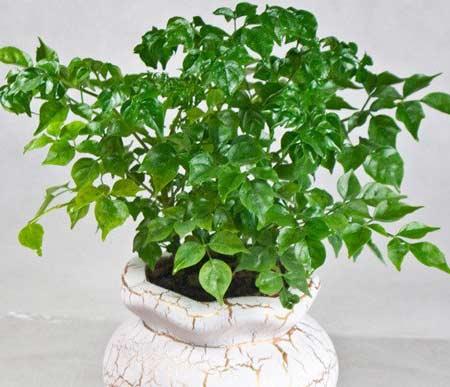
That is all for today's content from the editor. I hope the editor's content can help lovers of the Radermachera sinica. Thank you for reading!
How to grow a Radermachera sinica and precautions: what to do if the Radermachera sinica drops its leaves
The Radermachera sinica symbolizes happiness and peace, with luxuriant branches and leaves, and small emerald-green leaves, making it highly ornamental. So how do you grow a Radermachera sinica? Let's learn about the growing methods and precautions for the Radermachera sinica, as well as what everyone cares about most: what to do if the Radermachera sinica drops its leaves.
Growing methods for the Radermachera sinica
1. Temperature
The Radermachera sinica likes warm and hot environments. The suitable growing temperature is 20°C-21°C during the day and 18°C-19°C at night. In midsummer, try to keep the temperature below 27°C. When the ambient temperature is very high, provide appropriate shade with a canopy, and increase the humidity of the environment and leaf surfaces. During overwintering, it is best to maintain a greenhouse temperature of no less than 8°C, and the minimum must not be lower than 5°C, so as to avoid frost damage.
2. Light
The Radermachera sinica is a light-loving plant, and it can also tolerate slight shade. Either full sun or partial shade is acceptable. However, in summer do not let sunlight shine directly on it; provide shade with a canopy. When potted plants are placed indoors, it is best to place them by a window or on a balcony with sufficient light to receive partial shade or scattered light. If it is placed in a dim indoor area for a long time, it is prone to leaf drop. For home pot cultivation, during overwintering it can be placed in a higher position in front of a window or balcony so that it receives more light.
3. Humidity
The Radermachera sinica likes relatively moist soil and a moist growing environment. Air humidity should generally be maintained between 70-80%, and should not exceed 85% at most. If kept at home, you can often spray the plant with slightly warm clean water to maintain its fresh appearance and also increase the ambient humidity.
4. Growing medium
Choose a culture soil that is loose, fertile, well-drained and air-permeable, and rich in organic matter. Usually mix 5 parts garden soil, 3 parts leaf mold, 1 part decomposed organic fertilizer, and 1 part river sand. During the growing season, loosen the soil once a month to ensure the root area is always in a well-aerated state. If water accumulates in the pot, drain it as soon as possible, and repot and change the soil after the potting soil has dried out. Generally, for small and medium-sized plants grown as home potted plants, repot once a year in early April when they are moved out, to meet their soil fertility needs for a full year of growth.
5. Fertilizer
The Radermachera sinica grows relatively quickly and needs sufficient nutrients to ensure vigorous growth, so during the growing period it needs frequent fertilizing. Generally, a mixed fertilizer with an NPK ratio of 20-10-10 or 15-15-15 is sufficient. Diluted weak fertilizer water can also be used instead of clean water to water the potting soil.
Precautions for growing the Radermachera sinica
The Radermachera sinica likes warm and hot environments, and the suitable growing temperature is 20°C to 30°C. During the intense heat of midsummer, when the ambient temperature reaches above 30°C, provide appropriate shade with a canopy, increase misting of the environment and leaf surfaces, or move it to a ventilated, cool place with dappled shade to spend the summer. When late autumn arrives, when the ambient temperature drops to around 10°C, move it indoors into a greenhouse in time. During overwintering, it is best to maintain a greenhouse temperature of no less than 8°C, and the minimum must not be lower than 5°C, so as to avoid cold damage to the leaves or leaf drop. For home pot cultivation, it can be moved indoors where there is air conditioning or an electric heater, ensuring the room temperature is not lower than 8°C so that it can pass the winter safely.
What to do if the Radermachera sinica drops its leaves
There are many reasons for leaf drop in the Radermachera sinica. You need to find out the cause of leaf drop and deal with it accordingly. The following are the causes of leaf drop in the Radermachera sinica and the solutions:
1. Temperature reasons:The Radermachera sinica likes warm and hot environments, and the suitable growing temperature is 20°C to 30°C. During the intense heat of midsummer, when the ambient temperature reaches above 30°C, provide appropriate shade with a canopy, increase misting of the environment and leaf surfaces, or move it to a ventilated, cool place with dappled shade to spend the summer. When late autumn arrives, when the ambient temperature drops to around 10°C, move it indoors into a greenhouse in time.
2. Light reasons:The Radermachera sinica is a light-loving plant, and it can also tolerate slight shade. Either full sun or partial shade is acceptable. Its seedlings are relatively shade-tolerant, and in summer shade should be provided with a canopy. For potted plants, during indoor display they should be placed by a window with sufficient light or indoors. If it is placed in a dim indoor area for a long time, it is prone to leaf drop. For home pot cultivation, during overwintering it can be placed in a higher position in front of a window or balcony so that it receives more light.
3. Water reasons:During cultivation, the soil and display environment should be relatively moist. During the seedling stage, the seedbed must be kept moist. In hot seasons, sufficient water must be supplied, and in hot seasons spray the plant 2 to 3 times a day. In summer and autumn, place the plant outdoors for care. In winter, place the plant indoors; the plant enters dormancy, so do not water too much to avoid root rot.
4. Soil reasons:For potted Radermachera sinica, choose a culture soil that is loose, fertile, well-drained and air-permeable, and rich in organic matter. Usually mix garden soil : leaf mold : decomposed organic fertilizer : river sand = 5:3:1:1. During the growing season, loosen the soil once a month to ensure the root area is always in a well-aerated state. Generally, for small and medium-sized plants grown as home potted plants, repot once a year in early April when they are moved out, to meet their soil fertility needs for a full year of growth.
5. Fertilizer reasons:For potted Radermachera sinica, in addition to adding an appropriate amount of decomposed cake fertilizer and 3% compound fertilizer to the culture soil, topdressing should also be given continuously. During the growing season, apply a quick-acting liquid fertilizer once a month, usually decomposed cake fertilizer water. For a small number of home potted plants, or for large potted plants displayed in public places for a long time, a small amount of slow-release compound fertilizer granules can be buried regularly, or a mixed solution of 0.2% urea plus 0.1% potassium dihydrogen phosphate can be applied.
The above isgrowing methods for the Radermachera sinicaandwhat to do if the Radermachera sinica drops its leavesrelated introduction. If you are preparing to grow a luxuriant Radermachera sinica, you should carefully understand the growing methods.
Growing methods and precautions for the Radermachera sinica: growing methods and precautions for the Radermachera sinica
With the development of society, people's lives are also constantly developing. Due to urban construction, there are not many green plants we can see now. In order to make the air quality at home better, many people grow some bonsai plants at home for ornament and to purify the air. The Radermachera sinica is a small to medium-sized potted plant with dense, emerald-green leaves, full of vitality and vigor, giving people a feeling of happiness, which also makes many people like to grow this tree. Today, let's all take a look at what the growing methods and precautions for the Radermachera sinica are.
Introduction to the Radermachera sinica
The Radermachera sinica is also known as cai dou shu, ku ling jiu, jiang dou shu, la jiao shu, and other names. It is a small tree plant in the family Bignoniaceae, genus Radermachera. The petioles, leaf rachis, and inflorescences of the Radermachera sinica are all hairless. It has bipinnately compound leaves, rarely tripinnately compound leaves. The leaflets are ovate to ovate-lanceolate, with a caudate-acuminate apex, a broad cuneate base, entire margins, extending obliquely upward, and hairless on both sides. The Radermachera sinica is not only an ornamental plant; its roots, leaves, and fruit can also be used as medicine, and can be used to cool blood and reduce swelling, and to treat high fever, bruises, and venomous snake bites.
Growth habits of the Radermachera sinica
The Radermachera sinica likes to grow in high-temperature, humid, and sunny environments. It is relatively tolerant of high temperatures, afraid of cold, prefers moisture, and avoids dryness. The Radermachera sinica grows in valleys or open woodland on flat ground. When planting the Radermachera sinica, it is suitable to use loose, fertile, well-drained, organic-matter-rich soil and sandy soil for planting.
Growing methods for the Radermachera sinica
Soil: When growing the Radermachera sinica, choose a culture soil that is loose, fertile, well-drained and air-permeable, and rich in organic matter. You can mix garden soil, leaf mold, decomposed organic fertilizer, and river sand in a ratio of 5:3:1:1 for growing. During the growing season of the Radermachera sinica, loosen the soil once a month to ensure its root area is always in a well-aerated state.
Temperature: The Radermachera sinica is a plant that likes warm environments, and its suitable growing temperature is 20-30°C. When the temperature is above 30°C, appropriately cool it or provide shade, or move it to a ventilated, cool place with dappled shade to spend the summer. When the temperature is around 10°C, move the Radermachera sinica indoors. In winter, the temperature for the Radermachera sinica must not be lower than 8°C, so as to avoid freezing its leaves.
Light: The Radermachera sinica is a light-loving plant and is also relatively shade-tolerant. When growing it, either full sun or partial shade is acceptable. In summer, do not expose the Radermachera sinica to direct sunlight; provide shade with a canopy. If it is grown as a potted plant, during indoor placement it should be placed in a location with sufficient light. If the Radermachera sinica is kept in a dark place for a long time, it is prone to leaf drop.
Watering: The Radermachera sinica likes to grow in moist environments, so during its seedling stage, keep its potting soil moist. In the high-temperature environment of summer, water it in time as well. For potted Radermachera sinica, to keep it from growing too tall, when new shoots emerge in spring, watering can be appropriately controlled and it is enough to keep the potting soil relatively moist. In summer, water 2-3 times a day. In winter, move the Radermachera sinica indoors for growing, because during this period it has entered dormancy and does not need too much water, so as to avoid root rot. It is enough to spray water once every 2-4 days.
Fertilizing: When potting the Radermachera sinica, in addition to adding an appropriate amount of decomposed cake fertilizer and 3% compound fertilizer to the culture soil, it should also be fertilized continuously during its growing period. Generally, during its growing season, apply a quick-acting liquid fertilizer once a month, usually decomposed cake fertilizer water.
Precautions for growing the Radermachera sinica
1. The plant shape of the Radermachera sinica is very beautiful, and during growing it does not need pruning. Just cut off its dead branches and diseased or weak branches. During growing, especially in winter, its temperature must not be lower than 5°C, otherwise cold damage easily occurs, and even the whole plant may die.
2. The Radermachera sinica is a light-loving plant, and either full sun or partial sun is acceptable, but in summer it must not be exposed to direct sunlight. If grown indoors, place it in a sunny spot.
3. The Radermachera sinica is most susceptible to pests in environments with high temperature, high humidity, and poor ventilation. Therefore, when growing it, be sure to place it in a ventilated place. If scale insects are found on the Radermachera sinica, spray and kill them with a 1500-fold dilution of 25% buprofezin wettable powder.
Summary: The above is the editor's introduction to the growing methods and precautions for the Radermachera sinica. After reading the editor's introduction, I believe everyone has a certain understanding of the growing methods for the Radermachera sinica. The Radermachera sinica is a small to medium-sized potted plant and can be placed on balconies, in bedrooms, entrance halls, and other places. The mature Radermachera sinica has dense, emerald-green leaves and is full of vitality and vigor, and can serve as a plant that brings prosperity, bringing people an implication of happiness.