What are the cultivation methods for the octopus orchid?
1. Soil
The octopus orchid has low soil requirements; use loose, breathable, fertile soil. Generally choose fine-grained volcanic rock, bark or burnt soil, or buy special potting mix for cultivation.
2. Temperature
The octopus orchid mostly grows in forests at an altitude of 2000m, and has strong temperature adaptability. The suitable temperature is 15-35°C. In summer, avoid high temperatures to prevent scorching. In winter, it must not go below 8°C, and attention should be paid to keeping it warm.
3. Light
The octopus orchid likes bright light. Insufficient light will cause the plant to grow thin and weak, affecting flowering. In summer, pay attention to shading; in other seasons, it can appropriately receive more light.
4. Watering
The octopus orchid needs a large amount of water during its growing period; generally water once every 3 days. In summer, often spray water on the leaves to keep the air humid and help cool the plant. In winter, reduce watering.
Cultivation methods and precautions for the octopus orchid
Chinese scientific name: Octopus orchidLatin scientific name: Prosthechea cochleata (L.) W.E. HigginsAlso known as: Scallop orchidKingdom: PlantaeDivision: AngiospermsClass: MonocotyledonsSubclass: LiliidaeFamily: OrchidaceaeGenus: ProsthecheaDistribution: Native to Central America, the West Indies, Colombia, Venezuela and Florida in the United States, among other placesThe octopus orchid has linear petals and sepals, yellow-green, slightly twisted and naturally drooping, shaped like the small octopus of the Sea Kings in One Piece, hence its name. It is also called the scallop orchid because its lip resembles a beautiful scallop shell.1. Classification information
Latin name: Prosthechea cochleata (L.) W.E. HigginsClassification: Orchidaceae, Prosthechea
2. Basic morphology
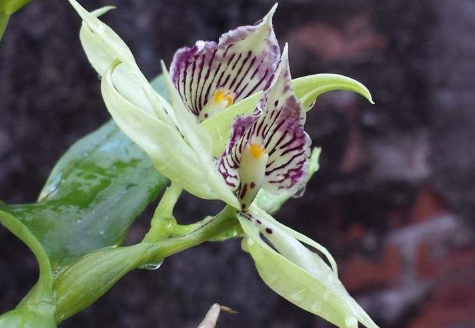
Their petals and sepals are linear, yellow-green, slightly twisted and naturally drooping, shaped like the small octopus of the Sea Kings in One Piece, hence the name. It is also called the scallop orchid because its lip resembles a beautiful scallop shell. Its flower form is unique, making it an epiphytic orchid of extremely high ornamental value; the pseudobulb is flat and oval, the raceme emerges from the pseudobulb, and the lip is purple-black with yellow stripes, located at the upper part of the flower, reversed to form a scallop-like hood covering the column; the flowers open in succession, and the flowering period lasts as long as 4-5 months.
3. Origin
The octopus orchid is native to Central America, the West Indies, Colombia, Venezuela and Florida in the United States, among other places. Because of its unique flower form and long flowering period, many cultivars have been bred in horticulture, and it is highly favored by people.How to grow the octopus orchid at home
Soil requirements
The octopus orchid originally grows in cold high mountain areas, so its soil requirements are not particularly high. But generally the soil should have good drainage and breathability. Generally choose fine-grained volcanic rock, bark or burnt soil; of course, you can also buy it directly from a flower shop.
Temperature range
The octopus orchid grows in forests at an altitude of 2000m and has relatively strong temperature adaptability. It grows well at 15-35°C. Summer is hot, so avoid excessively high temperatures at noon and use humidity to cool it down. In winter, the temperature must not be lower than 8°C. If the temperature is lower, appropriately increase light and water less to keep the roots relatively dry.
How to fertilize
The octopus orchid is a relatively large plant and has a relatively large fertilizer requirement itself, especially during the vigorous growing period when the need for fertilizer increases. In daily care, fertilize once every 1-2 weeks; during the growing period, appropriately increase the frequency of fertilization and the amount of fertilizer. Choose liquid compound fertilizer. Try not to use granular fertilizer, as it is not easily absorbed by the plant.
Sufficient light
The octopus orchid likes bright sunlight, but not direct sunlight. Insufficient light will cause the plant to grow weak and flower poorly. In summer, when sunlight is abundant, shade moderately, especially at noon. In winter in the north, no shading is needed, and it can receive sunlight all day.
Moderate watering
The growth of the octopus orchid requires a relatively large amount of water; generally water once every 3-5 days, and appropriately extend the interval in winter. During this period, often spray water on the leaves to ensure air humidity. At the same time, watering and fertilizing should be coordinated; usually after fertilizing 1-2 times, water once.