What are the common propagation methods for oleander?
1. Sowing
Sowing is simple and direct: plant the seeds in soil, keep them in a greenhouse for a period of time, and finally take them out to plant.
2. Layering
Cut and wound a branch close to the ground surface and press it into the soil, then wait for it to take root before separating it from the mother plant.
3. Water cutting
Cut selected branches and place them in a prepared glass container filled with water. Change the water frequently to prevent root rot.
4. Cuttage
Select well-developed branches and cut them off. First let them dry in the air for a few days, and once the wounds have healed, insert them into the soil, then water to keep the soil moist, and then simply wait for them to take root.
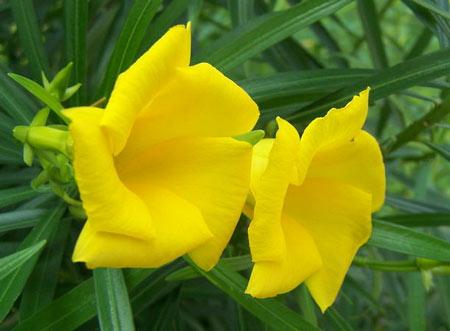
Well, that's all for today's content. I hope the editor's content can be helpful to you and let you understand oleander even better. Thank you for reading!
Oleander Propagation Methods and Oleander Benefits and Effects
Everyone should know about the oleander plant. It is a very beautiful ornamental plant. Today I will tell you about oleander propagation methods and oleander benefits and effects.
Introduction to oleander:
Oleander, also known as willow-leaf peach and half-year red, is an evergreen large shrub of the Apocynaceae family and the genus Nerium, reaching up to 5 m tall. Its flowers resemble peach blossoms and its leaves resemble bamboo, and it stays green all year round without changing. From spring to summer to autumn, flowers bloom and fall one after another. The leaves are 3-4 in whorls, opposite on the lower part of the branch. The leaves are long and lanceolate, and the leaf margins are very smooth. The main vein of the leaf runs straight from the petiole to the leaf tip, and many lateral veins emerge from the main vein and are arranged neatly in horizontal rows. There is also a thin layer of "wax" on the leaves of oleander. This layer of wax helps the leaves retain water and heat, enabling the plant to withstand severe cold. The flowers of oleander are fragrant, with terminal cymes, upright calyx, and a deep red corolla like an opened mulberry follicle. The follicle is oblong, 10-23 cm long, and the seeds have yellow-brown seed hairs at the tip.
Oleander benefits and effects:
1. Oleander has outstanding ornamental value. The leaves of this plant are like bamboo leaves, and the flowers are pink or fiery red, even more beautiful than peach blossoms, and have a unique fragrance. The flowering period is from June to October every year, and it is one of the main ornamental flowers in gardens across the country.
2. Oleander also has important applications in industry. Its seeds are one of the most important industrial raw materials. Oleander seeds contain a large amount of oil, with a content of about 58 percent. After extraction and processing, it can be made into widely used lubricating oil.
3. The oleander plant also holds an important place in the textile industry. Its stem bark fiber is one of the natural textile raw materials, and after being used in the textile industry, it can weave some textiles of excellent quality.
4. The medicinal effects of oleander are even more outstanding. This plant is high in substances such as oleandrin and glycosides. After being used as medicine, it can have cardiotonic and diuretic effects, and has preventive and therapeutic effects on various heart diseases and difficult urination. In addition, after oleander is used as medicine, it also has a clear effect on human external injuries and can eliminate redness, swelling and pain from bruises.
Oleander propagation methods:
1. Cuttage propagation. Oleander cuttage propagation has a relatively high success rate. Propagation can be done in both spring and autumn. Water cuttage propagation makes rooting even easier. Select branches from the previous year, take small sections 30 to 40 cm long, and simply insert them into the seedbed in the usual way.
2. Layering propagation. Take a one-year-old robust branch from the outer part of the mother branch, keep the leaves about 30 cm down from the top tip, and remove all the leaves below. At a suitable part, bend the branch into a ring with the branch tip facing upward, and fix the ring well with rope. After more than one month, roots are basically formed.
3. Division propagation. Oleander has many root shoots. Divide the plants in early spring, and they can bloom in the same year.
Oleander propagation methods
Oleander growth habits
Oleander likes to grow in a warm and humid growing environment. It is relatively intolerant of cold and also intolerant of waterlogging, so it should be planted in dry places with good drainage. It likes sunlight and likes fertilizer, and can also adapt to a more shaded environment. Its sprouting ability is relatively strong, and the tree body recovers easily after being damaged.
Oleander propagation methods
Sowing propagation
After the fruit of oleander matures, it can be picked and sown at any time. After sowing, it will only emerge in the greenhouse after three months.
Layering propagation
In the rainy season, cut and wound a branch close to the ground surface, press it into the soil, and after about two months, once it has taken root, it can be separated from the mother plant.
Water cutting
Water cutting can be carried out during the growing season of oleander. Cut branches about 30 to 40 cm long, use a small knife to split the lower end about 4 to 6 cm, then insert them into a container filled with water, and quietly wait for them to take root.
Cuttage propagation
Select healthy branches, cut them off with scissors, cut the upper end into a horizontal surface and the lower end into a slant, and remove the lower leaves and branches. Before cuttage, disinfect the soil, and insert the prepared cuttings at a spacing of 5 x 5 cm so that the cut ends of the cuttings are in close contact with the soil substrate. Be careful not to scrape the cortex at the lower cut of the cuttings. Generally, they can take root about 15-20 days after cuttage. After cuttage, pay attention to timely watering, and provide shade when the temperature is too high.
Oleander is known as the "green vacuum cleaner" and has a strong ability to absorb dust and purify the air, so gardening friends can plant more oleander at home!