Cape Mallow (Anisodontea capensis) Growing Methods and Care Tips
I. Light Conditions
The cape mallow is a sun-loving plant that thrives in bright light, and maintaining at least 6 hours of light per day is most suitable. Sufficient light promotes the growth of the cape mallow, making it more robust, while an overly shady environment will reduce flowering and affect its ornamental value. If placed indoors, it should be put in a bright spot where it can receive light for extended periods.
II. Soil Requirements
For the soil used to cultivate the cape mallow, generally commercially available potting soil will do, or you can make your own potting soil by mixing mountain soil (leaf mold) with a small amount of river sand and organic fertilizer. Also, because the cape mallow flowers abundantly and consumes a lot of fertilizer, an appropriate amount of fertilizer can be applied to the soil, such as fully decomposed organic fertilizer, nitrogen fertilizer, and phosphorus fertilizer, all of which have good effects.
III. Watering Matters
The soil should be kept moist, with timely replenishment of water. When watering, avoid too great a difference between water temperature and soil temperature. Rainwater or pond water can be used for irrigation, while tap water should be left to stand for one or two days before use.
III. Temperature Control
The cape mallow has weak cold tolerance. In spring and autumn, when the temperature difference between day and night is large, it should be moved indoors at night in time. In summer, during the midday hours when sunlight is strongest, appropriate shading is needed. In winter, it should be avoided being placed outdoors and should be cared for in a warm indoor environment.
Cape Mallow Growing Methods and Precautions
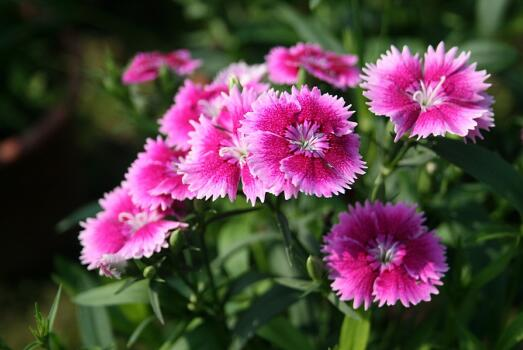
Chinese scientific name: Xiaomujin (cape mallow)Latin scientific name: Anisodontea capensisAlso known as South African mallow, mini hibiscus, and large fennel herb; in Taiwan, China it is mostly called: Yulinglong and Linglong hibiscusKingdom: PlantaeFamily: MalvaceaeGenus: AnisodonteaSpecies: Cape mallowThe cape mallow is a perennial subshrub of the Malvaceae family. Also known as: South African mallow, cape mallow, linglong hibiscus, mini hibiscus, false hibiscus, mini hibiscus, and large fennel herb; in Taiwan, China it is mostly called: Yulinglong and Linglong hibiscus. Plant height 1 OOcm~180cm. Stems are branched, green, light purple, or brown. Leaves are alternate, triangular-ovate, with three lobes, the lobes triangular and irregularly toothed. When it first grows, it resembles a herbaceous plant, and as it gradually matures, the branches also become woody. The flowering period is from summer to autumn. Its form resembles a miniature version of the hibiscus. It bears 1~3 flowers at the leaf axils. The flowers are small, with 5 petals, round and lovely, pink or pinkish-red. It blooms continuously, with very many flower buds, the petals are light and delicate, and the flower shape is elegant. Its producing areas include Shandong, Anhui, Jiangsu Changjing Garden, Zhejiang, and other places.1. Morphological Characteristics
Plant height 1 OOcm~180cm. Stems are branched, green, light purple, or brown. Leaves are alternate, triangular-ovate, with three lobes, the lobes triangular and irregularly toothed. The flowers are small, with 5 petals, round and lovely, pink or pinkish-red. There are very many flower buds, the petals are light and delicate, and the flower shape is elegant.2. Growth Habits
Suitable for pot cultivation. For the growing medium, choose soil with good permeability and drainage. Generally commercially available potting soil will do, or you can make your own potting soil by mixing mountain soil (leaf mold) with a small amount of river sand and organic fertilizer. Avoid using clayey soil.Likes light. It is best to maintain at least 6 hours of light per day. Sufficient light can promote more robust plant growth, while too much shade easily causes internodes to elongate and flowering to decrease. If cared for indoors, it should be placed in a bright spot, such as a balcony or windowsill.
Likes fertilizer. When fertilizer is sufficient, the cape mallow grows rapidly and flowers abundantly. For young plants, use a balanced fertilizer, or one slightly higher in nitrogen. Generally, for spring fertilization, a nitrogen:phosphorus:potassium ratio of 20:20:20 is best. In early summer, switch to a fertilizer with a higher phosphorus content, such as a 10:30:10 flowering fertilizer. Because it flowers abundantly, it also consumes a lot of fertilizer, so apply a 1 200-fold liquid fertilizer about once every 10 days. In winter, when it enters dormancy, stop fertilizing. If conditions permit, applying some fully decomposed organic fertilizer gives even better results.
3. Distribution Range
Native to the hillside or hilly areas of South Africa.4. Care Methods
Growing and PropagationThe soil should be kept moist, and water can be replenished once the surface dries. In winter, water can be appropriately restricted, keeping it only slightly moist. When watering, the water temperature should be consistent with the soil temperature to prevent too great a temperature difference from damaging the root system. Water that is neutral or slightly acidic is best. Rainwater or pond water can be chosen. Tap water is best left in a vat or bucket for one or two days before use. Water with more minerals easily leads to the accumulation of salt ions, causing soil acidification and affecting the plant's
growth. Propagation can use the cutting method, preferably carried out during the plum rain season. For the branches, choose semi-lignified ones; ones that are too old or too tender are both unfavorable for rooting. Generally, they can take root in 1 month.
To encourage the plant to branch more and form a full plant shape, the pinching method can be used. For some diseased branches and dead branches, remove part of the overly dense branches at any time, which helps ventilation and the growth of other branches. After the plant has been cared for for one or two years, its growth worsens and flowering decreases. At this time, light pruning or heavy pruning can be carried out. Light pruning can cut off 1/3 of the branches, and heavy pruning can cut off all branches more than 10cm above the ground, which can promote the plant's renewal and rejuvenation. The cape mallow tolerates pruning well and can be pruned into a round ball shape, a hedge, or other shapes to increase its ornamental value.
Pest and Disease ControlSpider mites and aphids are relatively likely to occur.
For spider mites, dicofol emulsifiable concentrate at 500~600 times dilution or 40% omethoate emulsifiable concentrate at 1 500 times dilution can be used for control;
For aphids, 40% dimethoate emulsifiable concentrate at 1 000 times dilution can be sprayed for control.
Cape Mallow Flower Growing Methods, 7 Growing Points
Cape Mallow Growing Method 1. Adapting to the EnvironmentThe cape mallow likes light. According to observation, many flower enthusiasts place their cape mallows on a south-facing balcony, where light is sufficient and growth is very good.
2. Choosing the Potting Soil MixFor the growing medium, choose soil with good permeability and drainage. Generally commercially available potting soil will do, or you can make your own potting soil by mixing mountain soil (leaf mold) with a small amount of river sand and organic fertilizer. Avoid using clayey soil (some flower enthusiasts have also been seen using ordinary garden soil). In summary, if conditions permit, you can choose potting soil with good air permeability and water permeability, and if conditions do not permit, you can also try ordinary garden soil.
3. Choosing the Flower PotThe cape mallow grows very quickly, so flower enthusiasts need to buy a slightly larger flower pot, such as a terracotta pot with good air permeability. In late autumn, the cape mallow needs to be pruned in time. Long branches, diseased branches, dead branches, and damaged branches should be cut short or removed, and must not consume too many nutrients and affect the next year's growth and development.
4. Sufficient Sunlight ExposureThe cape mallow is a flower that likes sunlight and warmth, so it has high requirements for sunlight. During care, the cape mallow must be constantly moved to prevent long-term exposure to only one direction, which would cause biased growth. In summer, when the weather is too hot, it needs to be placed in a spot on the balcony with sufficient scattered light and kept ventilated, so it can safely pass through the hot summer.
5. Controlling the Amount of WateringIn summer, during the care of the cape mallow, be sure to pay attention to watering, because water is the key to getting the cape mallow through the summer. When the weather is too hot and the temperature rises, it needs to be watered once a day. If you forget to water, large patches of yellowed, fallen leaves will appear.
When direct sunlight makes the temperature too high, it must be watered once a day, and watering must be thorough. If the cape mallow lacks water, it will very easily wither and die. During the winter dormancy period, stop watering it.
6. Fertilizing to Supplement Enough NutrientsThe cape mallow likes plenty of water and fertilizer. According to observation, this is indeed the case, so when flower enthusiasts grow the cape mallow, they must ensure sufficient water and fertilizer. Flower enthusiasts ask what fertilizer to apply; various slow-release fertilizers, flowering fertilizers, and so on can all be used. In winter, when it enters dormancy, stop fertilizing.
7. Timely PruningWhen pruning the cape mallow, flower enthusiasts dare not make a move. Looking at the lush cape mallow, they cannot bring themselves to prune it. In fact, the cape mallow tolerates pruning very well. Generally, light pruning or heavy pruning can be carried out. Light pruning can cut off 1/3 of the branches, and heavy pruning can cut off all branches more than 10cm above the ground. Pruning can promote the plant's renewal and rejuvenation.