How to grow orange jasmine? Mastering these care measures makes it easy
1. Temperature and light
Orange jasmine is not cold-tolerant, so in winter take care to keep it warm, otherwise it will drop its leaves. Orange jasmine also likes sunlight, so make sure it gets plenty of light, but in summer it must not be exposed to scorching sun, otherwise it will get scorched.
2. Watering
Because orange jasmine likes a warm, humid environment, it should be watered in good time to prevent it from dying of drought, but it should not be watered too much either, otherwise the roots rot easily.
3. Fertilizing
Fertilize orange jasmine regularly, roughly once every half month during the growing season.
4. Pruning
Prune orange jasmine often; this keeps the plant's shape attractive and also promotes its growth.
5. Repotting
After orange jasmine has been grown for 2-3 years, repot it once, and thereafter repot once every two or three years, generally in spring or autumn, as this makes it easy to survive and also promotes its growth.
Well, that is all for today's content. I hope this article helps you understand orange jasmine better!
The uses of orange jasmine
1. Ornamental use
Orange jasmine has graceful branches, an attractive shape and beautiful flowers, and has a certain ornamental value, so it is very suitable for keeping indoors as a potted plant.
2. Medicinal use
The leaves and young twigs of orange jasmine can be used as medicine; they are an effective remedy for illnesses such as colds, headaches and stomachaches, and can also invigorate the blood and disperse stasis.
The above are the uses of orange jasmine. Do you find it amazing? Below is a summary of orange jasmine care measures.
Orange jasmine flowering time: when does orange jasmine bloom?
When does orange jasmine bloom?Orange jasmine flowering time: orange jasmine generally blooms between April and September each year, and sometimes it also blooms in autumn and winter.
Orange jasmine fruiting period: orange jasmine has a fairly long flowering period, and after flowering it produces fruit; the fruiting period is between September and December.
How to grow orange jasmine so it bloomsIt likes warmth, tolerates low temperatures fairly well, is not tolerant of severe cold, and can withstand blazing sun and high summer heat. To make orange jasmine's fragrance carry far, pay attention to the following in cultivation and care:
1. How to grow orange jasmine so it blooms: fertile potting soilChoose a sandy soil rich in humus that is loose and fertile. During the young tree stage, repot once each year in early spring; once it reaches the flowering stage, plant it in a wooden tub to favor root development.
2. How to grow orange jasmine so it blooms: water controlOrange jasmine is fairly drought-tolerant, so do not water too much during the growing period; it is enough to keep the soil slightly moist regularly. In the hot summer season, do not water too much, but the pot (or tub) must not have standing water; at this time you also need to spray water on the branches and leaves frequently, which both cools things down and raises humidity and helps keep the branches and leaves glossy green.
3. How to grow orange jasmine so it blooms: fertilize in appropriate amountsReasonable fertilizing is another important measure for growing orange jasmine well; during the peak growing season, apply a dilute cake fertilizer solution once every 3-4 weeks. In addition, during the growing period, avoid direct sunlight and keep it in light shade; only then will orange jasmine have abundant flowers and a strong fragrance.
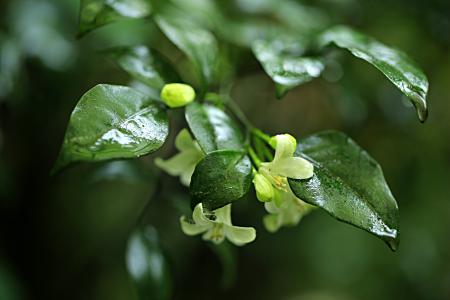
The shape of orange jasmine flowersOrange jasmine flowers are mainly terminal or axillary; generally fewer than 10 flowers open, and in abundant cases more than 50. The petals of orange jasmine are oblanceolate or long elliptical, and when fully open they are somewhat recurved; the flowers are mainly white but bear some pale yellow oil dots. Orange jasmine flowers carry a fragrance that is very rich.