How to grow orchids so they bloom? A full analysis of care techniques
1. Light
Although orchids prefer a semi-shaded environment, light is an important factor for blooming, and suitable light allows the plant to bloom better. Before blooming, if you place it in a bright spot, the colors will be more brilliant. It should receive 2-3 hours of light each day, so the flowers will be more elegant and noble.
2. Watering
Proper watering will also encourage the plant to bloom. Keep the soil moist, but do not overwater, otherwise root rot will occur; however, too little water will cause bud clamping. During the stage of new leaf bud growth, watering should be reduced.
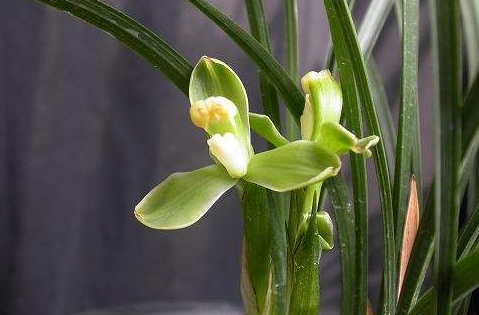
3. Rain protection
Orchids are afraid of waterlogging, especially rain exposure, which can easily cause the plant to die. Therefore, during the rainy season, shelter them from rain in time, and you can sprinkle some plant ash to regulate humidity.
4. Temperature
Orchids prefer warmth. The suitable growing temperature is 15-25°C, and the day-night temperature difference is best around ten degrees. If kept in a low-temperature environment for a long time, small spots will appear on the leaves and growth will stop.
How to grow orchids so they bloom
Orchids are one of China's top ten famous flowers and are deeply loved by flower enthusiasts. But when you grow orchids at home, how should you care for them so they grow well? Here is a detailed introduction. Three parts planting, seven parts care: this is the ancient experience in growing orchids. The quality of care determines whether orchids flourish and whether they can bloom, so the importance the ancients placed on this makes sense. Below is a detailed introduction to methods for caring for and managing orchids. 1. Location The location where orchids are placed is very important, as it directly affects the growth and development of orchids. Orchids are generally placed outdoors in spring, summer, and autumn, in shaded outdoor areas in summer, and indoors in winter. Outdoors, it is best to have open space on all sides and moist air. Indoors, there should be sufficient light, preferably facing south. This is favorable for orchid growth. Orchid pots are best placed on wooden racks or tables, not on the ground. 2. Shading Most orchids are semi-shade plants, and most species fear direct sunlight, so appropriate shading is needed. In early to mid-April, orchids can receive more sunlight to promote growth. After late April, appropriate shading is needed. For summer orchids and autumn orchids with upright leaves, it is best to place them on the south side of a shaded area so they receive appropriately more sunlight; for autumn orchids and spring orchids with drooping leaves, two hours of light per day is best. From the beginning of June to September, shading should be started earlier each day; if using reed screens, dense screens or two layers of sparse screens can be used. After October, when the weather turns cooler and sunlight is weaker, shading can be delayed, but around noon, attention should still be paid to shading work. 3. Rain protection Orchids can tolerate light rain, but should be protected from plum rain, showers, or continuous rain. During the plum rain season, rain protection work must be done especially well. From late June to mid-September, there are often showers. If the rain is short and the rainfall is light, water more in the evening to let the hot air in the pot escape; otherwise, orchids will be damaged, or even suffer root rot and die. If a shower is followed by sunshine, shade promptly to prevent heat rising from the ground from affecting orchid growth. In rainy seasons, which coincide with the stage when orchids are sending out leaf buds, if the potting soil is too warm, leaf bud growth will be poor or diseases may be caused. At this time, a small amount of plant ash can be sprinkled to regulate the humidity of the potting soil. 4. Watering A flower proverb says: dry orchids, wet chrysanthemums. This saying has some truth. Generally speaking, orchids are best kept at eight parts dry and two parts wet. If too wet, the flowers are prone to root rot and death. The principle of watering should be: water when dry, stop when wet, and appropriately lean dry. In specific practice, generally note: during the growing period, from May to the end of June, water appropriately more; during the leaf bud stage, around March-April, and the flowering period, around March-April, water appropriately less; during the dormant period in winter, water even less or not at all. If the pot is large and the orchid plant is small, water less; if the pot is small and the plant is large, water more. In hot, dry weather, water appropriately more; in cool, humid conditions, such as the plum rain season, water less or not at all. For orchids newly dug from the mountains, if the root system is sparse or many roots are broken, water less and keep the potting soil a bit dry, so root rot does not occur and new leaves are encouraged to grow. Second, how to grow potted orchids Orchids by nature love cleanliness. They cannot tolerate dust and grime. In warm, humid, semi-shaded places facing south with relatively more sunlight, they grow especially vigorously. For potted orchids, pay even more attention to the following points: potting soil selection, watering, temperature and light, fertilizing, division, and pest and disease control. 1. Potting soil requirements for orchids: For planting orchids, black mountain soil, peat soil, garden soil, pine needle soil, moss, fern roots, bark chunks, and so on can be used. Cover the drainage hole at the bottom of the pot with a tile, then spread a layer of broken brick and stone granules with a thickness of one quarter of the pot depth to enhance air permeability and drainage, and then spread a layer of culture soil. Place the orchid upright and plant it, fill in culture soil, and cover the pseudobulbs. The soil should be compacted, and no soil should be filled within 2 cm of the pot rim, to make watering easier. After planting, water thoroughly, and place in a cool, shaded place. After half a month, move it to a sunny, ventilated environment for cultivation. To increase beauty and moisture retention, a layer of small white crushed stones can be spread on the pot surface. In spring, temperatures are still unstable, and moving them out too early makes them susceptible to cold wind. Moving them out in early April is relatively safe. In summer, place them under a shade shed, avoid direct sunlight, and cultivate with scattered light. Autumn is the period when orchids sprout and send up flower stems, so maintain corresponding humidity and avoid dryness. Orchid roots are fleshy, and in winter dormancy the water requirement is not high; the potting soil only needs to be slightly moist, and watering should not be excessive, so as to avoid diseases of roots and leaves. How to water orchids: A flower proverb says: dry orchids, wet chrysanthemums. This saying has some truth. Generally speaking, orchids are best kept at eight parts dry and two parts wet. If too wet, the flowers are prone to root rot and death. The principle of watering should be: water when dry, stop when wet, and appropriately lean dry. In specific practice, generally note: during the growing period from May to the end of June, water appropriately more; during the leaf bud stage, around March-April, and the flowering period, around March-April, water appropriately less; during the dormant period in winter, water even less or not at all. If the pot is large and the orchid plant is small, water less; if the pot is small and the plant is large, water more. In hot, dry weather, water appropriately more; in cool, humid conditions, such as the plum rain season, water less or not at all. For orchids newly dug from the mountains, if the root system is sparse or many roots are broken, water less and keep the potting soil a bit dry, so root rot does not occur and new leaves are encouraged to grow. How to fertilize orchids: Fertilizer should be dilute, not concentrated: during the growing period, apply once every half month with fully decomposed soybean cake water or horse-hoof paste residue water. If an appropriate amount of potassium dihydrogen phosphate is added, the effect is even better. Do not fertilize in midsummer. When the temperature is too high, in addition to daily watering, spray water several more times. Slightly acidic water is suitable. Frequently spray and wash the leaf surface with clean water, which not only improves the growing environment of the potted orchid, but also keeps the leaves clean and reduces the chance of pest and disease infection. Orchids are propagated by sowing and division. Orchid seeds can be sown as soon as they are collected. Orchids have a characteristic, namely that orchid roots must live symbiotically with orchid fungi to survive. Therefore, when sowing, the seeds are often sown on the surface of the mother plant's pot, using the mother plant's orchid fungi to germinate and grow. The seeds germinate after about half a year, and after growing in the mother pot for two months, they can be moved to small pots for cultivation. The division method is the method commonly used at present. Because orchid species differ and their characteristics vary, when division is best done, famous orchid growers each have their own definite views. Overall, the relatively suitable times are spring, before new buds are sent out, and autumn, when orchids gradually stop growing. At these times, it is not easy to bruise or break new buds, the temperature is milder, and it is convenient for handling and for restoring the plant body. Summer temperatures are high, which is the peak growing season for orchids, while winter is cold and the plant body has weaker resistance, so division is mostly unfavorable. It can also be controlled by dividing after flowering. Generally, those that bloom in summer and autumn should be divided in early spring; those that bloom in early spring should be divided in late autumn. This way, flowering is not affected, and the tillering of leaf buds can be stimulated, with green leaves and brilliant flowers. When dividing, take the mother plant out of the pot, shake off the soil, and divide it into several clumps with a knife. Each clump should carry 3-4 pseudobulbs and new buds, and withered leaves and decayed, shriveled roots should be pruned away. If using wild orchids bought from the market, because the root system has mostly lost water and shriveled, they can first be soaked in clean water, and after absorbing enough water, wash and clean the root whiskers, dry them in the shade until the roots turn white, and then plant them. Orchid pest and disease control: Orchids are prone to scale insects, which can be sprayed with dichlorvos emulsifiable concentrate at 1000 times dilution. When whiteflies are harmful, spray with deltamethrin at 2000 times dilution to kill them. Orchid roots have a sweet taste and easily attract ants, which can be eliminated by luring them with meat bones. Orchids are prone to anthracnose fungi and black spot fungi. After disease occurs, promptly remove diseased leaves and burn them, widen the distance between potted plants, and improve ventilation and light conditions. Reduce water spraying and control humidity. Also combine with carbendazim for prevention and control. Third, how to grow orchids so they bloom 1. Temperature. To promote orchid blooming, make the day-night temperature difference about ten degrees Celsius, that is, under conditions of 18 to 21 degrees Celsius during the day and 7 to 10 degrees Celsius at night, growth is best and there are more flowers. If the night temperature is high, the orchid leaves will become soft and flower buds will fall off. If the temperature is too low, blind buds will occur, and spots will also grow on the leaves. If harmed by low temperature during flowering, brown spots will appear on the flowers. 2. Watering. The amount of watering is also a major condition for orchid blooming, and moisture must be well controlled. Too much moisture will make the orchid plant grow leggy and make it hard to produce flower buds. Suitable moisture is one of the methods to promote blooming. However, lack of moisture will cause bud clamping. 3. Light. Light is the main factor promoting orchid plants to develop flower buds. Light intensity varies greatly among different orchid species. Generally, when flower buds are forming, if the orchid plant is placed under fairly bright light, the red, dark red, and yellow colors will deepen when blooming. For orchid plants that bloom green or white flowers, light intensity should be reduced as soon as flower buds first appear, to ensure the flower color is more elegant, and after flowering, more light should be given again. Generally, orchids should receive 2 to 3 hours of light. If the leaves are soft and moist with a moderate green color, it indicates normal light. If the leaves are dark green and soft, it indicates that light needs to be increased. If the leaves are pale yellow, it indicates that light needs to be reduced.
How to grow Huilan orchids so they bloom
Huilan orchids not blooming is a headache for many people, yet they do not know what to do. So, how to grow Huilan orchids so they bloom? Now let us tell you how to grow Huilan orchids so they bloom!
How to grow Huilan orchids so they bloom?
The flowering period of Huilan orchids is generally March-May. In February-March, 30-50 granules of compound fertilizer relatively high in phosphorus and potassium can be buried in the pot. Because phosphorus can promote the formation of flower buds, and with flower buds there is no worry about not blooming; potassium can promote sturdy flower stems, making the flower stems tall, thick, and strong. Normally control the amount of water, watering thoroughly only after the soil has dried, as this easily promotes the formation of flower buds.
1. Temperature:
The suitable growth temperature is 15°C to 30°C. Their tolerance for high temperature is higher than that of Phalaenopsis, and the day-night temperature difference is best at 5-8°C.
2. Light:
The most suitable light intensity for growth is 15000 to 40000 LUX (about the strong light indoors in winter). The maximum light intensity is best less than 70000 LUX (about the weak light indoors in summer).
3. Humidity:
They very much like humidity, and ventilation should be noted. Humidity for small seedlings should be 80% to 90%, and humidity for medium and large seedlings should be 60% to 85%. (Indoors this generally cannot be reached; spray water in the morning and afternoon.)
Variety classification
Place of origin
Huilan flowers differ slightly in leaf shape and flower quality, and are divided by place of origin into: Beijing Huilan, Jiangsu-Zhejiang Huilan, western Anhui, Hubei Huilan, Yunnan Huilan, Guizhou-Sichuan inland Huilan, southern Shanghai, Guangzhou Huilan, and so on.
Huilan is native to forests as a terrestrial plant. The pseudobulbs are extremely small or inconspicuous, and the leaves are 25-80 cm long and 7-12 mm wide. The flower scape is nearly upright or slightly curved, 35-50 cm long, with 5-11 flowers, and the flower diameter is 6 cm, with fragrance. The flowering period is March-May. It is distributed in southern Shaanxi, southern Gansu, Anhui, Zhejiang, Jiangxi, Fujian, Taiwan, China, Henan, Hubei, Hunan, Guangdong, Guangxi, Sichuan, Guizhou, Yunnan, and Tibet in China, and also in Nepal and India. It grows in moist, open, and well-drained places at an altitude of 700-3000 m. Huilan is one of the orchid types with the oldest cultivation history among Chinese orchids, and many excellent varieties have been selected from wild plants. Huilan is also the species in this genus distributed farthest north in China, and its cold tolerance is relatively strong.
Huilan is traditionally usually divided by the color of the flower stem and sheath into red shell, green shell, red-green shell, white-green shell, and so on. In flower shape, it is also like Chunlan, divided into lotus petal, plum petal, narcissus petal, and so on. Flowers with no other color and uniform color are also called "suxin". The main varieties include: Jipin, Jinaosu, Wenzhousu, Jiepeimei, LaoShanghaimei, Cui'e, Dayipin, Jiangnan Xinjipin, and so on.
Flower color
Huilan is traditionally usually divided by the color of the flower stem and sheath into red shell, green shell, red-green shell, white-green shell, and so on. In flower shape, it is also like Chunlan, divided into lotus petal, plum petal, narcissus petal, and so on. Flowers with no other color and uniform color are also called "suxin".