A detailed guide to Anisodontea capensis cuttings: a step-by-step tutorial to help you master propagation
1. Choosing branches for Anisodontea capensis cuttings
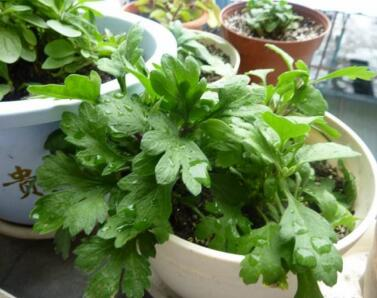
First of all, when selecting branches of Anisodontea capensis for cuttings, you must choose suitable branches. Try to use healthy mother plants free of pests and diseases, and cut branches from the outer part of the plant. It is best to choose vigorous, healthy branches free of pests, which helps the cuttings succeed. Then cut these branches into small sections about 10 cm long. A few small leaves should be kept on each branch section, and the lower cut should be trimmed into a horseshoe shape so that the branch can absorb more water. The cut should not be too far from or too close to the side leaf; about 1 cm is enough. In addition, note that after cutting the branches, they should be inserted into the soil as soon as possible to prevent water loss from the branches.
2. The cutting season for Anisodontea capensis
Although Anisodontea capensis can now be propagated by cuttings all year round without being too restricted by the season, it propagates fastest in spring. When beginners try to root Anisodontea capensis cuttings themselves, they might as well do it in spring, which can increase the success rate of the cuttings and achieve better results.
How to grow Anisodontea capensis
I. Light conditions
Anisodontea capensis is a sun-loving plant and prefers light. Maintaining more than 6 hours of light per day is most suitable. Sufficient light can promote the growth of Anisodontea capensis and make it more robust, while an overly shady environment will reduce flowering and affect its ornamental value. If it is placed indoors, it should be put in a bright place where it can receive light for a long time.
II. Soil requirements
For the soil used to grow Anisodontea capensis, ordinary commercially available nutrient soil is sufficient. You can also make your own nutrient soil from mountain soil (leaf mold) plus a small amount of river sand and organic fertilizer. At the same time, because Anisodontea capensis flowers a lot and consumes a lot of fertilizer, an appropriate amount of fertilizer can be applied to the soil, such as fully decomposed organic fertilizer, nitrogen fertilizer and phosphorus fertilizer, all of which have good effects.
III. Watering matters
The soil should be kept moist and replenished in time. When watering, avoid too great a difference between water temperature and soil temperature. Rainwater or pond water can be used for watering, while tap water should be left to stand for one or two days before use.
III. Temperature control
Anisodontea capensis has weak cold resistance. In spring and autumn, when the temperature difference between day and night is large, it should be moved indoors at night in time. At noon in summer, when the light is strongest, it needs appropriate shading. In winter, it should be kept from being placed outdoors and should be cared for in a warm indoor place.
How to grow Anisodontea capensis and points to note
Chinese scientific name: Anisodontea capensisLatin scientific name: Anisodontea capensisAlso known as South African mallow, mini hibiscus and anise weed; in Taiwan, China it is mostly called: Yulinglong, Linglong FusangKingdom: PlantaeFamily: MalvaceaeGenus: AnisodonteaSpecies: Anisodontea capensisAnisodontea capensis is a perennial subshrub of the Malvaceae family. Also known as: South African mallow, Anisodontea capensis, Linglong hibiscus, mini hibiscus, false hibiscus, mini hibiscus and anise weed; in Taiwan, China it is mostly called: Yulinglong, Linglong Fusang. The plant height is 1 OOcm-180cm. The stem is branched, green, light purple or brown. The leaves are alternate, triangular-ovate, three-lobed, with triangular lobes and irregular teeth. When it first grows, it looks very much like a herbaceous plant, and as it gradually matures, the branches also become woody. The flowering period is from summer to autumn. Its form resembles a shrunken version of hibiscus. It produces 1-3 flowers in the leaf axils. The flowers are small, with 5 petals, round and lovely, pink or pinkish red. It blooms continuously, with very many flower buds, light petals and a delicate flower shape. It is produced in Shandong, Anhui, Jiangsu Changjing Landscape, Zhejiang and other places.1. Morphological characteristics
The plant height is 1 OOcm-180cm. The stem is branched, green, light purple or brown. The leaves are alternate, triangular-ovate, three-lobed, with triangular lobes and irregular teeth. The flowers are small, with 5 petals, round and lovely, pink or pinkish red. There are very many flower buds, the petals are light and the flower shape is delicate.2. Growth habits
Suitable for pot cultivation. For the growing medium, choose soil with good permeability and drainage. Ordinary commercially available nutrient soil is all right, or mountain soil (leaf mold) plus a small amount of river sand and organic fertilizer can be used to make nutrient soil. Do not use clayey soil.Likes light. It is best to maintain more than 6 hours of light per day. Sufficient light can promote more robust plant growth, while too much shade easily makes the internodes longer and reduces flowering. If grown indoors, it should be placed in a bright place, such as a balcony or windowsill.
Likes fertilizer. When fertilizer is sufficient, Anisodontea capensis grows rapidly and flowers abundantly. For young plants, use a balanced fertilizer, or one slightly leaning toward nitrogen fertilizer. Generally, in spring, a fertilizer with an N:P:K ratio of 20:20:20 is best. In early summer, switch to a fertilizer with higher phosphorus, such as a 10:30:10 flowering fertilizer. Because it flowers a lot, it also consumes a lot of fertilizer, so apply a 1,200-fold liquid fertilizer about once every 10 days. In winter, it enters dormancy, so stop fertilizing. If conditions permit, applying some fully decomposed organic fertilizer gives even better results.
3. Distribution range
Native to the mountain slopes or hilly areas of South Africa.4. Care methods
Growing and propagationThe soil should be kept moist, and water can be replenished once the surface dries. In winter, water can be appropriately controlled, just slightly moist. When watering, the water temperature should be consistent with the soil temperature to prevent excessive temperature difference from damaging the root system. Water is best neutral or slightly acidic. Rainwater or pond water can be chosen. Tap water is best left to stand in a vat or bucket for one or two days before use. If the water contains more minerals, salt ion accumulation easily occurs, causing soil acidification and affecting plant growth.
Growth. Propagation can use the cutting method, preferably carried out in the plum rain season. The branches chosen should be semi-lignified; both too old and too tender are unfavorable for rooting. Generally, roots form in 1 month.
To encourage the plant to branch more and form a full plant shape, pinching can be used. For some diseased branches and dead branches, some overly dense branches should be cut off at any time, which is beneficial to ventilation and the growth of other branches. After the plant has been cared for for one or two years, its growth becomes worse and flowering decreases. At this time, light pruning or heavy pruning can be carried out. Light pruning can cut off 1/3 of the branches, while heavy pruning can cut off all branches more than 10 cm above the ground, which can promote plant renewal and rejuvenation. Anisodontea capensis is tolerant of pruning and can be cut into a round ball shape, a green hedge or other shapes to increase its ornamental value.
Pest and disease controlRed spider mites and aphids are relatively likely to occur.
For red spider mites, dicofol emulsifiable concentrate at 500-600 times dilution or 40% omethoate emulsifiable concentrate at 1,500 times dilution can be used for control;
For aphids, 40% dimethoate emulsifiable concentrate at 1,000 times dilution can be sprayed for control.