What are the requirements for the growing environment of the Peace Tree?
The Peace Tree likes a warm, humid environment with plenty of sunlight; it enjoys light but also tolerates shade, and prefers warm, hot, frost- and snow-free places with heavy fog and high temperatures; it does not tolerate drought, waterlogging, severe cold or dry air. For artificial cultivation, a loose, fertile, well-drained, organic-rich acidic sandy loam is suitable, and the optimum growing temperature is 20°C-30°C.
I. How to grow the Peace Tree
1. Light
The Peace Tree's need for light varies with age. Plants 3 to 5 years old grow faster under shaded conditions; plants 6 to 10 years old require fairly abundant sunlight. After potted plants enter summer, they should not be given full sun; they can be placed under the dense shade of a large tree or under a shade shed, given about 50% scattered light, and allowed full light in the morning and evening, which gives ideal growth. Be sure the light is not too intense, as too much will turn the leaves yellow and spoil the ornamental effect.
2. Temperature
The suitable growing temperature for the Peace Tree is around 25 degrees; it is not cold-hardy, and tolerates low temperatures below zero degrees, otherwise the bark is prone to frost cracks, the branches and leaves wither, and the sapling can freeze to death roots and all.
3. Watering
It likes moisture; normally water when half of the soil surface in the pot has dried, and in dry weather spray or mist the leaves frequently. In winter, water after about half of the potting soil has dried; the Peace Tree likes an environment with fairly high air humidity, generally relative humidity greater than 80%, only then can it grow vigorously. In summer or the dry autumn, and even when placed indoors in winter, the leaves should be sprayed with water regularly to create a relatively humid spatial environment. If water accumulates in the pot, it easily causes root rot, so we must water in moderation.
4. Soil
For potted Peace Trees, use a loose, fertile, well-drained acidic soil rich in organic matter. Compacted, heavy or insufficiently acidic soil, poor drainage and compacted potting soil can all cause fibrous root rot, leading to yellowing leaves and poor growth. Leaf mold soil can be used for cultivation.
5. Repotting
Small Peace Trees are repotted once a year, while large ones are repotted about once every 2 years on average.
6. Fertilizing
The Peace Tree rather likes fertilizer; during the growing season, apply a compound quick-acting fertilizer once a month as a top dressing, and after autumn begins, apply a phosphorus-potassium fertilizer 1 to 2 times.
How to grow the Peace Tree: points to note when growing the Peace Tree
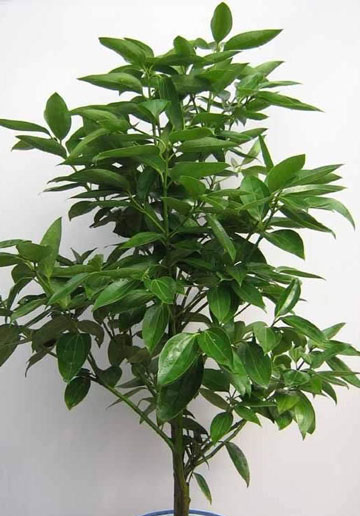
In China, many plants and flowers have names with very beautiful meanings, and the Peace Tree is one of them; the real name of the Peace Tree is Lanyu cinnamon (Cinnamomum kotoense), an evergreen plant of the Lauraceae family, with upright branches and stems that are yellow-green, smooth and without down. The upper surface of the leaves is bright green with a metallic-like sheen, while the underside is grayish green. Below, we explain the growing methods and points to note for the Peace Tree, hoping to help everyone.
How to grow the Peace Tree
Potting soil choice: for potted Peace Trees, use a loose, fertile, well-drained, organic-rich acidic sandy loam, which is also the potting soil requirement for most indoor flowers. If the soil is heavily sticky or low in acidity, it will cause the leaves of the plant to turn yellow and new bud growth to decline, thus affecting the plant's lifespan.
Suitable growing temperature: the best temperature for Peace Tree growth is 22°C to 30°C, and the lowest temperature must not fall below 5°C. If freezing or consecutive frost days occur, good insulation work should be done to prevent the bark from frost cracking and the branches and leaves from withering, and in severe cases it may freeze to death.
Moderate light: the Peace Tree not only likes sunlight but is also quite shade-tolerant, yet it cannot be placed in direct sun; especially in summer, when placed in the sun it needs some shading, about 50 percent of its area is suitable, otherwise the sunlight may scorch the leaf surface. In winter it can be exposed directly to sunlight without any shade.
Correct watering: the Peace Tree likes a humid environment and does not tolerate drought; its potting soil should be kept relatively moist, and in dry weather the leaves should be sprayed with water. In summer the leaves should be sprayed once a day, and the indoor relative air humidity should be maintained, preferably above 60 percent. When watering, water once first, then water again after half an hour, which avoids the appearance of half-watering. The number of waterings depends on the season; water when the surface soil looks a little dry.
Fertilizing: fertilize once every month except in winter; fertilizing in winter may damage the roots and stems.
Pest prevention: aphids are prone to appear on the young leaves and new shoots of the Peace Tree; after scattering plant ash on the plant, rinse it clean with water; spraying chinaberry leaf juice can effectively kill insects; use a 10% imidacloprid wettable powder 2000-fold solution for spraying and killing.
Points to note when growing the Peace Tree
There are 4 key points in growing the Peace Tree. The first point, light. In summer, the Peace Tree must have its leaves shaded, otherwise they are easily scorched by sunlight. The second point, temperature. The Peace Tree likes warmth, and the most suitable temperature is 20 to 30 degrees. In winter, it is best not to leave the Peace Tree outdoors but to move it indoors for growing. The third point, correct watering. The Peace Tree likes moist soil, so in summer it must be watered once a day. The fourth point, loosening the soil. When growing the Peace Tree, it is best to loosen the soil once a month, so that the Peace Tree grows better.
Causes of yellowing leaves on the Peace Tree and solutions
In the process of growing indoor flowers, yellowing leaves are a fairly common phenomenon, and the same is true in indoor cultivation of the Peace Tree, where yellowing leaves are unavoidable; the main reasons for yellowing or falling leaves on the Peace Tree are the following:
First, due to accidents or special circumstances, the plant's root system is seriously damaged, causing the leaves to turn yellow.
Second, the indoor temperature is below 5°C, and frost damage causes the Peace Tree to turn yellow and drop leaves.
Third, overwatering causes root rot at the bottom, which in turn causes the plant to turn yellow and drop leaves.
Fourth, the water quality is heavily alkaline, causing the leaves to slowly turn yellow; this situation is fairly common in the north, especially in places such as **.
Fifth, improper fertilizing, with too much or too concentrated fertilizer, causes the nutrient fibrous roots to lose water, shrink and die.
Sixth, prolonged exposure to the scorching sun causes the leaves to dry up and turn yellow.
The above is what we have explained about the growing methods and points to note for the Peace Tree; is everyone clear now? For more home decor knowledge, please stay tuned.