Ariocarpus Autumn Care Methods and Precautions
In autumn, place Ariocarpus in a spot with plenty of light and water it after the soil dries. As temperatures begin to drop, gradually reduce watering, keeping the potting soil dry but not parched. Before frost, promptly move it into a bright, enclosed balcony.
How to Care for Ariocarpus Through the Four Seasons
Spring Care for Ariocarpus
In spring, place Ariocarpus in a spot with plenty of light. As temperatures rise, Ariocarpus begins to resume growth, and at this point watering should be gradually increased. When the outdoor temperature stays steadily above 15°C, it can be placed outside on a balcony for care, and this is also a suitable time for repotting. During Ariocarpus's peak growing season, water it by letting the soil dry out between waterings; never let the soil become too wet, and watering after the potting soil has dried out completely is best. When temperatures are high in late spring, provide some shade at midday.
Summer Care for Ariocarpus
Summer light is too intense and can easily cause the body to wrinkle, so strong direct light for long periods must be avoided in summer. Ariocarpus can be placed where it receives morning and evening light. At this time Ariocarpus grows slowly, so watering must be controlled to keep the potting soil on the dry side, preventing rot of the body from high heat and excess moisture. After temperatures cool in late summer, resume watering by letting the soil dry out between waterings.
Autumn Care for Ariocarpus
In autumn, place Ariocarpus in a spot with plenty of light and water it after the soil dries. As temperatures begin to drop, gradually reduce watering, keeping the potting soil dry but not parched. Before frost, promptly move it into a bright, enclosed balcony.
Winter Care for Ariocarpus
In winter, ensure plenty of light. The temperature is best kept above 10°C, though it does not need to be too high. In winter Ariocarpus enters dormancy and generally needs no watering; simply keep the soil dry.
How to Care for Ariocarpus
Ariocarpus is a spineless cactus-type plant. Because these plants grow very slowly, they are called "living stones" abroad. With the rise of succulents in recent years, more and more people have come to love Ariocarpus. Below, let's take a look at how to care for Ariocarpus.
Ariocarpus
Introduction to Ariocarpus
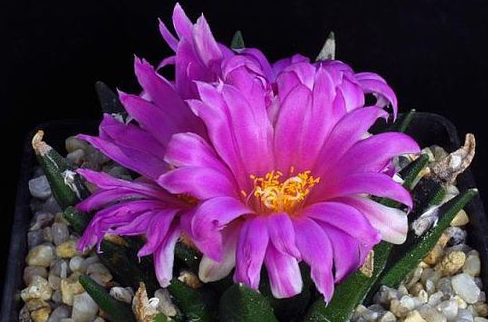
Ariocarpus is native to northern Mexico and is a succulent cactus that grows in the subtropics. Ariocarpus is half buried in the soil and has a very large taproot. The upper part is flat, 6-12 cm in diameter, with triangular tubercles that overlap to form horizontal wrinkles. Ariocarpus has no crown at all and is gray in color, making it very easy for it to hide itself in its native habitat. The top of Ariocarpus has wool, and after several years of growth it produces large pink, white, or yellow flowers.
Caring for Ariocarpus
1. Soil
Ariocarpus likes well-drained sandy soil and requires a deep soil layer to make room for root growth. The ideal soil is heavy clay mixed with coarse sand, and some humus can be added. For the pot, a plastic pot can be chosen; plastic pots are good for the growth of Ariocarpus's root system and provide a relatively warm growing environment for its roots.
2. Watering and Fertilizing
Watering needs to be done according to climatic conditions and the plant's growth state. Basically, during Ariocarpus's growing period, the soil should be kept moist without standing water, while during the winter dormancy period the soil should be kept dry. Fertilizing can be done together with watering; when fertilizing, apply some dilute fertilizer solution, mainly phosphorus and potassium fertilizer. Generally speaking, Ariocarpus does not need much fertilizer, because it grows naturally in a rather harsh environment and is therefore fairly tolerant of poor soil.
3. Temperature and Light
Ariocarpus likes a growing environment with plenty of light and good air circulation, and the temperature can be kept between 0°C and 30°C. During care, make sure Ariocarpus receives plenty of light.
Ariocarpus
How to Care for Ariocarpus Through the Four Seasons
1. Spring
In spring, place Ariocarpus in a spot with plenty of light. As temperatures rise, Ariocarpus begins to resume growth, and at this point watering should be gradually increased. When the outdoor temperature stays steadily above 15°C, it can be placed outside on a balcony for care, and this is also a suitable time for repotting. During Ariocarpus's peak growing season, water it by letting the soil dry out between waterings; never let the soil become too wet, and watering after the potting soil has dried out completely is best. When temperatures are high in late spring, provide some shade at midday.
2. Summer
Summer light is too intense and can easily cause the body to wrinkle, so strong direct light for long periods must be avoided in summer. Ariocarpus can be placed where it receives morning and evening light. At this time Ariocarpus grows slowly, so watering must be controlled to keep the potting soil on the dry side, preventing rot of the body from high heat and excess moisture. After temperatures cool in late summer, resume watering by letting the soil dry out between waterings.
3. Autumn
In autumn, place Ariocarpus in a spot with plenty of light and water it after the soil dries. As temperatures begin to drop, gradually reduce watering, keeping the potting soil dry but not parched. Before frost, promptly move it into a bright, enclosed balcony.
4. Winter
In winter, ensure plenty of light. The temperature is best kept above 10°C, though it does not need to be too high, because Ariocarpus is also a fairly cold-tolerant plant. In winter Ariocarpus enters dormancy and generally needs no watering; simply keep the soil dry.
Ariocarpus
A Friendly Reminder
Ariocarpus contains bitter and toxic alkaloids, such as hordenine. These alkaloids protect the plant itself from being eaten by herbivorous animals. In addition, because Ariocarpus grows rather slowly, growers need to be patient and not give up halfway.
Ariocarpus