How to care for white sandalwood cactus in summer? Detailed care methods and tips
1. Avoid enclosed spaces
In summer's high temperatures and stuffy heat, if the white sandalwood cactus is kept in an unventilated environment, it is very prone to rot, and this requires special attention. It is best to place the white sandalwood cactus in a semi-shaded spot on the balcony and open the windows often for ventilation.
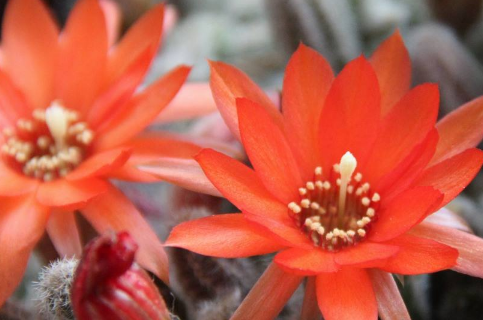
2. Avoid too much water
The white sandalwood cactus blooms in summer, and we generally prefer to enjoy the flowers rather than simply letting it burst with growth, so there is a little trick here: control the water. After spring begins, generally from April or May, stop watering and only let the white sandalwood cactus receive sunlight. Next, you will notice the color of the white sandalwood cactus change from pale green to dark red, and flower buds slowly emerge. When the buds grow to more than 1cm, we then lightly spray a small amount of water into the air to cool and replenish moisture.
That is all for today's content. If you are interested, you can give it a try.
How to care for the white sandalwood cactus to bloom
For the care of the white sandalwood cactus in summer and autumn, just like other cacti, in winter the white sandalwood cactus begins a long sleep, so watering should be stopped and the soil should be kept dry. Place it indoors, and keep the indoor temperature between 5°C and 10°C. Only by letting the white sandalwood cactus have sufficient sleep will it bloom. If the indoor temperature is high, the white sandalwood cactus will stop sleeping, and then the white sandalwood cactus will not produce brilliant flowers.
After spring begins, in northern regions move it outdoors to sun in mid-April, and do not water. As the temperature rises and the light intensity increases, the white sandalwood cactus will turn dark red, and flower buds will gradually grow. Do not water in the early bud stage. After watering, the flowers will turn green, and after 2 weeks the white sandalwood cactus will produce brilliant flowers. If you water before the buds have developed into shape, the white sandalwood cactus will shrivel after blooming. Only the large ones will bloom.
After reading today's content, do you still think the care and propagation of the white sandalwood cactus are very difficult? Then if you are interested, do not hesitate.
How to grow the white sandalwood cactus_White sandalwood cactus cultivation methods
Cacti are plants people are most familiar with. They are often grown in offices, indoors, next to computers and so on. They are very easy to grow and do not require much thought to keep well. There are many kinds of cacti, and different kinds have different shapes. The white sandalwood cactus is one of them. It is a cactus plant that blooms very easily. However, many people find it is not so easy to get the white sandalwood cactus to bloom when growing it. This is mainly because it needs to go through low-temperature treatment in winter before further care, and then it can produce very brilliant flowers. Below let us take a look at how to grow the white sandalwood cactus, and the cultivation methods for the white sandalwood cactus.
[Introduction to the white sandalwood cactus]
The white sandalwood cactus is also called the cactus whip, gourd fist, golden ox palm and so on. It belongs to a flowering plant in the genus Cereus of the cactus family, and it is native to the northern region of Argentina. The white sandalwood cactus is a perennial succulent plant. Its stem is not like the round ball shape of a ball cactus, but is rather slender and cylindrical. It grows in clusters and is multi-branched. The color of the plant is light green, and it is very ornamental; the shape of a single plant is like staggered peaks of different heights. The low shallow ribs number 6-9, and on the ribs grow relatively dense areoles. At the end of spring, flower buds flourish on the lateral areoles of the stem, and slowly produce red funnel-shaped flowers. There are also many stamens, and the color is [color] and white. They generally bloom during the day, and at night the flowers close. The flowering period is generally 3-4 days. The flowers bloom very easily and are very brilliant.
[Growth habits of the white sandalwood cactus]
The white sandalwood cactus likes to grow in environments with relatively abundant sunlight, good ventilation and dryness. Its tolerance for shade and drought is relatively good, but it fears waterlogging, high temperatures and strong light. The suitable growing temperature is 15-25°C. In winter, after the stem is frozen, it will show a phenomenon of becoming limp and red, and growth slows at temperatures above 5[facility?] . During the growing season, give sufficient water, especially in high-temperature times, carry out appropriate shading and ventilation, and keep the potting soil dry. Its cultivation method is somewhat similar to that of ordinary cacti.
[How to grow the white sandalwood cactus]
The care methods for the white sandalwood cactus in autumn and summer are very similar to those for other varieties of cacti. In winter, the white sandalwood cactus enters a dormant state, and generally watering should be stopped and the potting soil kept dry. It should be placed indoors to overwinter safely. The indoor temperature should be 5-10°C, and it should be grown in a window position with relatively good light and good ventilation. In winter, it must receive sufficient dormancy to be able to open more brightly colored flowers. However, if the indoor temperature is relatively high, it will cause the white sandalwood cactus to begin normal growth, so it will not bloom, or it will not bloom easily.
[Cultivation methods for the white sandalwood cactus]
The white sandalwood cactus likes to grow in loose, fertile soil with relatively good ventilation. You can choose vermiculite, fine sand and rotted humus soil mixed together for cultivation, which is most suitable. Its drought tolerance is relatively strong, but it also needs sufficient water according to the different seasons. In spring, when the temperature is relatively moderate, water a small amount. In summer, when the light is relatively abundant, the temperature is relatively high, and the amount of watering should not be too much, otherwise it will cause root rot. But if it encounters excessive water shortage, the plant will develop scorch spot disease, shriveling and so on, thereby reducing its ornamental value. You can spray water on the white sandalwood cactus to increase humidity, so that the water at the base can be fully absorbed. In autumn, water and fertilize more; in winter, water less. As long as sufficient water is given, it can grow normally.
More related information: elderberry pictures What varieties of Hypericum are there Peony flower pictures Daphne pictures Alocasia leaves turning yellow