Can camellias actually be grown indoors?
Camellias can be grown indoors, but they must be cared for properly, because if they are even slightly neglected, the camellia will wither. So how should you grow camellias indoors? Next, the editor will give you a detailed introduction.
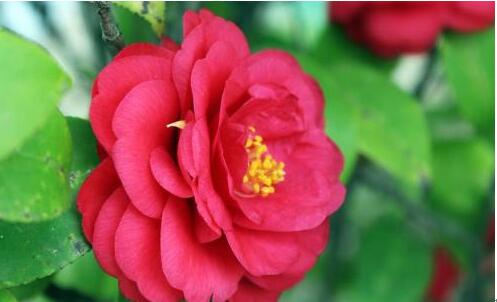
Methods for growing camellias indoors
1. Light and temperature
Camellias like plenty of light and a well-ventilated environment, and they tolerate neither high heat nor cold, so when growing them you must be sure to provide enough light and regulate the temperature. Do not place them on a balcony to grow.
2. Water management
Camellias like a moist environment and tolerate partial shade, so when watering you can water a little more than usual, but not excessively, as this promotes the growth of the camellia. Note that during the high temperatures of summer, you must water once in the morning and once in the evening, while in winter you should reduce the frequency of watering to prevent the roots from freezing.
3. Soil management
Camellias require a loose, sandy soil with good drainage, and it is best to mix in some fertilizer to ensure there are enough nutrients.
4. Pest and disease control
Once pests are found, they must be dealt with immediately, for example by spraying insecticide. If disease occurs, you only need to prune off the diseased branches.
5. Pruning
For camellias, frequent pruning is essential to keep the shape attractive and produce brilliant flowers, so camellias should be pruned from time to time.
Home potted camellia growing techniques: can camellias be placed in an indoor bedroom?
Nowadays people use their spare time to grow flowers and plants in places such as their own balconies and rooftops, and camellia, as one of China's traditional flowering plants, is certainly indispensable. Although camellias have a very long history of cultivation in China, most people are not very experienced in how to grow them well in pots. Below, the editor will introduce the home potted growing techniques for camellias.
Home potted camellia growing techniques
1. Light
Camellias are best placed in a warm, humid, well-ventilated and well-lit spot. In spring they need plenty of light; in summer take care to provide shade, avoiding direct sunlight and afternoon western sun. If placed on a balcony, they are often accidentally scorched to death.
2. Watering
The soil for a potted camellia should be kept moist, but not excessively wet, to prevent it from alternating between dry and wet. Generally, in spring you can water a little more to encourage budding and new shoots; in summer, water in the morning and evening, and it is best to spray the leaves with water so they are thoroughly wet. Do not pour water on in a strong direct stream or flood the pot, do not water with hot water, and avoid watering around midday when temperatures are high; in autumn, water moderately; in winter, water around midday, and you can spray water once every two or three days.
3. Fertilizing
Camellias like fertilizer, so when potting them, be sure to put base fertilizer in the potting soil, mainly phosphorus and potassium fertilizer. Normally, do not fertilize too much. Generally, apply dilute fertilizer water 2-3 times between April and May after flowering, and apply one slightly stronger liquid fertilizer in November in autumn. When fertilizing, note that the proportion of phosphorus fertilizer should be somewhat higher, to encourage abundant flowers and vivid color.
4. Pruning
Camellias grow relatively slowly, so excessive pruning is not advisable. Generally, you only need to cut off the leggy shoots that affect the tree's shape, as well as diseased, pest-infested and weak branches. You can thin the flowers, keeping only 1-2 and maintaining a certain distance between them, to avoid consuming nutrients. In addition, promptly remove flowers that are close to fading, which can also reduce nutrient consumption, helping the plant grow robustly and form new flower buds.
5. Repotting
A potted camellia can be repotted once every 1-2 years, and the new pot should be one size larger than the old one, to allow the root system to spread and develop. Repotting is best done in April in spring, or in autumn. When repotting, remove some of the compacted old soil as appropriate, replace it with fertile, loose new soil, and add base fertilizer at the same time.
6. Pest and disease control
The main diseases of camellias include black mold and anthracnose, which can be prevented and controlled by spraying 0.5-degree Bordeaux mixture. The main pest is the tea shoot borer; the control method is to cut off and remove infested shoot tips, preferably done between April and June.
Can camellias be placed in an indoor bedroom?
Camellias can be placed in an indoor bedroom. They repel mosquitoes and can absorb many harmful substances. From this perspective, they are beneficial for sleep quality and relatively beneficial to the human body. However, many people are allergic to pollen, and in that case it is best not to keep them in the bedroom.
Small tips for caring for camellias after flowering
1. Prune promptly
After the peak flowering period, the remaining spent flowers should be removed, and at the same time, overly dense overlapping branches, crossing branches and dry, withered branches should be cut away. On the one hand, this prevents wasting the tree's nutrients; on the other hand, it improves the plant's ventilation and airflow, prevents the occurrence of pests and diseases (such as scale insects and black spot), and promotes robust growth of the plant.
2. Fertilize promptly
From bud formation to the end of flowering, camellias consume a large amount of nutrients. To quickly restore the tree's vigor, fertilizer must be applied to replenish them. After flowering, apply a thin liquid fertilizer once every week or so. The liquid fertilizer can be made by sealing and soaking soybean cake, hoof and horn meal, fish bone meal and black alum together, and after it has fully decomposed, take the upper fermented liquid and dilute it with clean water before use. Never water with concentrated or raw fertilizer, to avoid root rot. At the same time, you can also use 0.2% potassium dihydrogen phosphate for foliar feeding, spraying once every ten days, for 5 consecutive applications, to encourage thick, sturdy spring shoots and improve bud-setting ability.
3. Water moderately
Around mid-April, the camellia's spring shoots begin to grow, but at this time the climate is dry and the air humidity is low, so you should water moderately and spray the leaves with water once or twice a day to increase local air humidity and benefit the plant's growth.
4. Repot promptly
After flowering, plants that need repotting should be repotted immediately. When repotting, it is best to use slow-release fertilizer such as hoof and horn meal or hair as base fertilizer. After repotting, water thoroughly once and place in a humid, cool spot; after 20 days, normal care can be resumed.
What are the reasons a camellia does not grow?
1. Improper watering amount
A large part of the reason a camellia grows too slowly or stops growing is too little watering. When watering is insufficient, the camellia's growth slows down; too much watering causes root rot, which is also bad for the plant's growth.
2. Too little fertilizer
Applying too little fertilizer leaves the camellia short of nutrients, affecting the plant's development.
3. Improper light
Too much direct sunlight or insufficient sunlight will both affect the camellia's normal growth.
4. Transplanting seedlings too late
Many people transplant camellia seedlings around the Spring Festival, and this is an important reason for poor camellia growth.
Camellias are extremely valuable: they can not only be used for ornamental purposes, but can also be eaten and used in beauty care. However, when cultivating them, you must not refrain from pruning for fear of spoiling their looks, because proper pruning is the only way to ensure better growth.