How to grow Dianthus chinensis and things to note
1. Light
Dianthus chinensis needs 6 to 8 hours of light every day. In midsummer, full sun should be avoided, and exposure to blazing sun should be avoided.
2. Soil
Dianthus chinensis should be planted in fertile, alkaline clay soil that drains well and has small holes in the base. It can be grown in a mixed soil of garden soil, compost and sand at a ratio of 6 to 2 to 2.
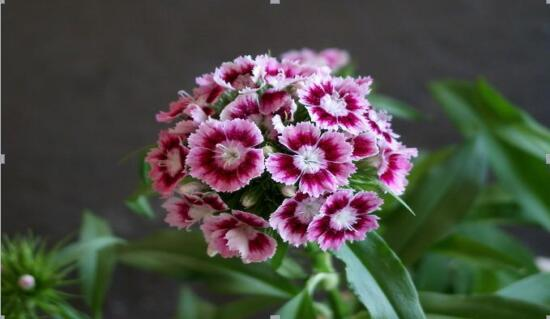
3. Watering
Dianthus chinensis is tolerant of drought, so slight moisture is best. In the rainy season, loosen the soil and ensure drainage, and do not let rainwater collect at the roots. Water promptly during the peak growing and flowering season; at other times, keep the soil slightly moist.
4. Temperature
The suitable growing temperature for Dianthus chinensis is between 15°C and 20°C. In winter, Dianthus chinensis needs to be placed in a greenhouse, with the temperature kept above 10°C. In summer, it should be placed indoors, where the temperature is a little lower than outdoors.
5. Fertilizing
Dianthus chinensis likes fertilizer, so suitable fertilizer is necessary for it. Before planting Dianthus chinensis, a large amount of baked fertilizer needs to be prepared, and fertilizer is also needed during the growing period. Generally, fertilize once every ten days, using decomposed liquid fertilizer, and fertilize once more after flowering.
6. Things to note
For potted Dianthus chinensis, attention should be paid to pruning the branches; otherwise, with many branches, nutrients will be spread out and the flowers produced will be small in size and dull in color. After pruning, Dianthus chinensis will continue to bloom. During the growing period, attention should be paid to watering more and placing it in a sunny, ventilated place, and it should be fertilized with tomato fertilizer rich in phosphate. Watering must not let water accumulate in the pot soil, or the plant will rot at the roots and die.
Growing Dianthus chinensis is not difficult. Fertilize when it is first planted and take careful care of it during the growing period, and I hope everyone can grow healthy and brightly colored Dianthus chinensis flowers at home.
How to grow Dianthus chinensis
How to grow Dianthus chinensisSeed propagation is the main method, but cutting or division propagation can also be used. For seed propagation, both spring sowing and autumn sowing can be used, but autumn sowing is the main method. Sow in an open-field seedbed in September. After sowing, cover with a thin layer of soil, or do not cover with soil and instead cover with rice straw, water thoroughly and keep the soil moist. At 20 degrees, germination can occur after 5〜6 days, and the germination rate can reach 80“. After autumn begins, carry out cutting propagation in combination with pruning and shaping. The method is to cut 5 cm long new shoots with buds and insert them directly into sandy soil mixed with equal amounts of river sand and culture soil, keep the soil moist, provide moderate shade, and they will root in about 2〜3 weeks.
Dianthus chinensis is a perennial herbaceous flower with weak perennial nature, and is mostly cultivated as an annual or biennial plant. Potted Dianthus chinensis requires sufficient base fertilizer, with 2〜3 plants per pot. When the seedlings grow to 15 cm tall, remove the terminal buds to encourage branching, and afterward pay attention to properly removing axillary buds; otherwise, with many branches, nutrients will be spread out and the flowers will be small. Properly removing axillary buds concentrates the nutrients and can promote larger flowers with brighter color. During the growing period, it should be placed in a sunny, well-ventilated place for care, keep the pot soil moist, and apply a decomposed dilute liquid fertilizer about once every 10 days. In summer, when there is too much rain, pay attention to drainage and loosening the soil.
Dianthus chinensis hybridizes easily, so those saving seeds need to plant them in isolation. Before flowering, some axillary flower buds should be removed in time, mainly to ensure that the terminal flower buds bloom. In winter, water less; if the temperature is kept at 5〜81, it will bloom continuously through winter and spring.
>Ornamental value and uses
The flower language of Dianthus chinensis is pure love, talent, boldness, and feminine beauty. In the Tang Dynasty, Sikong Shu wrote in the poem "Dianthus Flowers at Yunyang Temple": “Since parting from the secluded mountain, we meet in this temple. High and low, all put forth leaves; deep and light, they do not divide into clumps. Wild butterflies find it hard to rival their white, and courtyard pomegranates silently yield their red. Who pities their fragrance lasting longest, from spring dew to autumn wind.” Wang Anshi of the Song Dynasty wrote "Two Poems on Dianthus Flowers," one of which says, “When spring returns to the secluded valley, they first form clumps; on the ground their fragrance spreads, a pale red. No carriages or horses come, so who sees and admires them? Pitiful, yet they also know how to pass through the spring breeze.” All of these show that Dianthus chinensis has long been used as an ornamental plant.
The Dianthus chinensis plant is dense, with abundant blooms and bright flower colors. It is widely used in flower beds, flower borders and edging plants, or paired with rocks and planted in rock gardens. It is also especially suitable for potted ornamental use. The flower stalks of cut-flower varieties are upright, and the flowers last well in arrangements, so cut-flower ornamental use is also good. When planted in large areas, it can serve as landscape groundcover material.
Dianthus chinensis and carnation belong to the same genus as two species. Dianthus chinensis is a native species, while carnation is an introduced species. In modern times, many new carnation cultivars have been bred, with robust plants, diverse flower colors and also strong fragrance, surpassing the native Dianthus chinensis instead.
How to grow Armeria
Flower name: Armeria Alias: Plumbaginaceae, genus Armeria
Armeria
Germination conditions (temperature, soil covering and whether light is needed, etc.): 20-21°C
Number of days needed for germination: 4-10 days
Suitable growing temperature (day temperature/night temperature): 10-13°C
Light requirement for growth and other growing conditions: partial shade or partial light
Morphological characteristics: A perennial herbaceous flower of the Plumbaginaceae family, low-growing, clump-forming, with a plant height of only 8-12 cm. Leaves are linear, long and sword-shaped, entire, dark green; it blooms in spring, with terminal head-like inflorescences. The flower stems are slender, and the small flowers cluster at the top of the flower stems. They are semi-spherical in shape and purplish red.
Propagation and cultivation: Propagate by division, with autumn to winter being the suitable period. The growing medium is best as leaf mold rich in organic matter. Drainage and light need to be good. It likes warmth and dislikes high temperature and high humidity. The suitable growing temperature is 15-25°C.
Main habits: A perennial clump-forming herbaceous plant, plant height 20-30 cm, leaves linear, flowers pink to rose red, inflorescence terminal and head-like, flower stem about 3 cm, propagated by sowing or division, likes sunny conditions and well-drained sandy soil, and can be used for flower beds, flower borders, rock gardens, cut flowers and potted flowers.