What are the propagation methods for camellias? Explained clearly in one article
1. Cuttings
During the growing season, select well-developed branches, carry out a series of pre-cutting preparations, and finally insert them into the soil to wait for them to take root.
2. Approach grafting
Choose a suitable plant as the rootstock, first plant the rootstock in the soil, then fit the camellia and the rootstock tightly together, wrap with plastic film, and take care to tend them carefully.
3. Leaf cuttings
Leaf cuttings are best done in the rainy season; take one-year-old leaves as the leaf-cutting material. After inserting them into the soil, press the soil firm, water thoroughly, then place in a cool, ventilated spot, and simply wait for them to take root.
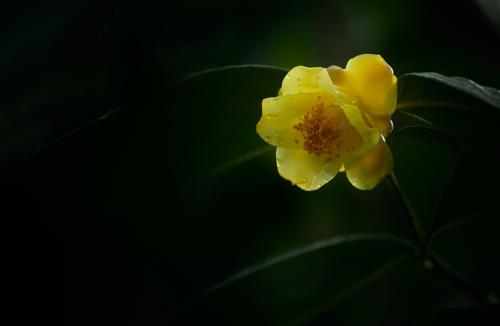
Well, that is all for today's content. I hope the editor's content can be of help to you. Thank you for reading!
Propagation methods for camellias
1. Cuttings
During the growing season, select branches with better growth, carry out a series of pre-cutting preparations, and finally insert them into the soil to wait for them to take root.
2. Approach grafting
Choose a suitable plant as the rootstock, first plant the rootstock in the soil, then fit the camellia and the rootstock tightly together, wrap with plastic film, and take care to tend them carefully.
3. Leaf cuttings
Leaf cuttings are best done in the rainy season; take one-year-old leaves as the leaf-cutting material. Insert about 2 cm into the soil, press the soil firm after inserting, water thoroughly, then place in a cool, ventilated spot, and simply wait for them to take root.
Well, that is all for today's content from the editor. I hope the growing methods and propagation methods provided by the editor can be of help to you. Thank you for reading!
Propagation methods for camellias and pest and disease control
Do you know about the propagation methods for camellias and pest and disease control? Today the editor will take you to find out.
There are many propagation methods for camellias; both sexual propagation and asexual propagation can be used, among which cuttings and approach grafting are the most commonly used.
Cuttings
This method is the simplest. The best time for cuttings is September, and spring also works. Choose well-grown, semi-lignified branches, remove the leaves at the base, keep the upper 3 leaves, cut with a sharp knife into a slanted cut, immediately soak the cut end in 200-500 ppm indolebutyric acid for 5-15 minutes, dry in the sun, then insert into a sand pot or vermiculite pot. After inserting, water; after about 40 days the wound heals, and after about 60 days roots form. Cuttings treated with hormones root 2-3 months earlier than those not treated with hormones. Using vermiculite as the cutting bed, rooting is also much faster than in a sand bed.
Approach grafting
Choose a suitable variety such as tea-cup camellia or oil tea as the rootstock, and approach graft a precious camellia onto it. The time for approach grafting is generally between Qingming Festival and Mid-Autumn Festival. First plant the rootstock in a flower pot, use a knife to shave off about half at the parts to be joined, the cuts must be smooth, then fit the cut surfaces of both sides tightly together, wrap with plastic film, water the rootstock twice a day, and after 60 days it will have healed. At that time it can be cut off and planted, and placed under tree shade to avoid direct sunlight. In February of the following year, use a knife to cut off the tail end of the rootstock, then plant it in its final position.
Leaf cuttings
Leaf cutting method: camellia propagation generally uses branch cuttings, but some precious varieties, due to limited sources of branches, or because taking material would affect their tree shape, also use the leaf cutting method. Use mountain soil as the cutting medium, and mix in 1/3 river sand to facilitate aeration and drainage. Put the medium in a clay pot, then carry out pot cuttings. Leaf cuttings are best done in the rainy season; take one-year-old leaves as the leaf-cutting material, as leaves that are too old do not easily take root, and those too tender easily rot. Insert about 2 cm into the soil, press the soil firm after inserting, water thoroughly, then place in a cool, ventilated spot. Generally roots can form in 3 months, and in the spring of the following year they can sprout and send out branches.
High cuttings
The greatest feature of the high-altitude cutting method is that it can give new life to all the weak and small branches on the camellia that should have been pruned off. Moreover, this method has a high survival rate, quick rejuvenation, and early flowering. The method is: take the thin and weak branches that need to be pruned off, and carry out ring-barking at a suitable position (generally 15-25 cm of branch can be left on the upper part). The ring-barking length can be between 5-8 mm. Tie on a suitably sized plastic film, add sterilized and disinfected peat soil or leaf mold into the film, and after 7-10 days, carry out another ring-barking of 5-8 mm at the lower part of the plastic film. This is called the double ring-barking high cutting method.
Tree grafting
Camellia is a plant that is relatively difficult to keep alive. There are many and varied propagation methods for camellias, among which grafting is the most commonly used. Grafting for camellia propagation has many advantages: it can maintain the excellent traits of the variety; it can speed up plant growth, enable it to take shape quickly, and allow large-scale production; it saves scion wood, especially for rare varieties with few sources of scion wood, which is particularly important; oil tea tree grafting camellia technique: the grafting time is suitable from June to July, when the leaves of the new shoots of the camellia scion have already unfolded, and the temperature is relatively high, so the grafting wound heals quickly and the survival rate is high. The grafting method uses the cut grafting method among the branch grafting methods. Because the grafting position is relatively high, it is often called "high grafting to change the head."
Pest and disease control for camellias
The main diseases of camellias include ring spot disease, anthracnose, shoot blight, leaf spot disease, sooty mold, etc. The main control agents are: 800 times Tuzet; 500 times carbendazim; 800 times chlorothalonil; 800 times kemeiling for regular control. Before flowering, pay attention to the control of gray mold and flower blight.
The main camellia pests are red spider mites, aphids, scale insects, leaf rollers, and inchworm moths. The main control agent is 15 mL chlorfenvalerate + 20 mL isocarbophos or 25 mL monocrotophos mixed with 30 jin of water for spraying.
The above is the relevant knowledge about camellia propagation methods and pest and disease control.