How to Grow Pentas? Detailed Growing Steps
I. Sowing
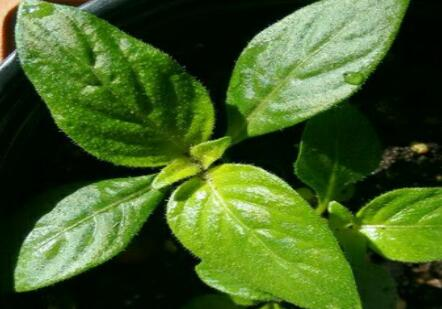
The seeds of pentas are quite small, so they should be sown in plug trays. The cells of the plug tray should be neither too large nor too small, ideally 1.5-2 cm. During seed germination, do not cover them with anything, so as to avoid blocking light. During this period, sufficient watering is needed to promote rapid germination of the seeds.
II. Potting Up
Seven to eight weeks after sowing the pentas seeds, the pentas can be transplanted into pots. Before potting up, fertilizer can be applied appropriately to give the plants enough nutrients. The growing medium should be sterile peat moss that contains a little fertilizer and drains well, with a pH value between 6.5-6.8.
III. Watering
During the growing period of pentas, do not overwater; overwatering will cause the plants to turn yellow and the flowers to grow slowly. This is determined by the characteristic that pentas is not tolerant of waterlogged conditions. The water temperature is best kept the same as that of the growing medium.
IV. Fertilizing
Start fertilizing after the cotyledons of pentas have unfolded. The fertilizing frequency is once every seven to ten days when watering; you can use an 800-1000 times dilution of Yelüjing as fertilizer. During the growth cycle of pentas, you can switch to using an 800-1000 times dilution of Kaihuajing as fertilizer, with a fertilizing frequency of once a week.The above steps answer the question of how to grow pentas. Next, let us look at what issues we need to pay attention to during the growing process of pentas:
Growing Methods for Pentas
Pentas likes high temperatures, with an optimum growing temperature of 25-30°C. It is suitable for cultivation in sandy soil rich in organic matter, and drainage must be good. It develops well in both full sun and partial sun.
Warm heat and sufficient sunlight help the growth of pentas. During the growing period, the night temperature should preferably be kept above 17-18°C, and the day temperature above 22-24°C. Temperatures below 10°C will make flowering uneven and delay or hinder the opening of the flowers.
During the seedling stage of pentas, because the seeds are tiny, plug seedlings are often used for sowing. The commonly used sowing medium is a sterile medium rich in humus and well drained, with a pH value of 6.5-6.8 and an EC value of 0.75 ms/cm. Sow in plug trays, 1 seed per cell. The size of the cell hole should preferably be 1.5-2 cm. Germination begins about 10-14 days after sowing, with an optimum temperature of 23-26°C. The seeds need light to germinate and must not be covered. During germination, sufficient watering is needed to accelerate the dissolution of the outer layer of the pink flowers and promote germination.
Pentas likes strong light. After germination, let the seedlings receive sunlight as soon as possible to avoid leggy growth and promote rapid plant growth.
Seven to nine weeks after sowing, they can be transplanted into pots, and the pot diameter should preferably be 10-15 cm. Before potting up, fertilizer should be applied moderately to make the plants grow strong, so as to reduce the shock that potting up causes to the plants. The growing medium should be sterile peat moss that contains a little fertilizer and drains well. The pH value should preferably be 6.5-6.8. Warm heat and sufficient sunlight help the growth of pentas. During the growing period, the night temperature should preferably be kept above 17-18°C and the day temperature above 22-24°C. Temperatures below 10°C will make flowering uneven and delay or hinder the opening of the flowers.
How to Grow Pentas Growing Methods for Pentas
Pentas is also called star flower. Dozens of flowers gather into clusters, very brilliant and pleasing to the eye. It is suitable for potted plants and for arranging flower stands, flower beds, and so on. So how do you grow pentas? What are the growing methods? Let us learn about them together below.
I. How to Grow Pentas
Pentas likes high temperatures, with an optimum growing temperature of 25-30°C. It is suitable for cultivation in sandy soil rich in organic matter, and drainage must be good. It develops well in both full sun and partial sun. Warm heat and sufficient sunlight help the growth of pentas. During the growing period, the night temperature should preferably be kept above 17-18°C, and the day temperature above 22-24°C. Temperatures below 10°C will make flowering uneven and delay or hinder the opening of the flowers.
During the seedling stage of pentas, because the seeds are tiny, plug seedlings are often used for sowing. The commonly used sowing medium is a sterile medium rich in humus and well drained, with a pH value of 6.5-6.8 and an EC value of 0.75 ms/cm. Sow in plug trays, 1 seed per cell. The size of the cell hole should preferably be 1.5-2 cm. Germination begins about 10-14 days after sowing, with an optimum temperature of 23-26°C. The seeds need light to germinate and must not be covered. During germination, sufficient watering is needed to accelerate the dissolution of the outer layer of the pink flowers and promote germination.
II. Growing Methods for Pentas
1. Transplanting: Pentas can be transplanted into pots 7-9 weeks after sowing. The pot diameter should preferably be 10-15 cm. A 10 cm pot can hold 1 seedling, and a 15 cm pot can hold 1-2 seedlings. Before potting up, fertilizer should be applied moderately to make the plants grow strong, so as to reduce the shock that potting up causes to the plants.
2. Medium: Use sterile peat moss that contains a little fertilizer and drains well. The pH value should preferably be 6.5-6.8 to avoid iron toxicity and magnesium deficiency. If the pH value is below 6.0, severe leaf-edge scorching will occur due to iron toxicity, causing the plants to stop growing.
3. Temperature: Warm heat and sufficient sunlight help the growth of pentas. During the growing period, the night temperature should preferably be kept above 17-18°C, and the day temperature above 22-24°C. Temperatures below 10°C will make flowering uneven and delay or hinder the opening of the flowers.
4. Light: Pentas likes an environment with sufficient sunlight. The stronger the light, the more compact and stocky the plants. Therefore, in winter with weak light and short daylight, attention should be paid to supplementary lighting.
5. Water: Pentas is relatively drought tolerant but not tolerant of waterlogged conditions. During the growing period, do not overwater, and at the same time avoid water accumulating in the growing medium, so as to avoid inducing root rot. When watering, the water temperature should not be too low (that is, the water temperature should be kept consistent with the medium temperature). Overwatering often makes the plants turn yellow and the flowers grow slowly.
6. Fertilizing: One week after planting, start applying an 800-**** times dilution of "Yelüjing", once every 7-10 days. When the plants enter the mid-growth stage (that is, plant height 8-10 cm), you can switch to applying an 800-**** times dilution of "Kaihuajing", once a week, to promote flower bud differentiation and good growth.
The above isHow to Grow PentasandGrowing Methods for Pentasintroduced. We hope it helps everyone grow pentas. If you want to learn more about pentas, keep following us.