How to Grow and Care for the Daxuesu Orchid
1. Light
Daxuesu does not have high light requirements; it prefers cool, shaded conditions and grows best in a shaded spot, where its leaves develop a more graceful appearance.
2. Temperature
The ideal growing temperature for Daxuesu is 15-28°C. In summer, it should not be kept above 30°C, and shade and cooling measures should be taken promptly. In winter, keep the temperature above 0°C, which is good for the plant's growth.
3. Soil
To grow Daxuesu, choose soil rich in humus and mix in more organic matter such as bark and leaves; the plant will grow more vigorously.
4. Watering
Watering should be decided according to weather conditions and the plant's growth. In summer, keep the soil moist, but do not let the potting soil become too dry. In winter, when the climate is dry, let the pots dry out more; the potting soil just needs to be dry-moist.
How to Grow Daxuesu and Points to Note
How to Grow Daxuesu
Temperature and Light
The ideal growing temperature for Daxuesu is between 15 and 28°C. In winter, as long as the temperature does not fall below 0°C, it can generally overwinter safely. In summer, when the temperature rises above 30°C, attention must be paid to heat protection and cooling, and the maximum temperature should not exceed 35°C.
Because Daxuesu's growing environment is fairly shaded, it does not have high light requirements and prefers shade; during the growing period, light should be on the weaker side. With a little less light, the leaves have a better sheen.
Humidity Requirements
Daxuesu's humidity requirements mainly refer to two aspects: air humidity and potting soil humidity.
Daxuesu's requirements for potting soil humidity are similar to those of other orchids: "mainly moist, appropriately on the dry side."
Daxuesu has higher air humidity requirements than other orchid species, staying at 60%-80%. But it still needs a fairly good ventilated environment. When cultivating Daxuesu, special attention must be paid to handling this contradiction well: not only create conditions to increase air humidity, but also strengthen ventilation in the growing environment.
Soil Requirements
Daxuesu is native to loam rich in humus. When planting Daxuesu, the soil generally chosen is soil rich in humus. The soil must contain abundant humus; mix in more organic matter such as bark, leaves and peanut shells, and the amount of this organic matter mixed in should be no less than 30%.
Fertilizing
Daxuesu is relatively fond of fertilizer, so during the vigorous growth period it should be fertilized more. If the soil is fertile, the amount of fertilizer can be reduced, and some foliar fertilizer can be applied. Plant-based fertilizers cannot be used directly; they must be fermented before application.
Note: apply light fertilizer frequently, and do not overdo it.
Points to Note When Growing Daxuesu
Propagation Method
Daxuesu is propagated by division, producing new shoots.
Other Points to Note
The growth of Daxuesu must follow its natural laws; do not rush for quick results.
Maintain air humidity and pay attention to potting soil humidity.
Daxuesu's growing environment is fairly shady and damp, so pay attention to daily insecticide and sterilization to prevent and control pests and diseases.
An introduction to how to grow Daxuesu, and points to note in its care
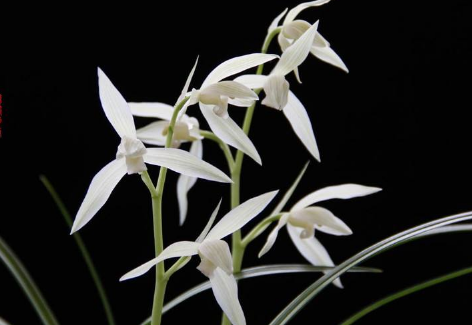
Orchids are a common flower for us, and the image of the orchid is firmly engraved in our hearts. Daxuesu is one variety of orchid; its flowers are white and look pure and flawless. Today I will take you through an understanding of how to grow Daxuesu and the points to note.
Care Methods
1. Temperature
The ideal growing temperature for Daxuesu is between 15 and 28°C. In winter, as long as the temperature does not fall below 0°C, it can generally overwinter safely. In summer, when the temperature rises above 30°C, attention must be paid to heat protection and cooling, and the maximum temperature should not exceed 35°C. Compared with other orchid species, overwintering Daxuesu introduced from other regions generally poses no problem; the main thing is how to do a good job of heat protection and cooling in summer. We can start from three aspects: increasing shading, enhancing ventilation, and spraying water to raise humidity, so that this orchid can pass the summer safely. If it really does not work, there is no choice but to use an air conditioner to lower the temperature.
2. Light
Because Daxuesu's growing environment is fairly shaded, it does not have high light requirements and prefers shade; during the growing period, light should be on the weaker side. With a little less light, the leaves have a better sheen.
3. Humidity
Daxuesu's humidity requirements mainly refer to two aspects: air humidity and potting soil humidity. Daxuesu's requirements for potting soil humidity are similar to those of other orchids: "mainly moist, appropriately on the dry side." Daxuesu has higher air humidity requirements than other orchid species, staying at 60%-80%. But it still needs a fairly good ventilated environment. When cultivating Daxuesu, special attention must be paid to handling this contradiction well: not only create conditions to increase air humidity, but also strengthen ventilation in the growing environment.
4. Soil
Daxuesu is native to loam rich in humus. When planting Daxuesu, the soil generally chosen is soil rich in humus. The soil must contain abundant humus; mix in more organic matter such as bark, leaves and peanut shells, and the amount of this organic matter mixed in should be no less than 30%.
5. Fertilizing
Daxuesu is relatively fond of fertilizer, so during the vigorous growth period it should be fertilized more. If the soil is fertile, the amount of fertilizer can be reduced, and some foliar fertilizer can be applied. Plant-based fertilizers cannot be used directly; they must be fermented before application. Note: apply light fertilizer frequently, and do not overdo it.
6. Propagation
Daxuesu is propagated by division, producing new shoots.
Points to Note
1. The growth of Daxuesu must follow its natural laws; do not rush for quick results.
2. Maintain air humidity and pay attention to potting soil humidity.
3. Daxuesu's growing environment is fairly shady and damp, so pay attention to daily insecticide and sterilization to prevent and control pests and diseases. During the growing period, Daxuesu's light should be on the weaker side.
The above is my summary of how to grow Daxuesu and the points to note. I hope it can be of help to the many flower lovers out there, and please keep following Succulent Garden to learn more about flower care knowledge.