Detailed explanation of the specific steps for rooting Lisianthus cuttings
1. First use chopsticks or a wooden stick to poke a small hole in the potting soil, insert the cutting, then press the potting soil firm with your hands and water it thoroughly.
2. Cover with plastic film or a transparent lid, and poke a few small holes in it for ventilation.
3. Because Lisianthus likes to grow in places with relatively strong light, the flowerpot should be placed in a bright spot where the temperature is not high.
4. After 10 days, the plastic film or plastic lid can be removed. In 3-5 weeks the cutting will have rooted, and once rooting has progressed to a certain degree, the above-ground part will begin to sprout new shoots. When the new shoots grow their second pair of leaves, they can be transplanted, and at this point normal care can be carried out.
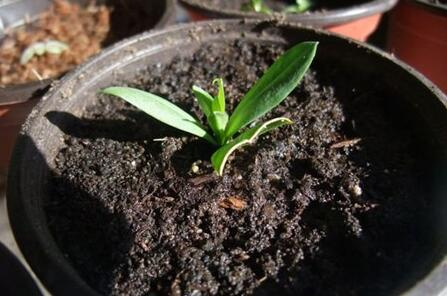
That is all for the introduction to Lisianthus propagation methods! Flower friends, if you have any questions, feel free to leave a comment and ask! In addition, when taking cuttings, be sure to keep the potting soil moist but not overly wet!
How do you take cuttings of Lisianthus? Lisianthus cutting propagation methods
The most commonly used method for propagating Lisianthus is sowing. In fact, besides sowing, cutting propagation can also be used. However, because many flower friends do not master the correct method when taking cuttings, the survival rate of Lisianthus cuttings is not high. Below, we bring you a practical Lisianthus cutting propagation method that can effectively increase the survival rate.
Image: Lisianthus cutting propagation methods
I. Selecting materials
Choose the part of the Lisianthus with strong meristematic ability. It is best to choose the stem below the second pair of leaves beneath the heart leaf after jointing, as its meristematic ability is stronger, so choosing the right cutting is very important. The stem below the first pair of leaves under the heart leaf is more tender and has relatively high nutrient requirements, so the survival rate is slightly lower. It is best to select a cutting with only one pair of leaves, which will also increase the survival rate.
II. Treating the cuttings
Cut the cutting diagonally into small sections containing one pair of leaves. The purpose of cutting diagonally is to increase the area of meristematic tissue at the cut end. Then cut each leaf in half, because at the beginning of rooting the cutting has no root system, so the nutrients it needs all come from what was stored beforehand; cutting the leaves in half can reduce nutrient consumption and is more conducive to rooting. But do not cut off all the leaves, because then the cutting cannot carry out photosynthesis and cannot produce nutrients.
III. Preparing the substrate
Choose a slightly alkaline substrate, with the pH value kept at 6—6.5. You can use peat plus some vermiculite and perlite, add some carbendazim and mix, then disinfect the substrate to prevent the breeding of pathogens. Before planting, water the substrate thoroughly to keep it moist.
Image: Lisianthus cutting propagation methods
IV. Specific steps
1. Use chopsticks or a wooden stick to poke a small hole in the potting soil, and insert the cutting;
2. Press the potting soil firm with your hands and water it thoroughly;
3. Cover with plastic film or a transparent lid, and poke a few small holes in it for ventilation;
4. Place the flowerpot in a bright spot where the temperature is not high; in winter and early spring it can receive direct sunlight;
5. After 10 days, the plastic film or plastic lid can be removed. In 3—5 weeks the cutting will have rooted, and once rooting has progressed to a certain degree, the above-ground part will begin to sprout new shoots;
6. When the new shoots grow their second pair of leaves, they can be transplanted, and at this point normal care can be carried out.
The above is the introduction to Lisianthus cutting propagation methods. Lisianthus likes warm, moist environments with plenty of sunlight. It is relatively drought-tolerant and not tolerant of waterlogging, so everyone needs to pay special attention during care.
[Image] How to take cuttings of Lisianthus, completed in 6 steps
The operation of Lisianthus cutting propagation is not very difficult either. So how do you take cuttings of Lisianthus? As long as the materials for cuttings are prepared in advance, taking Lisianthus cuttings is still quite simple. Below is a summary of the steps for the Lisianthus cutting method.
How to take cuttings of Lisianthus 1. Preparing the potting soilFor the substrate for Lisianthus cuttings, generally choose a slightly alkaline one, with the pH value kept at 6—6.5. You can use peat plus some vermiculite and perlite, add some carbendazim and mix, then disinfect the substrate to prevent the breeding of pathogens.
3. Selecting branchesIt is recommended to be sure to choose the part of the Lisianthus with strong meristematic ability. In addition, the stem below the second pair of leaves beneath the heart leaf after jointing has stronger meristematic ability. For the survival rate of cuttings, choosing the right cutting is very important.
The stem below the first pair of leaves under the heart leaf of Lisianthus is relatively tender and has relatively high nutrient requirements, so the survival rate will be slightly lower.
It is generally recommended that flower friends choose a cutting with only one pair of leaves, as this will also give a higher survival rate for the cutting.
4. Treating the branchesTake the selected branch and cut the cutting diagonally into a small section, and keep one pair of leaves. Then cut each leaf in half, mainly to reduce nutrient consumption and better facilitate rooting of the cutting.
5. Cutting methodIt is generally recommended that flower friends first use chopsticks or a wooden stick to poke a small hole in the prepared potting soil, then insert the cutting, and finally press the potting soil firm with your hands and water it thoroughly.
Immediately after that, wrap a layer of plastic film or a transparent lid over the pot, and be sure to poke a few small holes in it for ventilation. Then move the flowerpot to a ventilated place with some scattered light.
6. Rooting and planting outGenerally, after 3—5 weeks the cutting will have rooted, but it is recommended that flower friends remove the plastic film or plastic lid 10 days after taking the cutting. Once the Lisianthus has rooted to a certain degree, the above-ground part will begin to sprout new shoots.
Generally, when the new shoots of the Lisianthus grow their second pair of leaves, flower friends can transplant them.