How to Grow and Care for the Songmei Orchid: Methods and Precautions
1. Soil
Songmei is usually grown in soil mixed from various potting media, making the soil rich in humus, loose and airy, and slightly acidic.
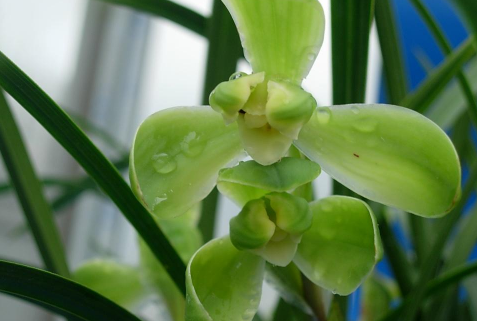
2. Light
Songmei likes a semi-shaded environment and is suited to diffused light. Light that is too strong or too weak is bad for the plant's growth. Songmei can be placed on a balcony to receive two hours of morning light, which is very good for its flowering.
3. Watering
Watering Songmei requires considering various factors, such as its growth condition, temperature, and whether the soil is dry or moist. If the plant lacks water or the soil is dry, water it thoroughly, and the water temperature should be close to the air temperature.
4. Temperature
Songmei likes warmth and grows best in an environment of 20°C-30°C. In summer, when temperatures are high, pay attention to shading and ventilation, and cool the plant down appropriately.
The Complete Guide to Growing Songmei
The Complete Guide to Growing Songmei, Songmei Pictures
Today we will introduce the complete guide to growing Songmei. I believe that if you grow Songmei, you will surely enjoy it.
The flowers of Songmei are a fine treasure among flowers to admire; when in bloom, their elegant form fully displays the beauty of the Chunlan orchid. When does Songmei bloom? Let us admire the beautiful Songmei together.
Songmei's Blooming Period and Flowering Management
Songmei is hailed as the finest of the Chunlan orchids. Its blooming period is in spring. Climate conditions and water and fertilizer management can all affect its blooming period, but generally Songmei blooms from February to April each year.
During Songmei's blooming period, note that you generally should not fertilize. The blooming period is best controlled to about one week, after which the flowers should be picked off to ensure the plant has a sufficient nutrient supply.
If Songmei is to produce beautiful flowers, this is closely related to light, temperature, and water and fertilizer management. Take sunlight, for example: morning sunlight is relatively beneficial to Songmei's growth. Before 10 a.m., Songmei's photosynthesis is at its most active, so letting Songmei fully receive morning light can make it bloom year after year. Songmei also gives off a delicate fragrance when the temperature is relatively suitable. All of this is tied to daily care.
Appreciating Pictures of Songmei in Bloom
When fellow growers cultivate Songmei, differences in growing methods, climate conditions, and so on mean that each person's Songmei takes on a different form. Let's take a look at some of the beautiful Songmei out there.
How to Grow and Care for Songmei: Methods and Precautions
Songmei is a type of Chunlan orchid, bearing plum-petal flowers, and its floral quality is unmatched. To grow Songmei well, you must care for it carefully during cultivation. So what are the growing methods for Songmei, and what precautions are there?
Growing Methods for Songmei
Choosing Pots and Soil
Growing orchids is a meticulous task, and choosing good pots and soil is very important. As for pots, if your budget allows, you can actually choose somewhat better flower pots. The pot should not be too large, but must ensure the roots can spread out. New pots need to be soaked, while old pots should be disinfected before use. As for soil, you can use a mix of various potting media so that the soil is rich in humus and has fairly good drainage, and it is best if the soil is slightly acidic.
Light and Temperature
Songmei likes a semi-shaded growing environment and prefers diffused light; direct sunlight should be avoided. During Songmei's growing period, light must be sufficient; too weak or too strong light will both have adverse effects on the plant's growth. Songmei's suitable growing temperature is between 20°C and 30°C. In winter, if the temperature is too low, it needs to be kept warm or moved indoors to a sunny spot for care. In summer, when the sunlight is intense and the temperature is too high, ventilate and cool it down; you can use shade netting to block out most of the sunlight.
Watering and Fertilizing
Watering Songmei mainly depends on the size of the pot, the plant's growth condition, ventilation, and temperature. When watering, check whether the plant lacks water; once the soil is dry, water it thoroughly. The water temperature should be close to the air temperature, especially in summer and winter. Fertilizing Songmei requires light fertilizer applied frequently. When planting, a certain amount of base fertilizer needs to be applied, and during the growing period, additional fertilizer is applied. To make the leaves grow attractively, some foliar fertilizer should also be applied. However, during the winter dormant period and when Songmei is blooming, generally no fertilizer is applied.
Precautions for Growing Songmei
Repotting
As Songmei grows, its root system expands, its stem nodes increase, and the soil loses fertility, so repotting is needed. Repotting is generally done once every 2 to 3 years, and division propagation can be done at the same time.
Propagation Methods
Songmei is mainly propagated by division, and can also be propagated by seed and tissue culture, but these require a longer cycle.
Pests and Diseases
During growth, Songmei may suffer from diseases such as mold disease, white silk disease, black spot disease, and anthracnose, as well as harm from pests such as scale insects. Measures must be taken according to the condition to prevent and control them.
What Propagation Methods Does Songmei Have?
In the process of growing Songmei, more plants can be propagated through division and sowing. So how exactly are division propagation and sowing propagation done for Songmei?
Division Propagation of Songmei
After a period of growth, Songmei will sprout many new shoots. When these new shoots reach a certain number, division propagation can be carried out. Songmei is generally divided once every 2-3 years.
Division propagation is generally carried out once every 2-3 years, in spring or autumn. Select a Songmei plant with 6 or 7 or more shoots and take the plant out of the flower pot. You can gently tap the bottom of the pot to tip out the Songmei, taking care not to damage the roots. Remove the soil from the roots, separate them carefully, and divide the Songmei into several plants. After dividing, trim the roots, then soak them in chlorothalonil for disinfection, rinse with clean water and let them dry, and they are ready to plant.
Sowing Propagation of Songmei
Songmei's seeds are extremely small, the embryo inside the seed does not germinate completely, the seed coat is relatively hard to absorb water, and the germination rate is low. Conventional sowing methods cannot make them sprout, so nutrients must be supplied artificially for them to germinate.
When sowing Songmei, you need to select unopened fruits, disinfect them, and then take out the seeds. Soak the seeds in sodium chlorate solution and rinse them clean, then place them into culture bottles with a culture medium for cultivation. Keep the temperature at 25°C. After germination, place them under light to grow.
Sowing propagation of Songmei takes a relatively long time. Generally, from sowing to transplanting, it may take half a year or even a year.
Tissue Culture of Songmei
Tissue culture is a way to produce large numbers of new plants. Remove the growth buds from Songmei's roots, disinfect them, and place them in a culture medium for cultivation. After root buds grow out and the young seedlings grow to about 5 cm, they can be transplanted.
Songmei's Flowering Management and Appreciation of Its Blooms
The flowers of Songmei are a fine treasure among flowers to admire; when in bloom, their elegant form fully displays the beauty of the Chunlan orchid. When does Songmei bloom? Let us admire the beautiful Songmei together.
Songmei's Blooming Period and Flowering Management
Songmei is hailed as the finest of the Chunlan orchids. Its blooming period is in spring. Climate conditions and water and fertilizer management can all affect its blooming period, but generally Songmei blooms from February to April each year.
During Songmei's blooming period, note that you generally should not fertilize. The blooming period is best controlled to about one week, after which the flowers should be picked off to ensure the plant has a sufficient nutrient supply.
If Songmei is to produce beautiful flowers, this is closely related to light, temperature, and water and fertilizer management. Take sunlight, for example: morning sunlight is relatively beneficial to Songmei's growth. Before 10 a.m., Songmei's photosynthesis is at its most active, so letting Songmei fully receive morning light can make it bloom year after year. Songmei also gives off a delicate fragrance when the temperature is relatively suitable. All of this is tied to daily care.
Appreciating Pictures of Songmei in Bloom
When fellow growers cultivate Songmei, differences in growing methods, climate conditions, and so on mean that each person's Songmei takes on a different form. Let's take a look at some of the beautiful Songmei out there.
Songmei's Pests and Diseases and Their Control
Caring for Songmei requires doing many things well, including the prevention of pests and diseases. What kinds of pests and diseases will Songmei encounter during its growth?
Songmei's Diseases and Their Control
Mold Disease
Mold disease mostly occurs during the plum rain season. When it strikes, white mycelium appears on the soil surface and leaves, causing the rhizome parts to rot.
When Songmei develops mold disease, the infected soil needs to be removed and a chemical agent sprayed.
Black Spot Disease
Black spot disease is also a common disease of Songmei. It often occurs when there is a lot of rain, high air humidity, and relatively high temperatures. It mainly harms the leaves, causing spots to appear on the leaves that gradually expand and become severe, leading to the plant rotting and, in serious cases, causing the plant to die.
To prevent black spot disease in Songmei, ventilation needs to be strengthened and watering controlled. When black spot disease occurs, carbendazim or other chemical agents can be sprayed for treatment, and spraying several times in a row is enough.
Anthracnose
Anthracnose occurs year-round and is more severe in hot, rainy seasons. When it strikes, the spots gradually expand, and in serious cases can cause the plant to die. When controlling anthracnose, the growing environment needs to be improved and a chemical agent sprayed for treatment.
Songmei's Pests and Their Control
Scale Insects
Scale insects, also called orchid lice, are a relatively common pest harming Songmei. They generally occur when it is hot and rainy and the air is not well circulated, and they reproduce quickly.
When Songmei is harmed by scale insects, you can first catch the pests by hand, or spray omethoate or dimethoate powder for treatment. In daily care, pay attention to air humidity, and strengthen ventilation when it is hot and rainy.
Songmei's Flower Language and Cultural Background
Songmei is a traditional famous variety among Chunlan orchids and occupies an important place among them. What is Songmei's flower language? What story lies behind it?
Songmei's Status
Songmei is a traditional famous variety, selected by Song Jinxuan of Shaoxing during the Qianlong period of the Qing Dynasty. It already has a history of two hundred years, and people are now accustomed to calling it Songmei.
Songmei is a typical representative of plum-petal flowers and is highly esteemed by everyone, called the finest of the "Four Great Famous Varieties of Chunlan." It is recorded in many orchid-related classics in our country, and the evaluations are all very high. Songmei holds an extremely high position in orchid history; from cultivation and propagation to the appreciation of flowers and leaves, among plum-petal flowers none can surpass Songmei.
Songmei's Flower Language and the Cultural Connotations It Represents
Songmei's flower language is friendship and confidence!
Songmei's three petals bloom brilliantly, with emerald-green flower color and a graceful flower shape, containing a unique delicate fragrance. It is a representative of the "gentleman's flower" and embodies the essence of Chinese orchid culture. Songmei carries people's pursuit of perfection, purity, and ideals.
The Cultural Legend of Songmei
Songmei owes its status today to Song Jinxuan.
Song Jinxuan was a native of Shaoxing, Zhejiang. During the Qianlong period of the Qing Dynasty, he was a successful businessman. Song Jinxuan was a wealthy man well known locally, had no bad habits, and loved only growing orchids, often spending large sums to buy orchids. His home was near the mountains, so he often went up the mountains to collect orchids, but he never came across a good orchid variety and felt it was a great pity.
One year after the Lantern Festival, Song Jinxuan had a dream at night. He dreamed that an old woman brought a pretty little girl to seek refuge with him, hoping he could take care of the little girl. He gladly agreed, but after waking up he suddenly realized it was only a dream. A few days later, Song Jinxuan once again went up the mountain to look for orchids and brought home an orchid plant he happened to find and planted it. Before long this orchid bloomed, and the flower was extremely beautiful, graceful and charming like a young girl. Song Jinxuan suddenly felt that this flower was like the little girl he had seen in his dream, and he cared for it even more carefully.
Later, this orchid was named: Songmei.
Repotting Songmei and Precautions
When growing Songmei, as the plant grows it needs to be repotted in time. So how is Songmei repotted, and what precautions are there?
Why Songmei Needs Repotting
Songmei needs repotting during its growth, mostly because it grows relatively quickly, propagates too many shoots, and has an expansive root system, while the flower pot's capacity is small and becomes packed full of roots.
Another point is that Songmei has grown in the original flower pot for too long, and the soil in the pot is old and has lost its nutrients. These are all factors unfavorable to Songmei's root growth.
When carrying out division propagation, Songmei needs to be removed from the soil and pot and repotted. In addition, growers may do so for their own reasons, such as wanting to change to a new flower pot to enhance the ornamental value, and so on.
Songmei is generally repotted once every 2-3 years, and division propagation can be carried out at the same time.
How Songmei Is Repotted
When repotting Songmei, first remove it from the pot and soil. Gently tap the flower pot to tip the Songmei out, remove the soil, and then decide whether to divide it based on Songmei's growth condition.
Choose a suitable flower pot, such as a clay tile pot. The pot should not be too large; just ensure that Songmei's roots can spread out inside the pot. New flower pots need to be soaked in water for 2 days, and old flower pots need to be disinfected before use.
When potting Songmei, choose suitable growing soil. First place some broken tiles at the bottom of the pot, then add coarse sand. Spread out Songmei's roots and place them into the pot, cover with a layer of growing soil, and you can appropriately add some base fertilizer. Water the potted Songmei and place it in a cool place for care.
How to Grow and Care for the Chunlan Songmei: Methods and Precautions
The Chunlan Songmei is a type of orchid; it is a unique plum-petal orchid that has been cultivated in our country for several hundred years and is a fine variety among orchids. There are many points to note when growing the Chunlan Songmei. Next, I will specifically explain them to everyone; friends who like growing the Chunlan Songmei can take a careful look.
How to Grow and Care for the Chunlan Songmei: Methods and Precautions1. The Flower Pot and Potting Soil for the Chunlan Songmei
When growing the Chunlan Songmei normally, you should choose a tall clay tile pot. The pot should not be too large; it just needs to let its roots spread out. When choosing potting soil, it must meet requirements such as breathability, drainage, and complete nutrients. The best choice is slightly acidic soil with high humus content.
2. The Chunlan Songmei's Light Requirements
During its growing period, the Chunlan Songmei has very high sunlight requirements. Morning sunlight is most beneficial to its growth and is also the main factor affecting its blooming. Therefore, it is best to normally place the Chunlan Songmei in a spot with morning light. Receiving sunlight for two to three hours a day is most beneficial to its growth and will also make it bloom year after year.
3. The Chunlan Songmei Needs Ventilation and Controlled Watering When Grown
When growing the Chunlan Songmei, it must be in an environment where ventilation is possible. Especially in summer when the weather is stuffy and hot, it should be moved to a cool, well-ventilated place. Timely ventilation can speed up Songmei's photosynthesis and also reduce the occurrence of some pests and diseases. In addition, the Chunlan Songmei has its own water requirements; it likes moist soil, but watering should not be excessive. Grasp the principle of watering when dry and watering thoroughly when you do. Also, do not water at a fixed time; it should be handled flexibly.